
How can research help everyone who is working to improve education, including teachers, educational leaders, designers, technologists, and policy makers?
Learning sciences research investigates the process of learning in realistic settings, which can include schools, museums, after-school programs, home environments, or anywhere people typically learn. In contrast, prior psychological research on learning was often conducted in a lab with artificial tasks and then applied to more realistic educational activities and settings.
Over the past 30 years, learning sciences has become a growing research field with its own society, journal, conference, and an active international community that tackles the challenge of real-world improvements in educational settings. We are passionate about creating equitable learning and building research-practice partnerships.
Key Features of Learning Sciences Research
Typically, learning sciences research includes four characteristics:
- Explores beyond general principles of learning, focuses on important concepts, and looks for evidence of learning in ways not just measured by typical tests
- Designs innovative approaches to learning and assessment, often taking into account a social, collaborative view of learning and using technology creatively
- Studies learning activity systems (not just one component)—such systems that integrate materials, technologies, supports, teacher professional development, assessments, leadership engagement, and other elements required to change teaching and learning
- Seeks improvement at scale by explicitly studying implementation and other challenges of scaling up as part of the scientific work
Learning Sciences as Equity Driven The learning sciences field has long-standing commitments to addressing equity, empowering learners, and helping successful efforts scale.
The learning sciences field has long-standing commitments to addressing equity, empowering learners, and helping successful efforts scale.
The learning sciences field has long-standing commitments to addressing equity, empowering learners, and helping successful efforts scale. Learning sciences researchers seek to partner with people and organizations, understand their contexts and how learning happens in different places, and promote assets found in communities that foster learning. We do this because we know learning is active, socially constructed, and situated. At its core, the field values diversity; it draws on multiple methods to understand learning processes in realistic settings and across communities. We want to understand not just how people learn, but when, with whom, and for whom learning occurs.
Learning Sciences vs. Sciences of Learning
Sometimes a related field called “sciences of learning” is confused with learning sciences. These terms represent distinct research traditions and inform our understanding in different and complementary ways.
Sciences of learning recognizes that many sciences inform our understanding of how people learn, such as neuroscience, psychology, sociology, anthropology, and more. Research questions often start from foundational theories, for example, about how the brain works. After investigating these in a laboratory, often using experimental methods, the findings are applied in other settings.
On the other hand, learning sciences is informed by the same wide net but, as described above, investigates specifically how learning happens in real-life settings (e.g., schools, classrooms, museums, the workforce) with research questions, data gathering processes, and insights that are highly responsive to needs in those specific settings.
Where to Learn More
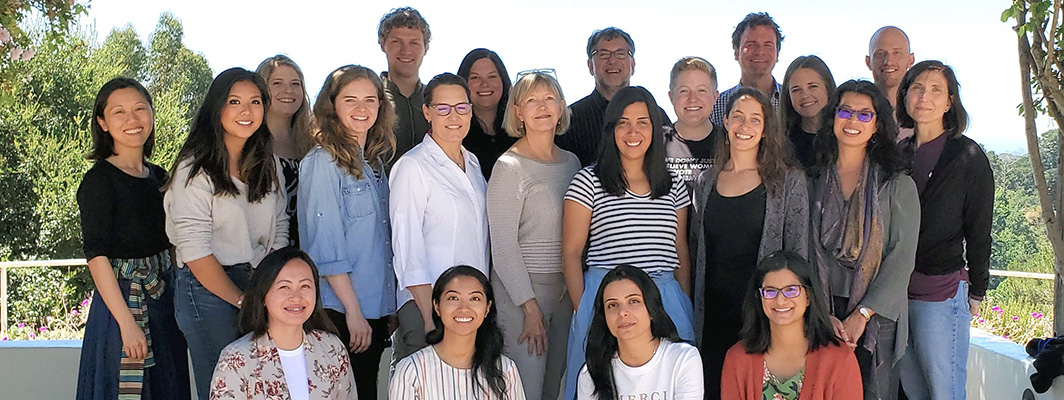
We’ve included a number of links to learning sciences resources below. For courses, webinars, and content related to the practical application of the learning sciences in teaching, check out CIRCL Educators. You can also leave comments or questions below for members of the Learning Sciences Research team at Digital Promise.
Places to Read More about Learning Sciences:
- CIRCL Primer
- The Cambridge Handbook of the Learning Sciences
- How People Learn I and How People Learn II
- Introduction to the Learning Sciences
- Wikipedia
- Overview: Learning Sciences
- What Do We Teach When We Teach the Learning Sciences?
Ways to Get Involved:
- Attend the NSF Video Showcase
- Join ISLS or AERA Learning Sciences (SIG #39)
- Contact an ISLS Fellow
- Find a Learning Sciences graduate program
- Apply for a Learning Sciences job
- Topics: AI and Emerging Tech , Classroom Practice , Core Content , Evidence-Based EdTech , Pathways and Economic Mobility , Systems and Leadership , The Whole Learner
- Learning Environments: Adult and Workforce Learning , Early Childhood Learning , K-12 , Postsecondary Education
- Audiences: Educators , Learners , Researchers
- Offerings: Credentialing , Practice and Professional Learning , Research and Development
- Programs: Adult Learning , Learner Variability Project , Learning Sciences Research , Micro-credentials , Reinvent the Classroom