
Preschool Computational Thinking (National Science Foundation)
Key Outcome
Early childhood researchers in Digital Promise’s Center for Learning Sciences Research collaborated with teachers and families in public preschool programs to design engaging activities that introduce young learners to computational thinking (CT) in meaningful and developmentally appropriate ways.
Helping Preschoolers Build Computational Thinking Skills
Computational thinking (CT) skills help us determine how to solve problems effectively and efficiently.
To explore how CT can be meaningfully introduced to young children, Digital Promise researchers partnered with educational media designers and teachers and families in public preschool programs. They worked together to strengthen the opportunities for learning CT skills that were already present in preschoolers’ everyday lives.
The hands-on activities and digital apps created build on foundational CT skills that children may already experience at home and at school, such as breaking up everyday routines into steps (related to the CT skill of problem decomposition) and sorting toys (related to the CT skill of abstraction).
Through their work, researchers found that teaching CT to preschoolers not only supports key learning goals of early childhood programs, but also connects to math and science, helping teach young children important STEM skills.
Innovative Resources for Preschool Teachers and Families
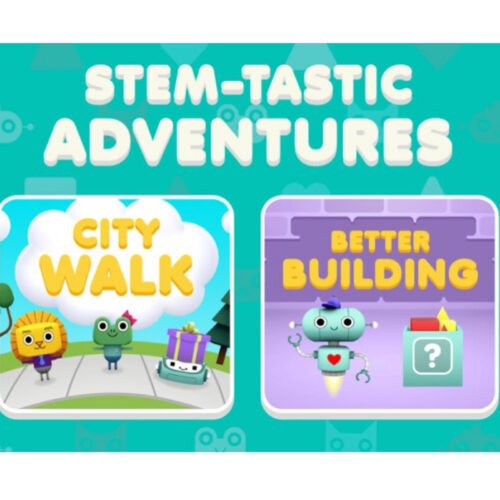
The project team developed a set of hands-on activities—including activities for classrooms and ideas for family activities at home—as well as a digital app with games to help learners further practice CT skills in an interactive touch-screen environment. To date, the activities on the project website have been viewed more than 5,000 times.