
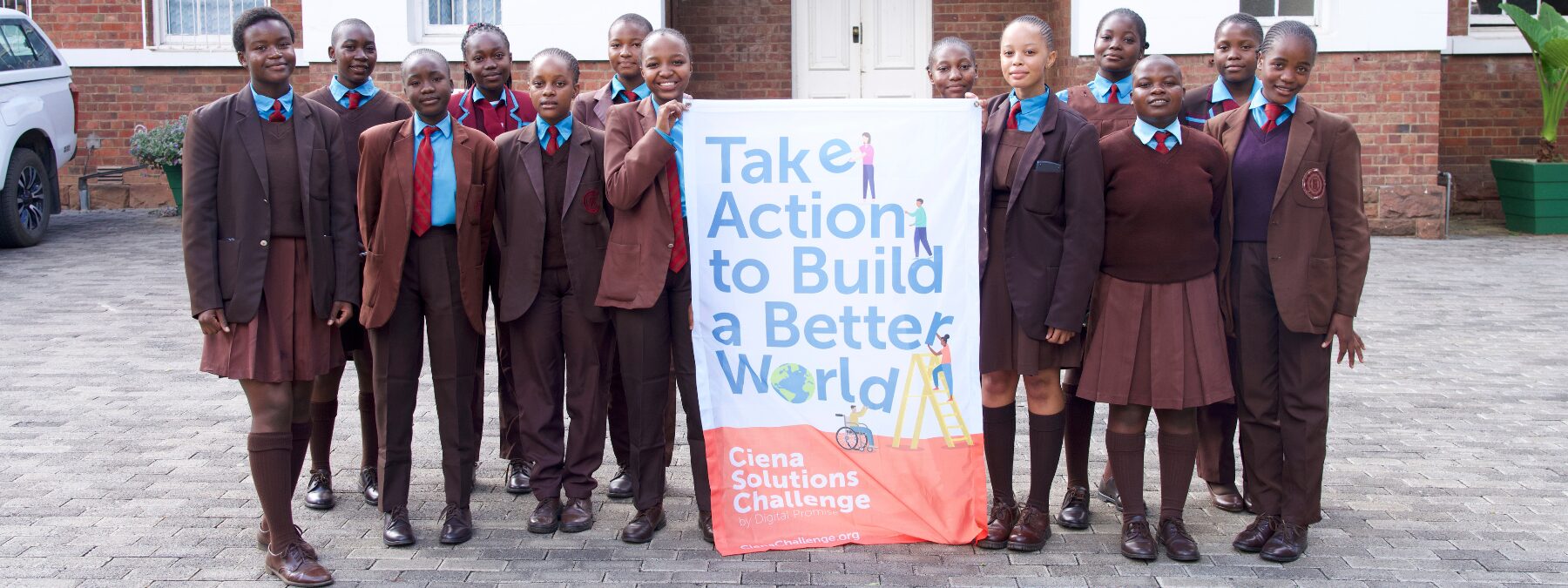
Key Ideas
- Challenge Based Learning is a framework for learning while solving challenges.
- When students apply Challenge Based Learning, they go through a process of iteration and experimentation to create a solution to real world challenges in their communities.
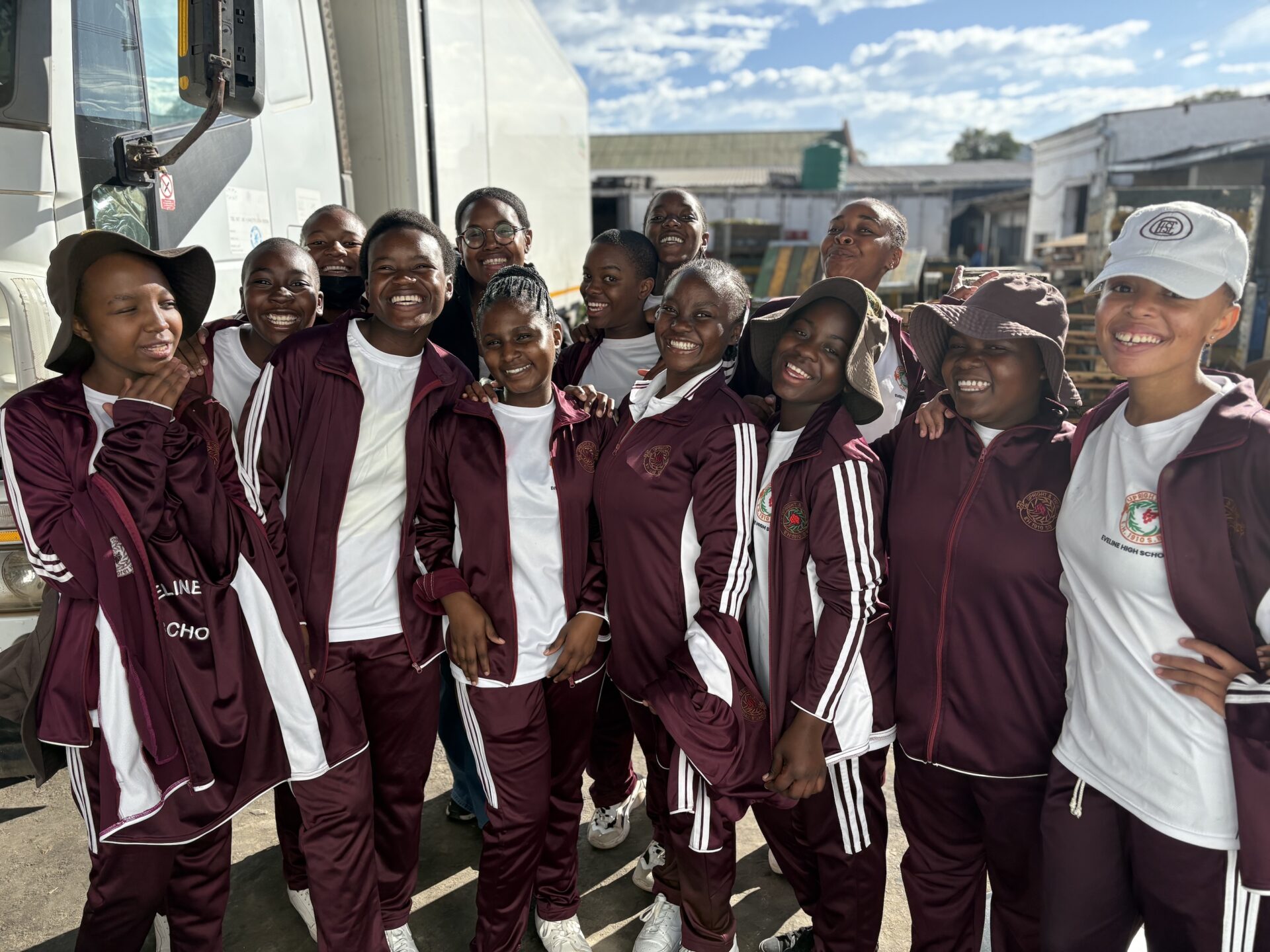
- At Eveline High School in Bulawayo, Zimbabwe, students in the Ciena Solutions Challenge used Challenge Based Learning to improve waste management at their local market.
Getting to Eveline High School
Students commute from all parts of the city to attend Eveline High School, located in the central business district of Bulawayo, Zimbabwe. Many of them walk through the local market, a stretch of bustling streets lined with tables of fresh, local produce. The market is just a few blocks away from the school and is an integral part of the school community.
Introducing Challenge Based Learning
When teachers Gladmore Chadzamira and Mavis Vhiya introduced Challenge Based Learning, a framework for learning while solving real-world challenges, to their class, the students identified the issue of waste management at the market. The city wasn’t collecting waste on a regular schedule. The accumulation of spoiled food and garbage made the market a less appealing place for buying and selling fresh produce.
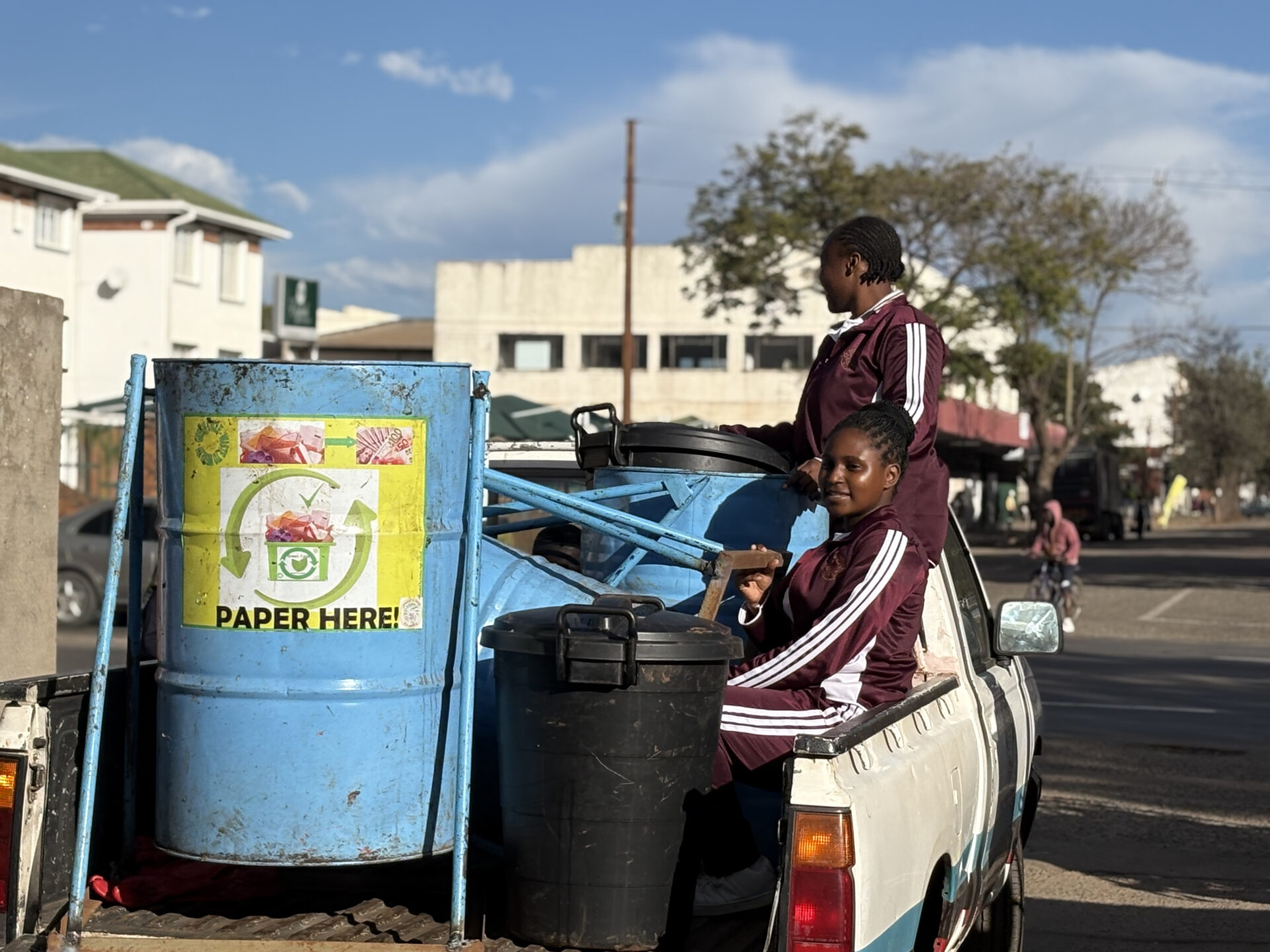
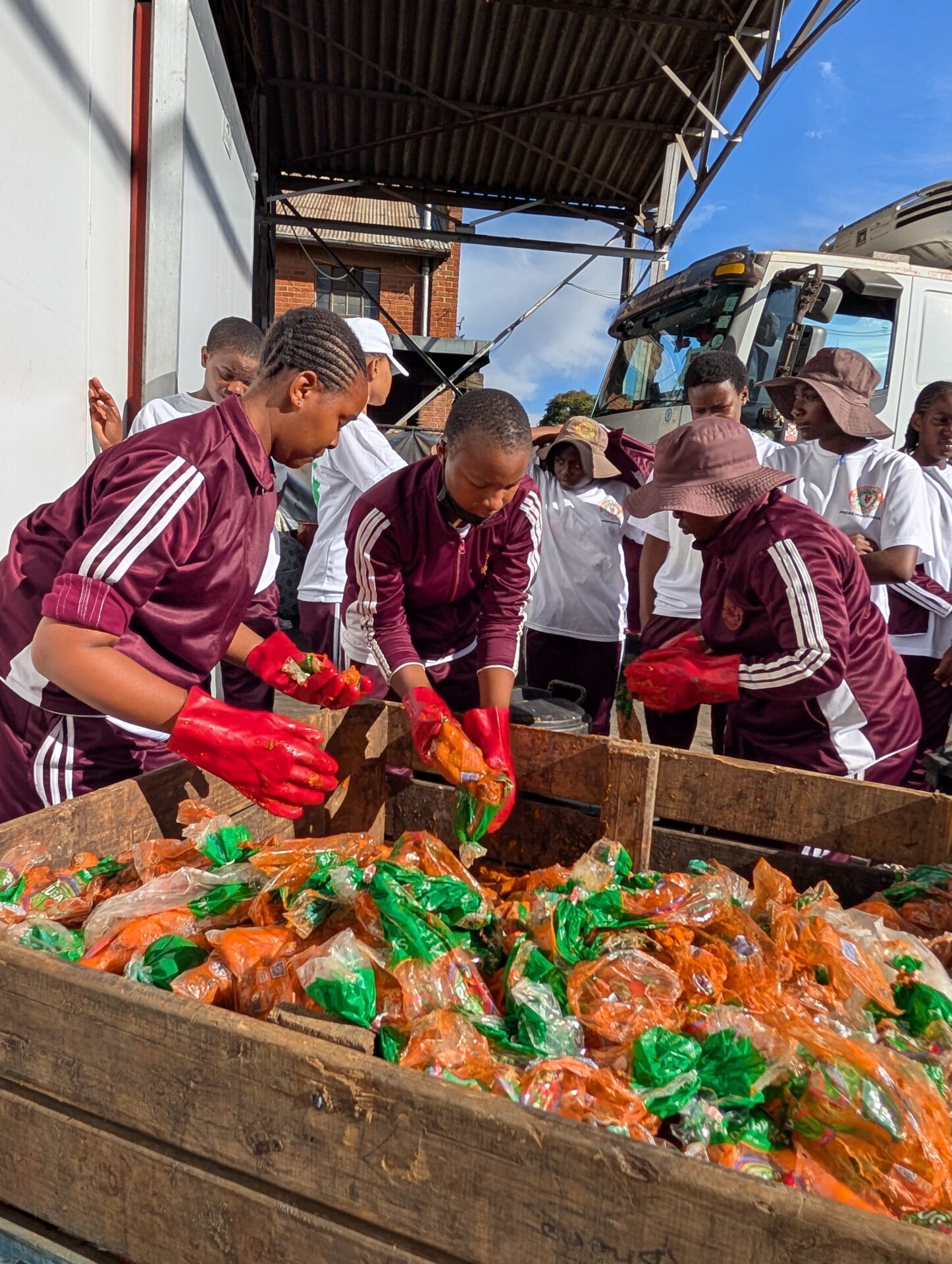
The students set out to create something to help keep the market clean. They started by surveying vendors to understand how they could make a difference. They learned that vendors needed more frequent waste collection and decided they could meet that need by setting up their own collection system. Some students wondered how they could turn the waste into something valuable. This led them to start their project Green Cycle, where they collect biodegradable waste from the market and compost it into liquid fertilizer for their school garden.
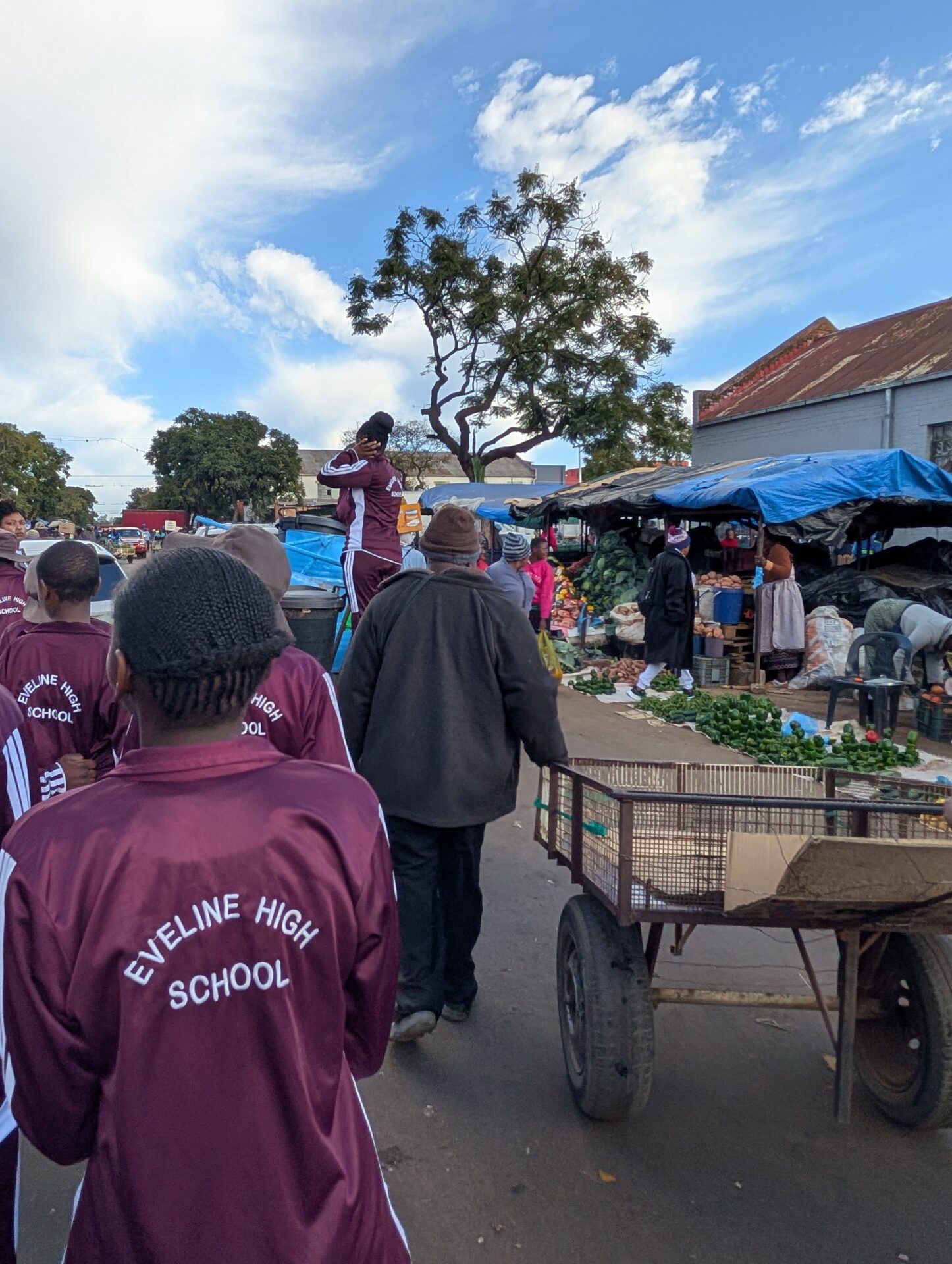
The Importance of Experimentation and Iteration
The students faced various challenges in developing their project. One of the first challenges was building trust with vendors at the market to be able to survey them and document the market. Another challenge was determining the best method for composting. They also faced obstacles in securing and maintaining the collection bins stationed throughout the market.
Throughout these challenges, their teachers encouraged them to be persistent in finding solutions. As chemistry teacher Gladmore Chadzamira said, “I believe in experimentation. So they should do some experiments on a small scale, then when the experiments flopped, they had to try again. Change the conditions, change the variables, then try again.”
With Green Cycle now up and running, the students deposit and collect the bins stationed throughout the market twice a week. They compost the contents in their biodigester, a large tank set up in an auxiliary space at their school. They produce liquid fertilizer to use in their school garden, which is lush with fruit trees and crops of leafy greens.
“After [completing] this project, I felt like ‘wow, I did it!’…I think learning in this way is important.” – Snenkosi, student
Students’ Impact on the City of Bulawayo
The students continue to witness the impact of their work. John Mutero, the director at Wilsgrove Farm, raved about how the students’ project has made a big difference in his business. “These kids have done a great job. Because of the ideas they came with, my place is always clean now. I’ve conscientized most of my customers and my visitors to make sure that they utilize the bin which was provided by Eveline High School,” he said.
As the market is run by the city, Ward 1 City Councilor Josiah Mutangi had to initially give approval for students to run Green Cycle. Now that it is in full effect, he compliments the students for how they’ve made a positive impact in Bulawayo and calls their project “one of its kind.”
Register for the Ciena Solutions Challenge
Eveline High School is part of the Ciena Solutions Challenge Model School program, which runs concurrently with the Ciena Solutions Challenge global design challenge. The open challenge invites middle and high school students around the world to design solutions to the Sustainable Development Goals in their communities.
Participating teachers and students use the Challenge Based Learning framework to identify and learn more about issues affecting their communities, and work to develop a solution. Challenge Based Learning is adaptable to all kinds of contexts—across subjects, disciplines, grades, and learning environments.
Through the Ciena Solutions Challenge, teachers globally can apply for $3,000 to sustain and scale students’ projects. Learn more and register at cienachallenge.org.
- Topics: Core Content
- Learning Environments: Global Education
- Audiences: Policymakers , School and System Leaders
- Offerings: Global Networks and Convenings
- Programs: Ciena Solutions Challenge , Global Education