
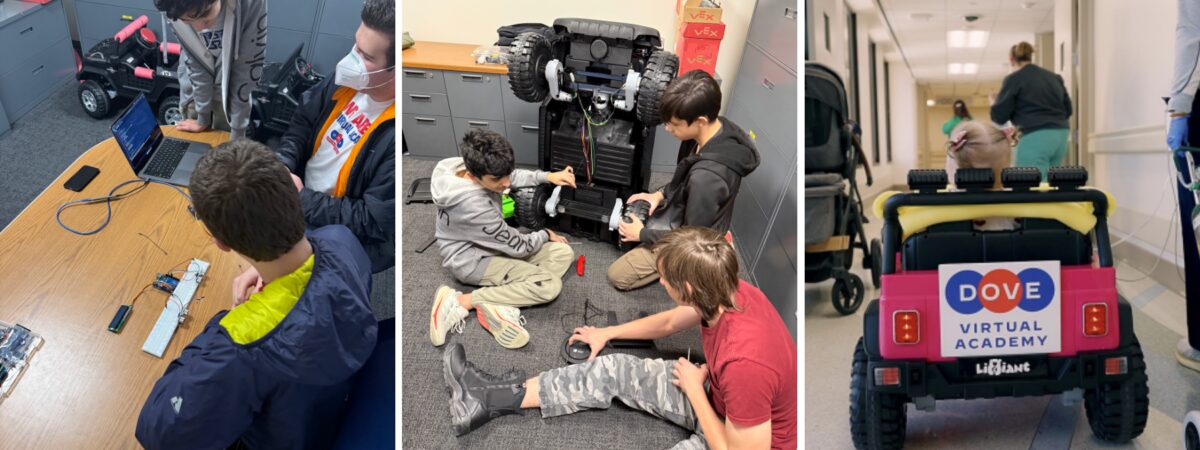


When people think about engineering, they often picture robots, coding, or complex machines. My students thought the same thing.
When we began the Ciena Solutions Challenge at Dove Virtual Academy, they expected to build something exciting. They imagined designing, testing, and solving technical problems. What they didn’t expect was that the most important lesson would have nothing to do with technology.
It began with empathy.
Our challenge was to redesign a battery-powered ride-on toy car for a young girl with mobility challenges. Like many ride-on toys, the original vehicle required the driver to press a foot pedal to move. For most children, that’s something they never have to think about. For this little girl, it meant she couldn’t experience the simple joy and independence of driving a toy car on her own.
Before anyone picked up a tool, I asked my students one simple question: “Who are we building this for?”
That question changed everything.
Instead of immediately focusing on engineering, students wanted to understand the child and her family’s needs. They researched adaptive mobility devices, learned about accessibility, and began thinking beyond the mechanics of the project. They realized they weren’t simply modifying a toy car; They were creating an opportunity for a child to experience something many of us take for granted.
The entire design really starts with understanding what that specific child needs and just building around those needs. – Sara Mehrabi
Over the next several weeks, our classroom transformed into an engineering design studio. Students researched solutions, brainstormed ideas, tested prototypes, rewired electrical systems, modified the controls, and worked through countless challenges together. Some ideas failed. Others required multiple redesigns. Every obstacle pushed them to think more creatively, collaborate more effectively, and persevere until they found a better solution.
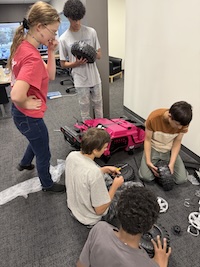
Students began by exploring the vehicle and brainstorming how to redesign it to meet the unique needs of a child with mobility challenges.
As they worked, I noticed something remarkable.
Our conversations gradually shifted away from circuits and wiring and toward the little girl who would eventually receive the car.
Students asked questions like, “Will she be able to drive by herself?” “What will her reaction be?” and “I hope she loves it.”
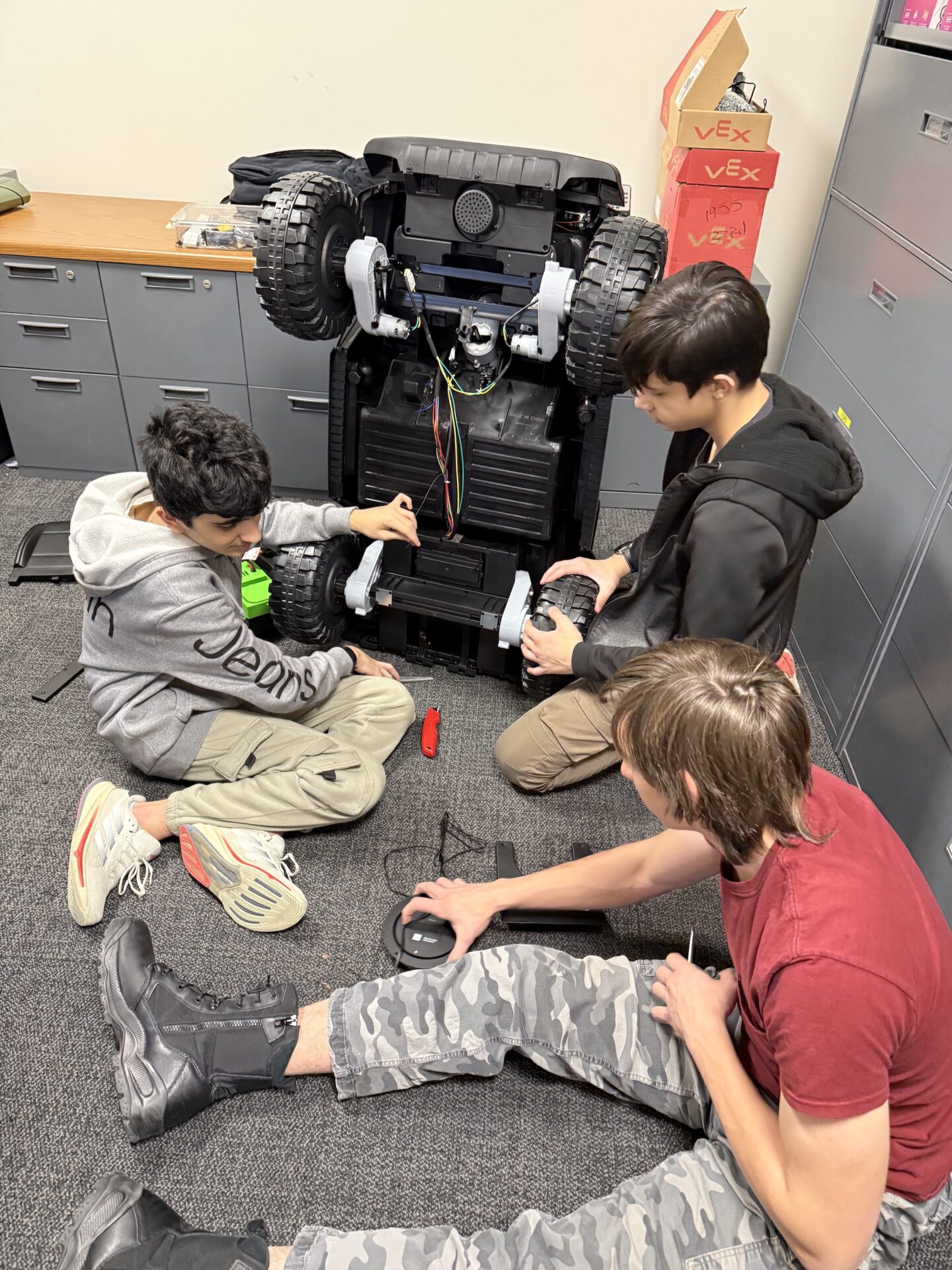
Collaboration, perseverance, and problem solving guided every step of the engineering process as students tested ideas and refined their design.
Without realizing it, they had begun designing with empathy instead of simply engineering a solution.
I think our students realized that engineering isn’t always about creating something complicated or inventing something completely new. Sometimes it’s simply just using the skills they already have and just thinking outside of the box and solving a real problem for someone. What seemed like a small modification to them could make a huge difference for a child and even for that child’s parents. – Sara Mehrabi
The project also became a meaningful example of our School of Character values in action. Students practiced compassion, collaboration, perseverance, responsibility, and service while applying authentic STEM skills. They discovered that innovation is not only about creating new technology; it is about using your knowledge and creativity to improve someone else’s life.
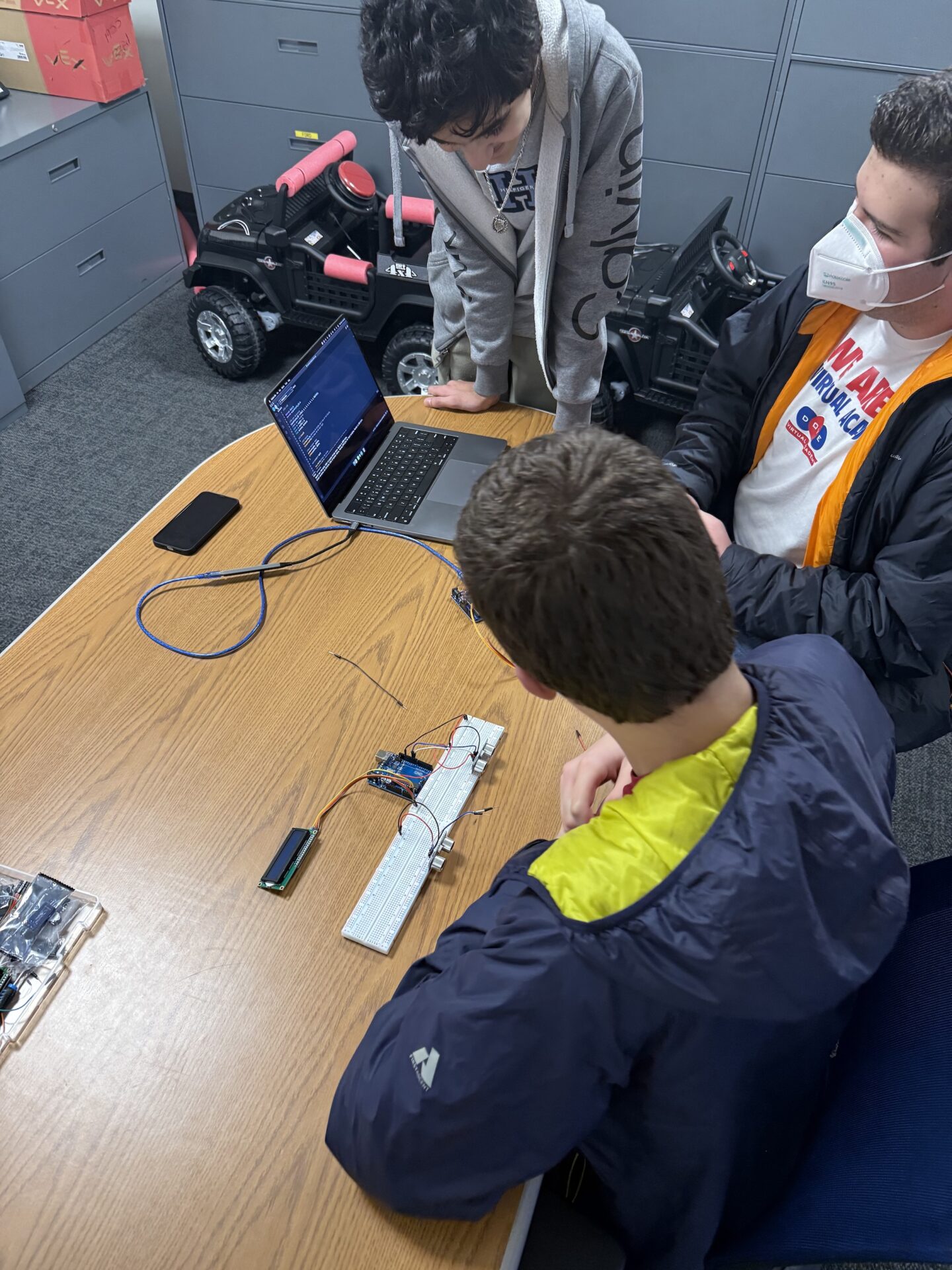
Students researched, programmed, and tested adaptive technologies, applying classroom STEM concepts to solve a real-world challenge.
The most unforgettable moment came when we delivered the customized vehicle to the child and her family at Oklahoma Children’s Hospital.
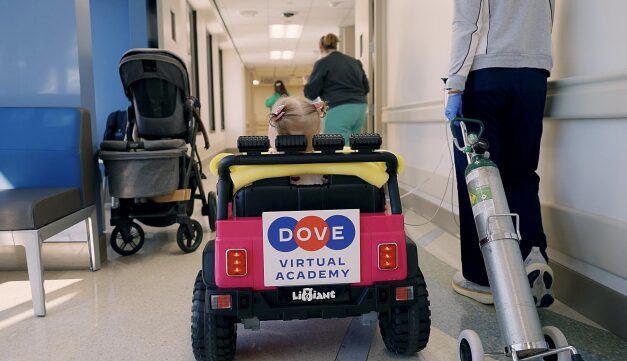
The completed ride-on vehicle gave a young girl the opportunity to experience the joy, freedom, and independence of driving on her own.
Watching her smile as she experienced the freedom of driving independently for the first time was something none of us will ever forget. But what impacted my students even more was seeing her mother’s emotional reaction. For our students, it had been weeks of research, brainstorming, problem solving, and engineering. For this family, it was the fulfillment of a dream they had hoped for but never thought possible.
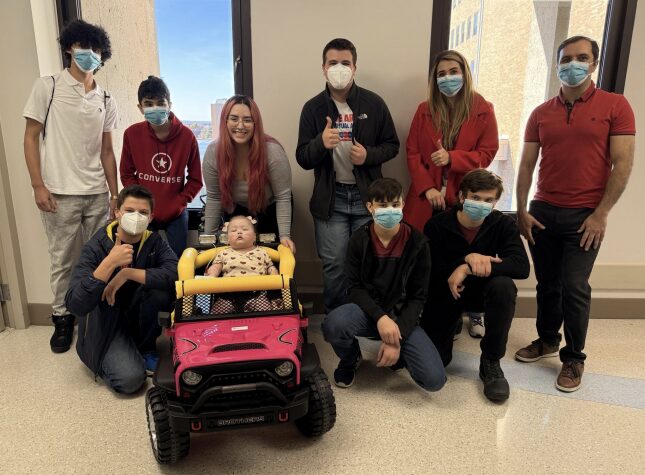
The most meaningful part of the project wasn’t finishing the car; it was seeing the joy it brought to a child and her family.
On the drive home, one of my students said, “I never knew something this small could mean so much to someone.”
That simple comment captured everything I hoped they would learn.
My students already knew how to research, collaborate, and solve problems; this project taught them why those skills matter. They discovered that what they learn in school can extend far beyond the classroom. Their knowledge can strengthen communities, solve real problems, and create opportunities for people who need them most.
As educators, we spend a great deal of time helping students prepare for future careers. Projects like this remind us that we are also preparing them to become compassionate leaders and thoughtful problem-solvers who recognize opportunities to serve others.
One of the greatest lessons from this experience is that meaningful innovation doesn’t always begin with a groundbreaking invention. Sometimes it begins by looking at an everyday object through someone else’s eyes and asking, “How can we make this possible for everyone?”
When we give students authentic opportunities to use their talents in service of others, we aren’t just teaching STEM; we are helping them discover that their ideas, creativity, and kindness have the power to change someone’s world.

