Picture two high school history classrooms that are both teaching the same discussion lesson. In one room, the teacher dominates the airtime by continually adding commentary, steering the conversation, and guiding students to specific takeaways. In the other, the teacher intentionally steps back as a facilitator, giving students space to talk longer, build directly on each other’s ideas, and engage in genuine peer-to-peer dialogue.
The second room sounds ideal, right? Most history educators value hearing student voices and aspire to build classrooms rich in active peer interaction, but finding the time, structure, and practical strategies to foster meaningful dialogue amid a dense curriculum can feel daunting. That’s where the Deeper Discussions in World History toolkit comes in.
A Partnership Between Researchers and Teachers
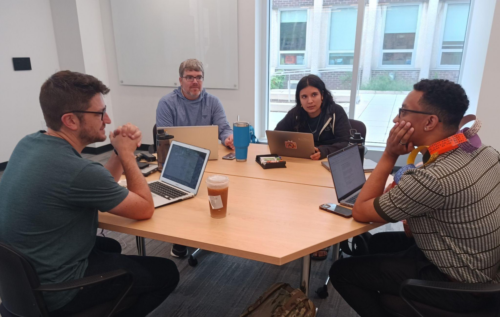
This toolkit was designed through a collaboration between Digital Promise, Dr. Abby Reisman (University of Pennsylvania Graduate School of Education), and OER Project, along with a dozen high school world history educators working in racially, linguistically, and economically diverse Title I public high schools across eight states (California, Kentucky, Nevada, New Jersey, New York, Pennsylvania, Virginia, and Wisconsin).
The project began with listening. Before the first design workshop, our design teachers interviewed their students and early-career colleagues to identify the real barriers to meaningful classroom discussions. Students cited a fear of making mistakes and a lack of clear expectations as their primary blockers. They asked for more support in collecting their thoughts and gathering evidence before discussions, and said that when teachers asked engaging, open-ended questions and provided positive reinforcement, they were more likely to participate.
Meanwhile, teachers noted that their pre-service training didn’t prepare them for facilitating discussions. They needed strategies for setting students up for success, knowing how to respond in the moment when a discussion didn’t go as planned, and advice on how to assess discussions.
With this feedback as a starting point, the team got to work. Design teachers began working with researchers to create lessons with embedded scaffolds. Teachers tested the scaffolds in their classrooms and brought their practical experiences and student feedback back for team reflection in iterative rounds over the course of three semesters.
During the final design workshop, teachers reflected on what an ongoing learning journey looks like for educators trying to change their practice around discussion. Their takeaways shaped the final product: teachers need to ground their development by considering their facilitation mindset, need practical support for executing a discussion lesson step-by-step, and finally, need tools for ongoing reflection. After all, there is no finish line. Every new school year brings new students and new challenges.