
Playbook
Portrait of a Graduate Playbook
Audiences
Related Programs
Learning Environments
Portrait of a Graduate Playbook
At Digital Promise, we have been working with school districts and systems across the country that are engaging in rigorous and robust practices to transform their schools into places where their Portrait of a Graduate skills and dispositions are an integral part of how teachers design and implement learning experiences and how all students experience Powerful Learning daily. From our thought partnership with these school districts, their authentic reflections on problems of practice, our landscape scans on integrated learning pathways and future-ready skills assessment strategies, and research projects, we have identified four components of successful Portraits of a Graduate programs. For each component, we describe what is involved, highlight a district story, and provide an interactive thinking sheet and protocol to support your district to make your Portrait of a Graduate come alive.
Visioning and Planning for Portrait of a Graduate
Many districts begin their Portrait journey by engaging their students, staff, families, and communities in determining the skills and dispositions most valued for their town, city, or county. This important first step usually results in a comprehensive list of future-ready skills and competencies that reflect the vision for not just what a graduate should know, but what transferable and durable skills they should have to thrive in life and careers. This is an important step that takes time and commitment. Working with educators, students, and community members helps to build a shared understanding of the competencies chosen for the Portrait and is an opportunity to forge relationships among staff, students, and the community. Yet, Portrait work cannot stop here.
The next phase of vision and planning for Portrait of a Graduate takes two essential steps: (1) getting clear on what the competencies look and sound like in classrooms and (2) aligning the vision of the Portrait of a Graduate with a district’s mission, strategy, and learning framework. Without gaining clarity about the competencies on a granular level and how the Portrait’s competencies align with district initiatives, the Portrait will just be that—a portrait hanging on the wall. Read about how North Salem Central School District (New York) aligned their Portrait of a Graduate to their instructional framework and built in systems to ensure their Portrait was a guiding force for their strategic vision.
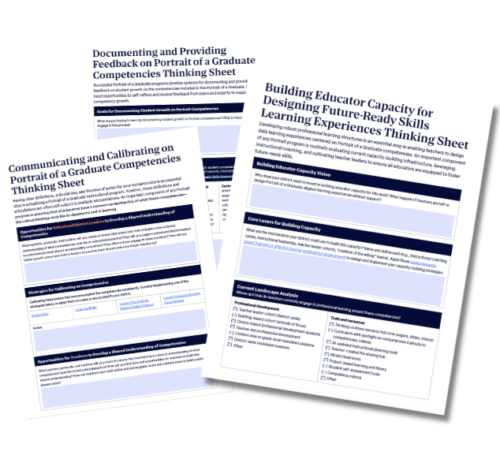
An important component of any Portrait program is auditing existing practices, connecting new competencies to ongoing initiatives, and establishing an actionable framework that supports future communication, professional learning, and assessment. Digital Promise developed this Visioning and Planning for your Portrait of a Graduate Thinking Sheet to support districts working through this important step. In it, you will find prompts to guide you through setting a course for making your Portrait of a Graduate an integrated part of teaching and learning in your district. Digital Promise also designed a protocol to support visioning and planning for your Portrait of a Graduate: Vision Quest creates a shared understanding about how the Portrait of a Graduate work connects to initiatives across a district, building ownership and commitment across teams and departments.
Communicating and Calibrating on Future-Ready Skills
Having clear definitions, articulations, and theories of action for your competencies is an essential step in actualizing a Portrait of a Graduate instructional program. However, these definitions and articulations are often still subject to multiple interpretations. A crucial component of any Portrait program is ensuring that all educators have a common understanding of what critical thinking or other competencies look like in classrooms and in learning. Read about how Norwalk Public Schools (Connecticut) built out tools and protocols to create a specific, shared understanding of what each of their Portrait competencies looks like in classrooms.
To support your district in developing similar resources and processes to ensure teachers, school leaders, and district leaders agree on what the competencies mean and which student artifacts do and do not demonstrate your Portrait competencies, use Digital Promise’s Communicating and Calibrating on Portrait of a Graduate Competencies Thinking Sheet. This interactive guide walks you through planning for opportunities to build a shared understanding of your Portrait competencies. Digital Promise also adapted a protocol that can be used with teachers or administrators to analyze student work through the lens of Portrait competencies. This Artifact Box Protocol creates opportunities to analyze student work as evidence of Portrait competencies, prompting needed dialogue and discussion about what Portrait competencies look like in practice.
Building Educator Capacity for Designing Future-Ready Skills Learning Experiences
Developing robust professional learning structures is an essential step in enabling teachers to design daily learning experiences centered on Portrait of a Graduate competencies. When implementing any Portrait program, it is important to evaluate current capacity-building infrastructure, leveraging instructional coaching, and cultivating teacher-leaders to ensure all educators are equipped to foster future-ready skills. Read about how Ephrata Area School District (Pennsylvania) leveraged a cohort of teacher-leaders to shift professional learning in their district and supported teachers in designing student-centered classrooms that foster future-ready skills.

Being strategic about designing learning opportunities for teachers that result in instructional practices that provide students with opportunities to develop and practice Portrait competencies requires two steps. First, conduct a landscape scan of current professional learning opportunities. Then, draw from professional learning research for effective best practices. Use Digital Promise’s Building Educator Capacity for Designing Future-Ready Skills Learning Experiences Thinking Sheet to support your district in designing robust professional learning for staff that centers your Portrait of a Graduate. Or, try out the Force Multiplier lesson design routine with administrators and students to translate your Portrait competency definitions into explicit and specific learning opportunities to support student development of future-ready skills.
Documenting and Providing Feedback on Future-Ready Skills
Successful Portrait of a Graduate programs develop systems for documenting and providing feedback about student growth on the competencies included in the Portrait. Students need opportunities to self-reflect and receive feedback from peers and experts to support their competency growth. The community also wants to understand how well schools are meeting their commitment to the Portrait of a Graduate competencies and are looking for windows into the school experience. An integrated, meaningful, and systematic approach to support students to self-reflect, notice growth, and receive feedback on their future-ready skill competencies can both deepen students’ future-ready skill growth and provide your district with data, artifacts, and stories that can be communicated to your community.

For examples of what this looks like in practice, read about how districts across the country are developing assessment systems for their Portrait of a Graduate programs in Portraits in Progress: Emerging Future-Ready Skills Assessment Strategies. Learn what teachers and students think about Norwalk Public Schools’ use of student portfolios to notice and recognize student future-ready skills growth. To support your districts’ Portrait assessment efforts, use Digital Promise’s Documenting and Providing Feedback on Portrait of a Graduate Competencies Thinking Sheet. This guide will help you get clear on your goal for assessing Portrait competencies, summarize common approaches, and provide suggestions for implementing the assessment approach you choose. Ready to try out a simple strategy for supporting students to notice their own growth, receive feedback, and self-reflect? Check out Digital Promise’s Pause, Collect, Reflect Protocol for use with your Portrait of a Graduate program.
As schools are being asked to address the prevalence of emerging technologies, a deepening mental health crisis in young people, and a pressing need to prepare students for an uncertain future, implementing Portrait of a Graduate programs rooted in Powerful Learning provides a path for creating educational systems where students can thrive. We have seen classrooms that foster future-ready skills such as critical and creative thinking, communication, and collaboration while giving students a sense of purpose, agency, connection, and curiosity. Creating a vision of how a district’s Portrait of a Graduate aligns with district priorities, communicating and calibrating on future-ready skills, building educators’ capacity for designing future-ready skills learning experiences, and creating a system to document and provide feedback on students’ future-ready skills are what will ensure that your graduates can live up to the aspirations in your Portrait of a Graduate.