
Integrating Science with Mathematics and Engineering: Linking Home and School Learning for All Young Learners
Part of Learning Sciences Research
Audiences
Learning Environments
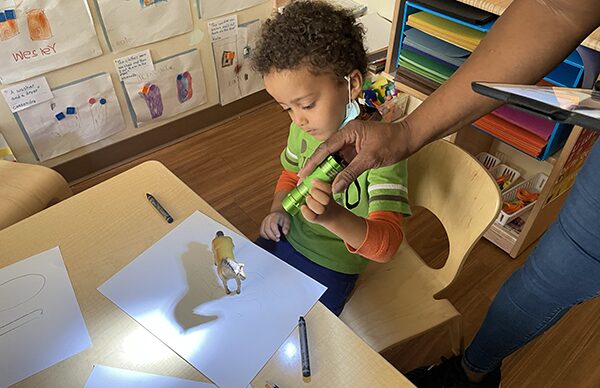
With National Science Foundation funding, we designed science, technology, engineering, and mathematics (STEM) activities for early learners (ages 3-5). Our multidisciplinary team included researchers, developers of curricula, media designers, preschool educators, and parents/caregivers.
Stakeholders were directly and actively involved in the development and iterative pilot testing of digital and hands-on activities. This helped ensure that design decisions were evidence-based, took into account the interests of young children and families, linked home and school learning, and addressed the needs and strengths of dual language learners.
Across the country, our youngest learners continue to have few opportunities to engage meaningfully in STEM disciplines. This is especially true in programs serving children from low-income communities, where resources are scarce.
This project aimed to investigate the integration of science with mathematics and engineering and develop resources that provide preschool children with integrated STEM learning experiences. It also investigated the connection between home and school learning and developed resources that strengthen children’s experiences at school and home. This included investigating the needs of, and designing for, dual language learners who represent a large (and growing) proportion of the population served by public preschool programs.
Using design-based research (DBR), the team:
- Developed learning blueprints to guide the design of classroom and family learning resources.
- Co-designed resources with teachers and parents from underserved communities.
- Conducted a series of formative pilot studies with partner teachers and parents.
- Conducted a quasi-experimental field study in preschool classrooms and homes to examine both implementation and learning outcomes.