


I strongly believe that teachers need to ensure that all voices are heard and that all students have a chance to participate fully in the learning process. This philosophy guides me as a teacher and enables me to negotiate learning with my learners and make them important stakeholders in the teaching and learning process. It is also an excellent way to teach them the importance of teamwork, cooperation, tolerance, open-mindedness, and inclusion. It was through the process of negotiating learning with my learners that one of them suggested the idea of extending lessons beyond the traditional classroom.
An example of how student input has shaped my lesson planning are the activities we carried out in the teaching and learning of a poem titled “Caged Bird” by American writer and activist Maya Angelou. This poem is one of the recommended poems that Literature-In-English students in Ghanaian Senior High Schools are required to study.
Specifically, the lesson focused on exploring the theme of discrimination in “Caged Bird.” The poem describes two birds: a caged bird and a free bird. While the caged bird has its feet tied, its wings clipped and is put in a cage, the free bird has freedom and is able to explore and catch fat worms. The caged bird is an extended metaphor for the Black community in the United States and depicts the plights of Black people and the challenges they face. The free bird on the other hand personifies another race of people who are privileged and have many opportunities at their disposal.
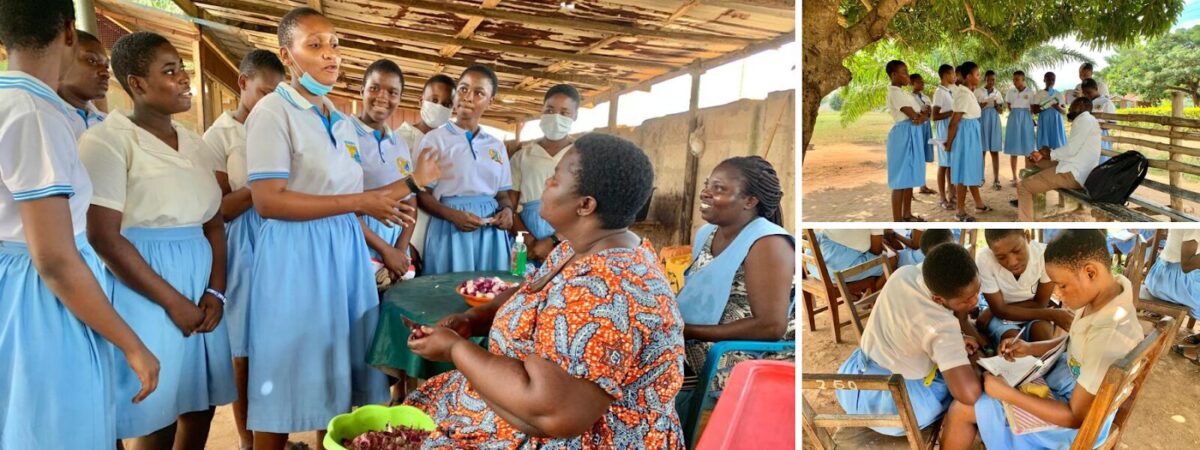
When one student brought up the idea of extending the lesson beyond the classroom, the whole class brainstormed and finally settled on going into the local community to engage and interact with people to learn about instances of discrimination experienced in the community.
“When you are able to connect the projects to real-world events, the students are fired up, they become motivated, they become interested, and they are encouraged to take charge or take ownership of the project. And all you need to do as a teacher is to guide them by providing constructive feedback. I made my students aware that, though they are the ones in charge, I was always available for them to give them the necessary support whenever they needed my expertise and advice as a teacher.”
I teach at an all girls school located in a small pepper and okra farming community called Agbakope in the southern part of Ghana. Members of this community are mostly farmers, petty traders, and artisans, with a blend of public sector workers like nurses and teachers. This community can be described as a melting pot that provides a delightful blend of the culture of the indigenous people and the cultures of other settlers from various parts of Ghana. This community therefore provides a unique opportunity for students to learn about environmental and social issues in a real-life context.
After obtaining permission from the school authorities, my students and I prepared for the community engagement aspect of the lesson. First, students put themselves into groups and gave each group a name. I provided them with an interview guide which contained sample interview questions they could use while interacting with community members in an attempt to uncover instances of discrimination experienced in the community. Based on my sample, each group developed their own interview questions and we entered the community armed with the questions.
I create a balance between guiding students and allowing them to take ownership of the project by providing them with meaningful choices. For instance, when we were ready to go into the community for the interviews, I provided them with an interview guide, and based on the interview guide, they developed their own interview guides. I also, with their help, established clear objectives. Establishing clear objectives can help students take ownership of the project while giving the teacher the opportunity to just be a guide.”
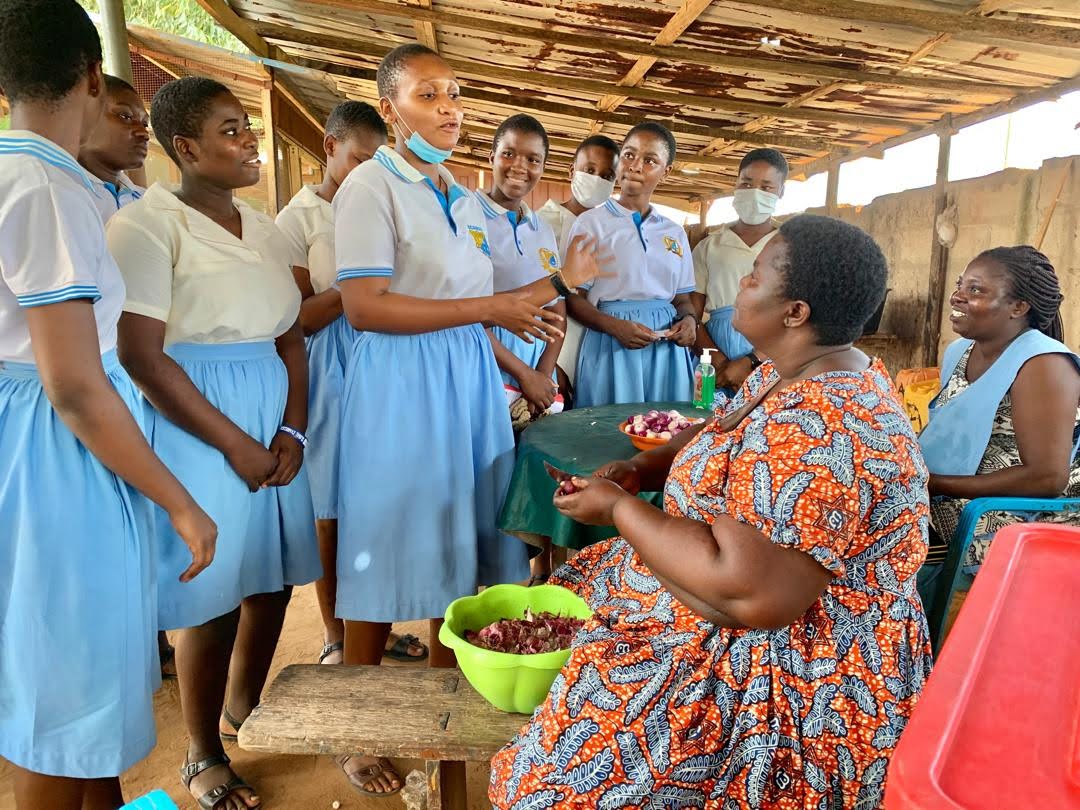
Students interview community members to learn about their experiences.
While in the community, l gave learners the opportunity to select the people they interviewed without any interference. Upon returning to school, the students worked in teams to collate the information they had obtained from the community engagement activity. Some of the groups explored their creativity by using various forms of visual representation to illustrate the ideas derived from engaging with different people.
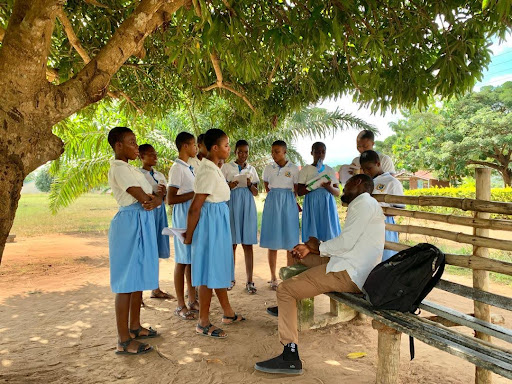
Students interview community members to learn about their experiences.
In the next step, each student group developed written reports and gave an oral presentation on their findings and the relationship between discrimination as explored in the poem “Caged Bird” and instances of discrimination experienced in the community of Agbakope.
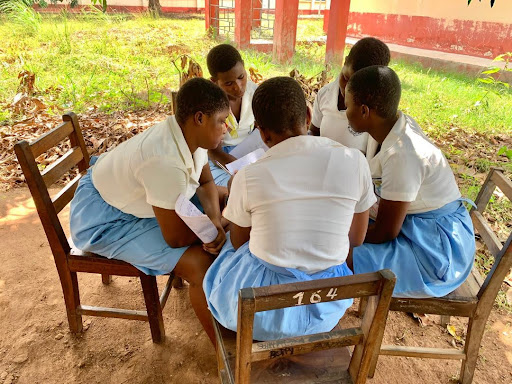
Students gather to collate their findings from their community interviews.
The community engagement activity enabled my learners to fully understand the theme of discrimination as tackled in a poem with a typical American setting within the context of the events happening in their own local community. They were able to link the content of the poem to the experiences of people in their own community thereby helping them understand the poem more. This demonstrates a foundational concept of learning from the known to the unknown and the benefits of contextualizing learning. In this example, a poem that was written in the United States, addressing a typical American theme can be understood and re-interpreted in the context of students’ own realities in another location.
I was able to observe clear evidence of students’ understanding of the poem and the theme of discrimination through the connections students made between the poem and events happening around them. In the process of engaging with community members and working with each other, students developed listening skills. Their speaking skills also improved greatly. Even more reserved students gleefully took part in the community interviews and immersed themselves in working with their various groups to put together their oral presentations. These presentations offered them the opportunity to practice speaking skills and helped them boost their confidence level as well. Beyond developing their listening and speaking skills, students improved their writing abilities and acquired new vocabularies and an excitement about learning new words.
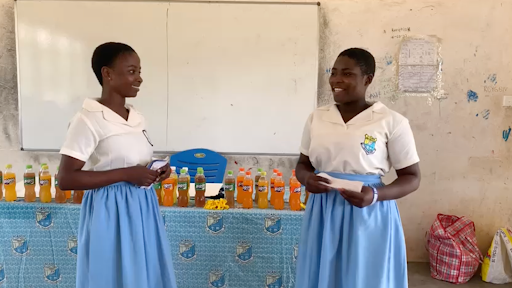
Students present their research to peers at their school.
My students not only built their English proficiency, they also acquired 21st century skills such as teamwork, tolerance, public speaking, technology literacy, media literacy, cross-cultural communication, creativity, collaboration, critical thinking, information literacy, productivity, and global citizenship—all skills they need for future studies and careers.
“When we give them the opportunity, we can help them nurture the talents they have, and so the students don’t only have to be dependent on the teacher. They are full of wisdom. They are full of solutions. The only reason it appears students do not have solutions to problems is because they are not given the chance to prove themselves.”
The “Caged Bird” poetry lesson, combined with community engagement, exposed students to the larger world around them, thus aiding them as they continue to adapt and thrive in environments in which they find themselves beyond high school.
Community engagement projects aren’t just useful for English language learning. They can be adapted in schools and communities around the world, regardless of the subject area. Below are four pieces of advice for teachers who want to incorporate community engagement or service learning into their lessons:

