Our reports on topics of interest—including learner variability, maker education, and family engagement—put us in conversation with policymakers and thought leaders on the issues facing education leaders today.
To access our full archive of publications, visit the Digital Promise Resource Repository.
Discover a selection of resources from across Digital Promise initiatives.
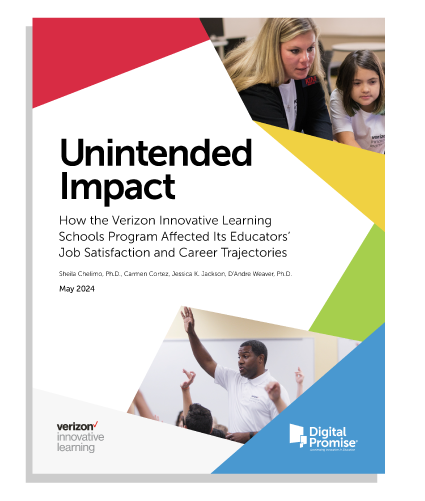
Unintended Impact: How the Verizon Innovative Learning Schools Program Affected Its Educators’ Job Satisfaction and Career Trajectories
While the Verizon Innovative Learning Schools has produced its expected results, including enhanced student engagement and teachers’ increased technology proficiency, this white paper explores the unintended impacts of the program—increased opportunities for career advancement and improved job satisfaction among teachers and coaches.
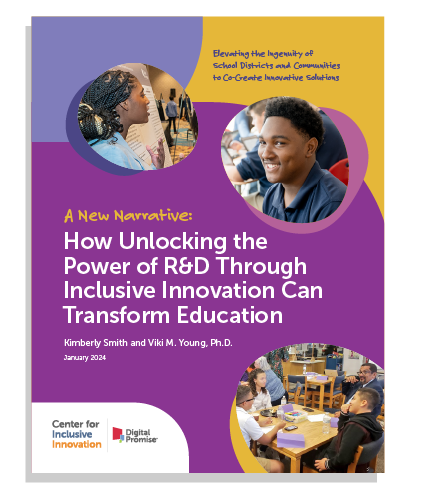
A New Narrative: How Unlocking the Power of R&D Through Inclusive Innovation Can Transform Education
Across the country, district-community teams are tackling educational challenges with Inclusive Innovation. This publication shares stories, solutions, outcomes, and learnings from years of deep collaboration with students, parents, teachers, and district leaders—and discusses how the Center for Inclusive Innovation, anchored in its core tenets, is building upon this work.
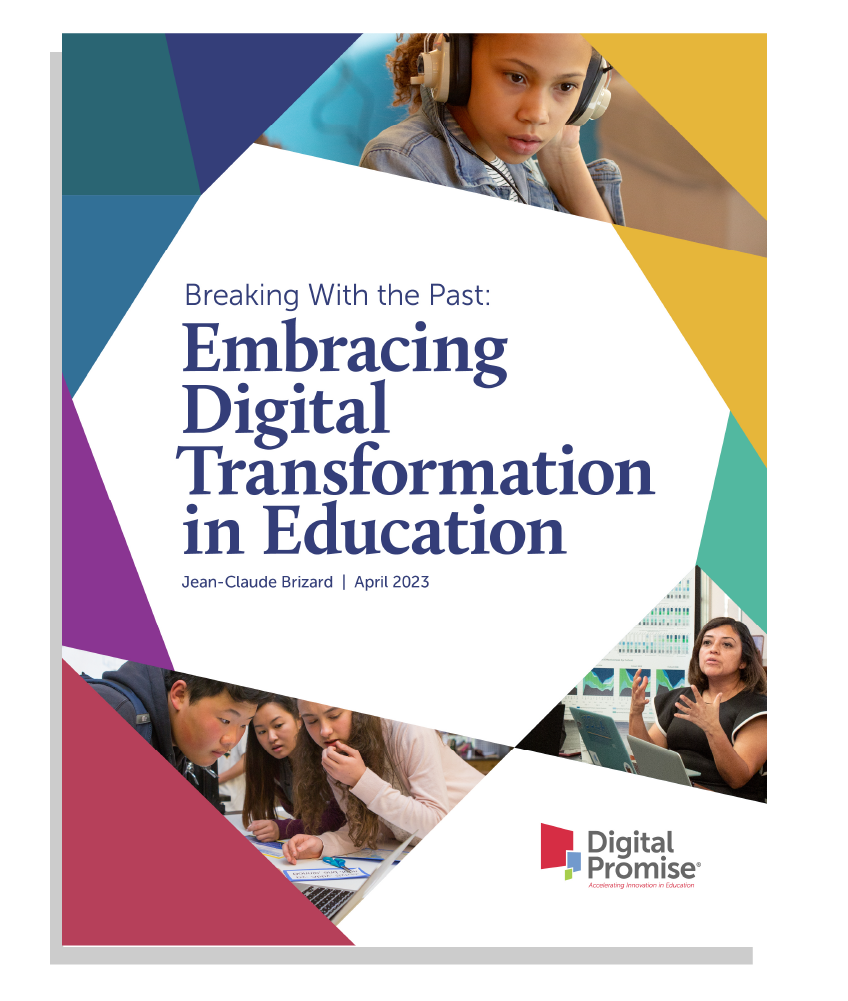
Breaking With the Past: Embracing Digital Transformation in Education
Digital transformation can pull K-12 education into new learner-centered constructs that accelerate learning, address inequities, and help close historic learning gaps. This report examines how the traditional one-size-fits-all approach to teaching and learning compares to more learner-centered, personalized frameworks; why we need to transition to them at scale; and how digital technologies can enable this.
Partnering to Promote Equity and Digital Learning
This report describes the key features of research-practice partnerships and the design choices made toward equity and digital learning, after a 15-month collaboration between Digital Promise, three Every Learner Everywhere partner organizations, and five colleges.
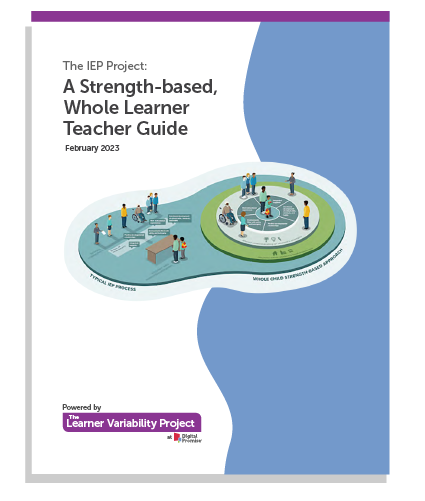
The IEP Project: A Strength-based, Whole Learner Teacher Guide
Individual Education Programs (IEPs) are the entry point to the design of teaching and learning for students with disabilities. This guidebook provides teachers with reflective questions, a sample response bank, strategies from the research-based Learner Variability Navigator, and other resources to write strength-based IEPs.
Delivering on the Promise of Digital Equity
The historic $65 billion Infrastructure Investment and Jobs Act represents a significant federal investment in advancing digital equity and inclusion, and an opportunity to make lasting change in communities across the country. This white paper proposes solutions to strategically use that funding to advance digital equity and inclusion.
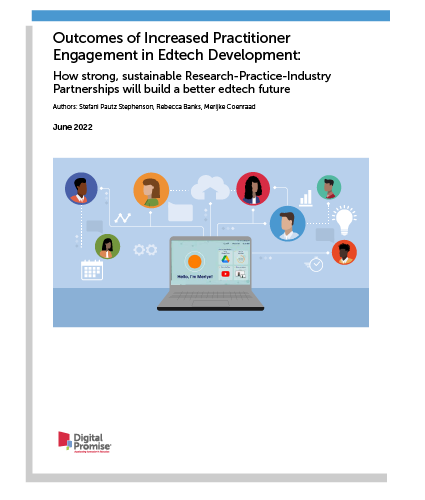
Outcomes of Increased Practitioner Engagement in Edtech Development: How Strong, Sustainable Research-Practice-Industry Partnerships will Build a Better Edtech Future
Digital Promise partnered with edtech startup Merlyn Mind and the University of California, Irvine in a research-practice-industry partnership. This white paper describes our engagement and suggests that this model can yield positive impacts and new learning for all participants.
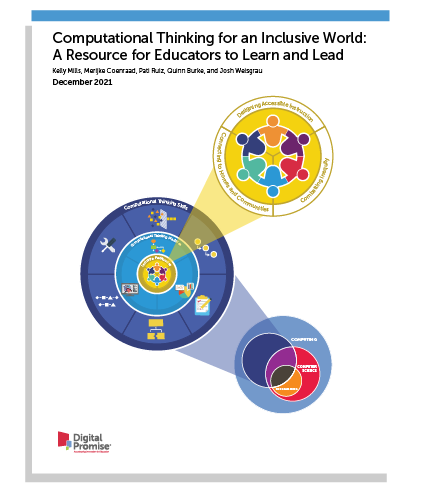
Computational Thinking for an Inclusive World: A Resource for Educators to Learn and Lead
This report issues two calls to action for educators to design inclusive computing learning opportunities for students: (1) integrate computational thinking into disciplinary learning, and (2) build capacity for computational thinking with shared leadership and professional learning.
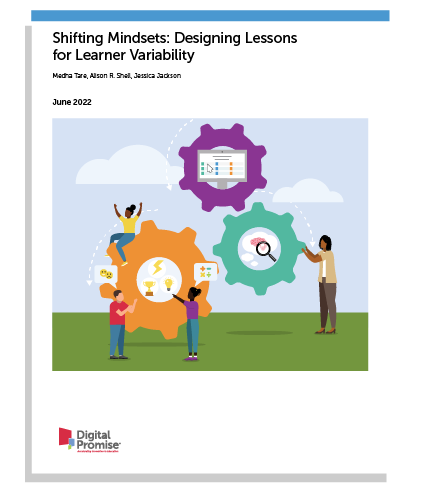
Shifting Mindsets: Designing Lessons for Learner Variability
The Learner Variability Project engaged in a partnership with the national nonprofit DonorsChoose to discover if teachers across the country could use the Learner Variability Navigator to find and put in place research-based strategies that address the whole learner.
Let's connect and we'll send you the latest from Digital Promise.

