

For over a decade, micro-credentials have impacted the credential ecosystem, shifting how learners receive recognition for specific skills. In January 2020, Digital Promise began conducting annual scans of micro-credential policies in the United States. These updates to the Educator Micro-credential Policy Map help inform how school districts, higher education institutions, and states throughout the United States engage with micro-credentials.
To capture the growth of micro-credentials in the credential ecosystem, the following classifications are used:
There has been notable growth in district-level initiatives implementing micro-credentials. The most recent update of the Micro-credential Policy Map identified four additional district initiatives using micro-credentials for teacher professional development or K-12 students.
Our review of state-level micro-credential policies identified three newly established policies or guidelines. These measures encompass a range of approaches, including the integration of micro-credentials into educator licensure and re-licensure processes, the awarding of micro-credentials, and the formal recognition of demonstrated competencies.
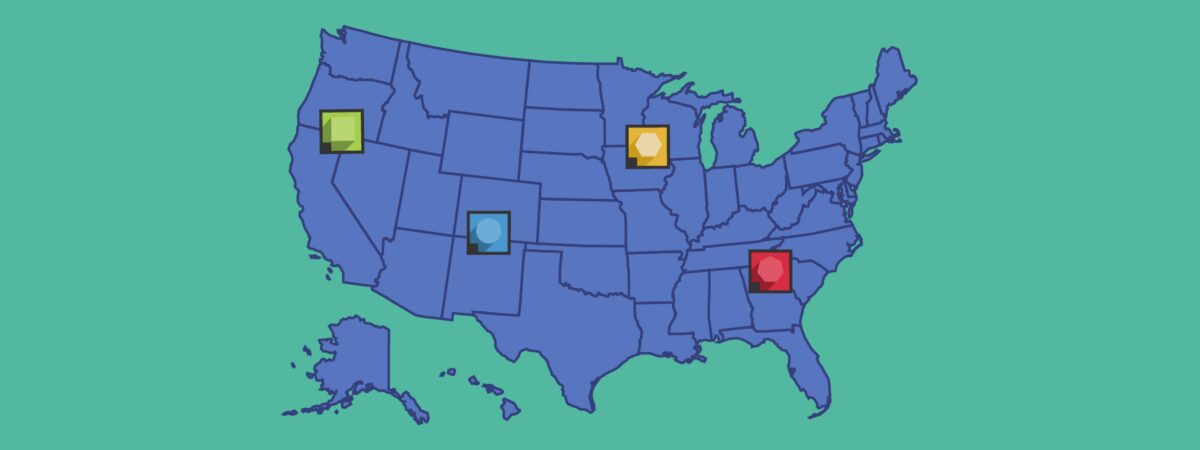
To date, we have identified 48 states, plus Washington, DC, with state-level policies supporting some level of micro-credential implementation.
In our review of higher education-level micro-credential initiatives, we identified one higher education institution that is newly integrating micro-credentials. These efforts span a range of applications, including integration into general education courses, offerings for current students and the workforce, and education-focused micro-credentials.
To date, we have identified 50 states, plus the District of Columbia, with higher education institutions offering micro-credential implementation.
In the five years we have conducted the educator policy scan, we have recorded 35 states with district-level policies supporting some level of micro-credential implementation, 48 states, plus the District of Columbia, with state-level policies supporting some level of micro-credential implementation, and 50 states, plus the District of Columbia, with higher education-level policies supporting some level of micro-credential implementation.
Explore the updated Educator Micro-credential Policy Map. Let us know what stories of micro-credential engagement are taking place in your community, or what higher education institutions are providing micro-credentials.
Note: While the policy map is as comprehensive as possible, some policies may have changed since the last annual update. The policy map provides up to five findings per level.
Digital Promise has been a pioneer in competency-based micro-credentials and has more than 10 years of experience in supporting organizations with their micro-credentialing needs. Check out this eBook, The Role of Micro-Credentials in Lifelong Learning and Development: Empowering Learners, Empowering Organizations, a comprehensive resource accessible to all interested in understanding micro-credentials. If you are interested in learning more about Digital Promise’s micro-credential services, please contact us at microcredentials@digitalpromise.org.

