


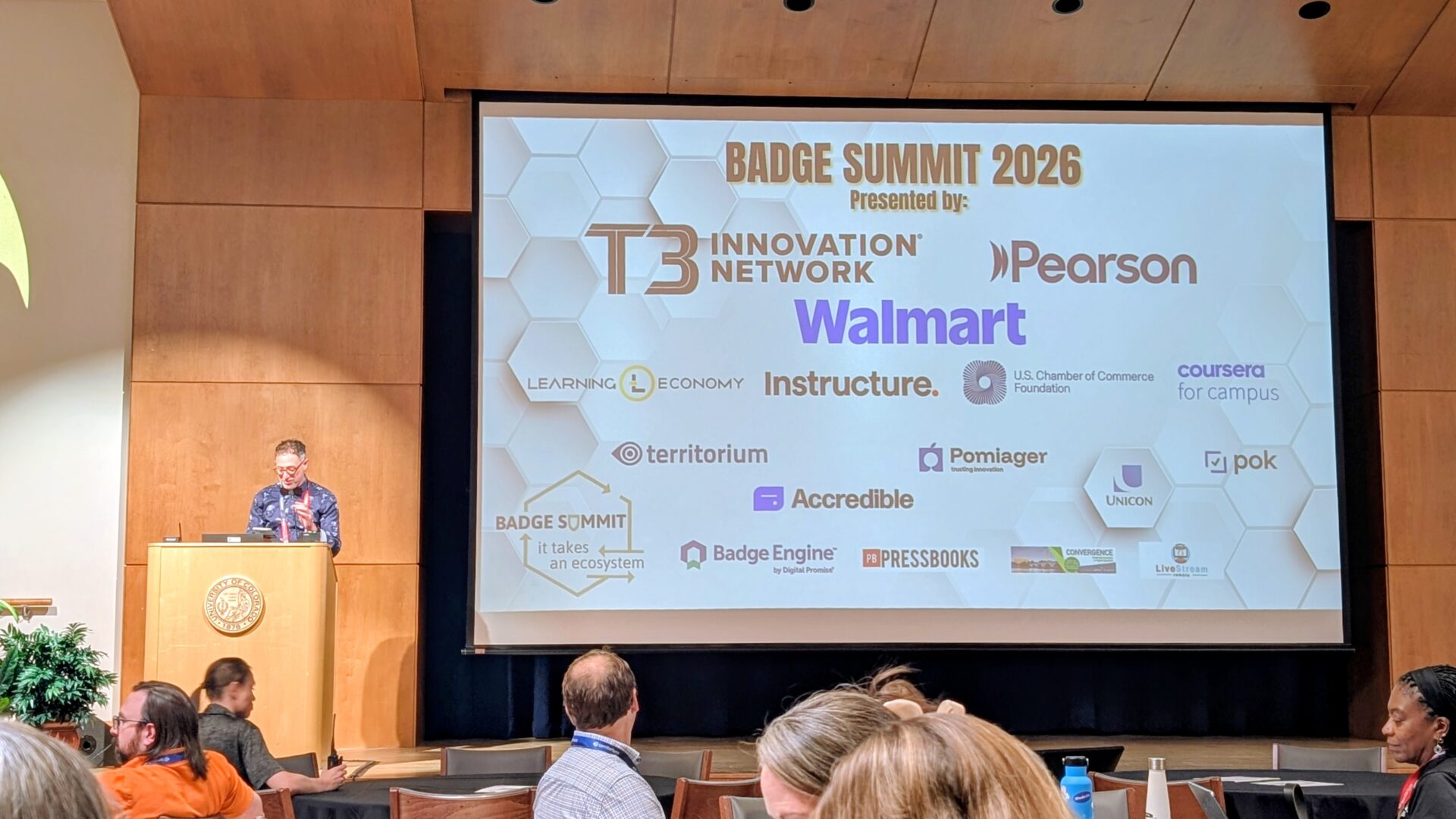
Badge Summit 2026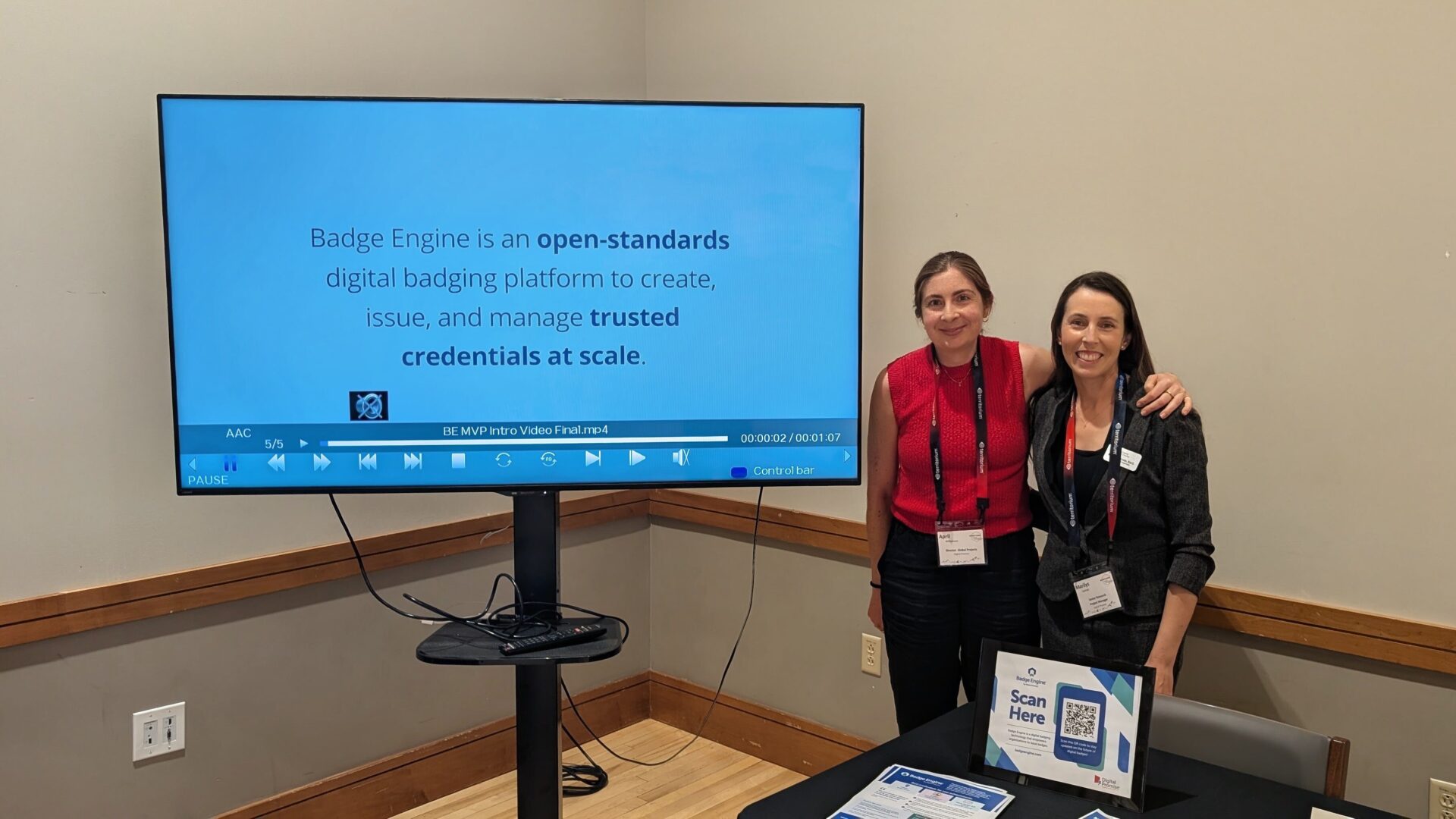 convened leaders across education, workforce, industry, and policy to address a pressing question: How do we build digital credentials that are trusted and valued enough to expand opportunity, while helping learners tell meaningful, verifiable stories about their skills and achievements?
The answers we heard pointed less toward technology and more toward the work surrounding it—building trust, shared language, and learner agency. Whether you joined us in Boulder, Colorado, or missed the summit this year, here’s what the field is signaling and what it means for your work.
We debuted this video at Badge Summit to show what it looks like when organizations issue trusted, verifiable credentials that learners control. Badge Engine helps issuers create and manage digital badging programs aligned to global standards, so credentials are portable and recognizable across institutions and industries.
The conversations at Badge Summit highlighted three foundational principles for building impactful credential programs:
Digital badges have the greatest impact when learners can use them to communicate their skills, experiences, and aspirations—not simply share a digital certificate.
Does your program prepare learners to talk about what they earned? Embedding structured opportunities for reflection and sharing makes credentials more meaningful to learners and more legible to employers and institutions.
That principle anchors Digital Promise’s competency-based micro-credential framework, where every micro-credential requires authentic evidence and learner reflection, rather than completion or seat time. As Badge Summit reinforced, learner storytelling and evidence now carry as much weight as the credentials themselves.
Across sessions, one theme kept resurfacing: Digital credentials have value only because people trust what they represent. That trust isn’t created by technology alone. It comes from transparent assessment; high-quality evidence; and shared understanding among learners, issuers, institutions, and employers.
Before expanding your program, evaluate whether stakeholders truly understand and believe in your credentials. Prioritize quality assurance, competency alignment, and clear communication over volume. Issuing more badges without trust just creates more noise in a crowded market.
During Digital Promise’s table talks on implementing micro-credentials in K-12 education, participants consistently named trust, stakeholder buy-in, and shared language as bigger challenges than technology. Successful adoption depends on building alignment and confidence across the entire ecosystem, not just selecting the right platform.
Terminology matters. Badge, micro-credential, and competency mean different things to different audiences, creating confusion that slows adoption.
 Don’t assume your audiences share a common vocabulary. Define your terms early, use them consistently, and frame credentials around outcomes your stakeholders already care about—like recognizing skills, expanding opportunity, and improving hiring. The goal isn’t to teach everyone your terminology; it’s to connect your work to problems they’re already trying to solve.
Digital Promise’s research and implementation partnerships consistently show that successful credential initiatives establish a shared purpose before introducing technology. As Badge Summit reinforced, a common language is a strategic asset, not a housekeeping detail.
Digital Promise partners with education institutions and workforce organizations to build competency-based micro-credential programs and deploy Badge Engine to issue secure, verifiable digital badges. If expanding opportunity through trusted digital credentials is on your roadmap, this is the work we do every day.

