


Teachers First: Building AI Practices That Work in South Africa – Digital Promise

Teachers First: Building AI Practices That Work in South Africa

January 13, 2026 | By

Key Ideas

In April 2025, SchoolNet South Africa was one of 62 teams from around the world that was recognized in the Ciena Solutions Challenge Sustainability Awards program. Their “InnovateEd: Code & Create“ program aims to empower educators and transform classrooms through hands-on coding and robotics activities for students. In the blog post below, SchoolNet South Africa’s executive director, Omashani Naidoo, shares insights on how educators can integrate technology—particularly artificial intelligence—into low-tech learning environments:
  • Allow resource constraints to fuel creativity: Educators can harness AI creatively within existing constraints using offline tools, asynchronous workflows, and low-tech solutions like USBs and messaging apps.
  • Equity-centered design is essential: AI strategies must prioritize accessibility, affordability, and relevance for all learners.
  • Empower teachers and celebrate local ingenuity: Teachers are central to meaningful AI integration. By placing educators first and recognizing their daily creativity in overcoming challenges, we can build sustainable, inclusive AI practices.
The buzz around artificial intelligence (AI) in education can be deafening—promises of personalized tutors, automated grading, and immersive learning dominate global conversations. But in many South African classrooms, the reality is far different: outdated hardware, unreliable connectivity, frequent power cuts, and overcrowded classes. Most educators here face daily questions: Do we have enough data to get online? Will the power stay on for the interactive board? Will the old computer lab even run today’s lesson? Pouring billions into cutting-edge AI for the few risks deepening inequality and leaving “forgotten classrooms” further behind. The solution isn’t waiting for perfect infrastructure but reimagining how creativity and equity drive AI in the realities we inhabit.

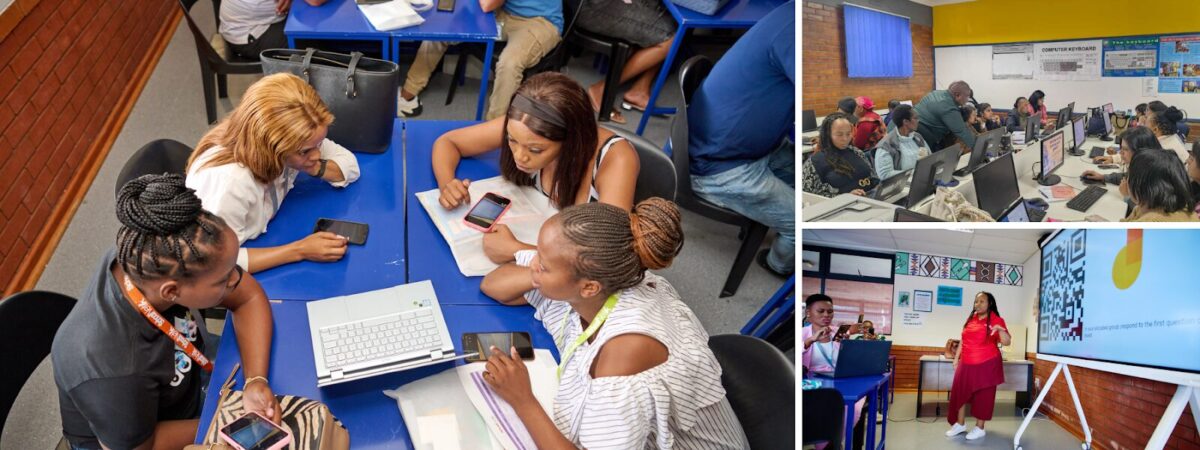
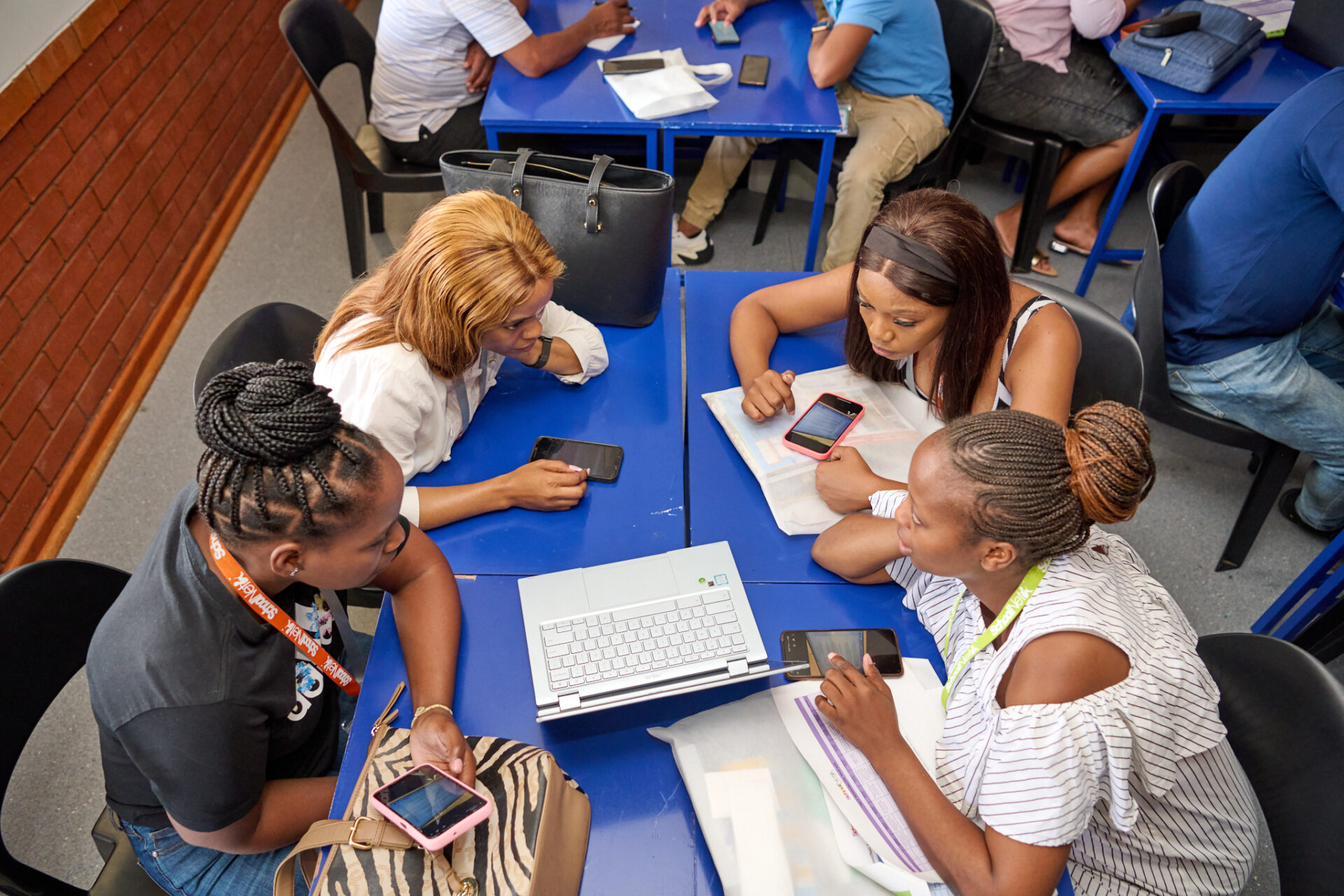
Educators sitting together around an open laptop at a table.

Educators meeting at a Teaching AI in Education workshop.

At SchoolNet South Africa, we’re actively involved in exploring and supporting equitable and responsible integration of AI into the South African education system, with a particular focus on empowering teachers and addressing the needs of historically marginalized and disadvantaged schools and communities. As a non-government organization that acts as an advocate for effective digital learning as a catalyst for positive educational change, our methods of implementation rely on adult learning principles that are deeply rooted in problem-based, practical learning. Implementation is dependent on the needs expressed by schools or as articulated by particular projects or initiatives and always, in consultation with the institutions concerned.

In our work, we see the innovation paradox play out daily. On one side are schools with 3D printers, VR headsets, multiple devices per learner, and gigabit Wi-Fi. On the other are classrooms where students share scarce devices, data costs exceed the daily cost of living, and electricity is unreliable. In these contexts, AI won’t disrupt education—it may even deepen inequality unless we act with intention.
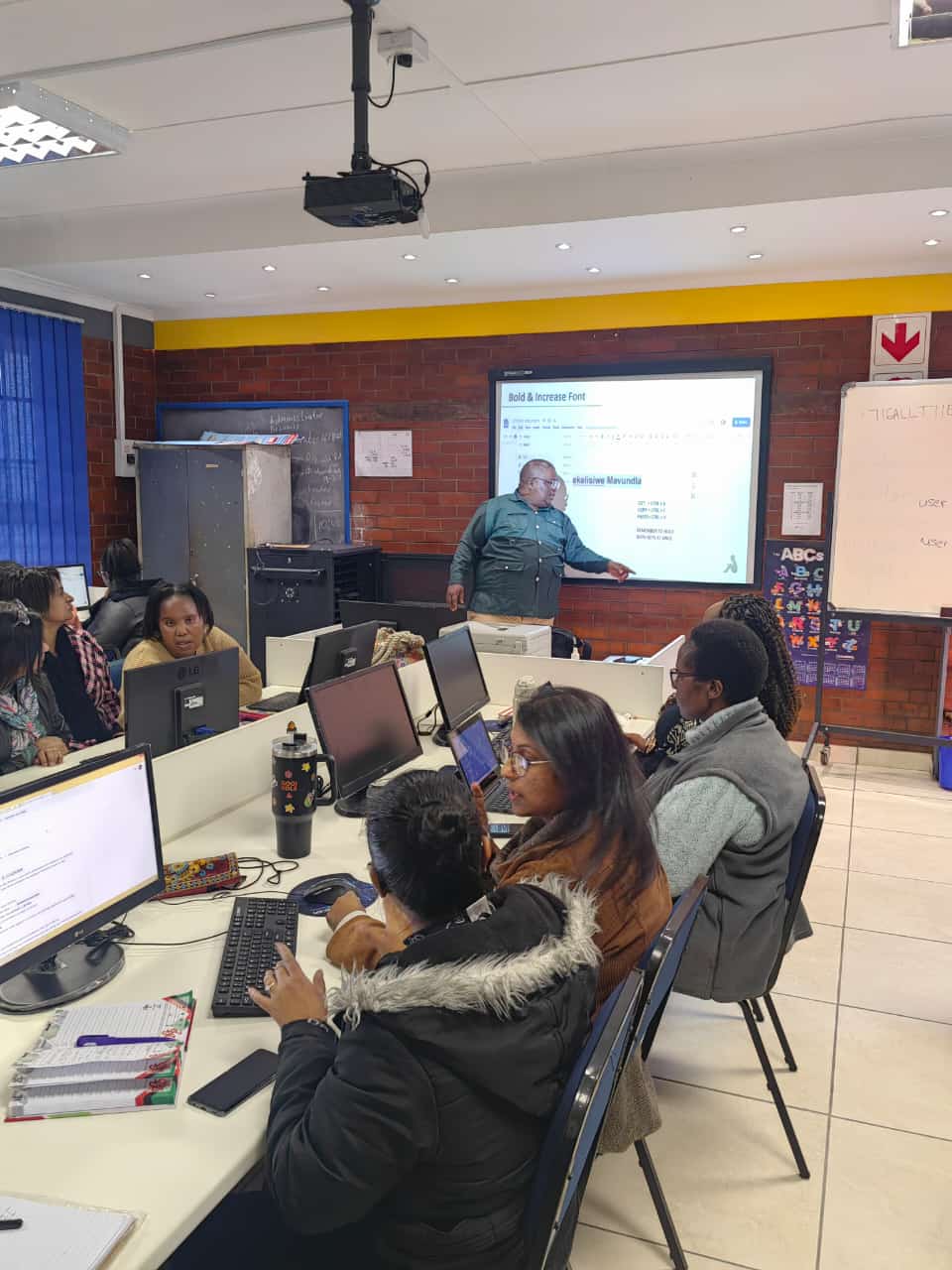
A group of educators in a computer lab participate in a training session, as an instructor at the front points to a projected screen with digital learning content.

Educators participating in a hands-on workshop on AI tools.
What are some principles we use to go “beyond the hype”?

  1. Teacher First, Tech Second: AI is a tool for educators, not a replacement. Our focus must remain on empowering teachers to use AI for planning, resource creation, and managing diverse needs (administrative tasks), freeing them up for crucial human interaction and time with learners (mentorship and teaching).
  2. Design for Disruption: Assume power/internet will fail. Prioritize downloading, printing, and asynchronous workflows such as saving and sharing via Bluetooth and USBs.
  3. Leverage Available Tech: Don’t underestimate SMS and instant messaging platforms, the value of basic feature phones, leverage USBs, SD cards, and local area networks. They are lifelines in limited connected areas.
  4. Teach the Why, Not Just the How: Integrate discussions about AI bias, data privacy, and digital citizenship from the start with learners. Teach learners to critically evaluate AI outputs, especially in resource-constrained contexts where misinformation can spread easily.
  5. Collaborate & Advocate: Share successful low-tech AI integration strategies between schools. Use these practical examples to advocate collectively for improved infrastructure (stable power, affordable broadband/internet connections from government and community/private stakeholders). Show them what could be achieved with better foundations and their support.
  6. Celebrate Contextual Innovation: Recognize and reward the incredible creativity South African educators show daily in making do. Solutions born from constraint could be innovative models for the challenging contexts in which we work.

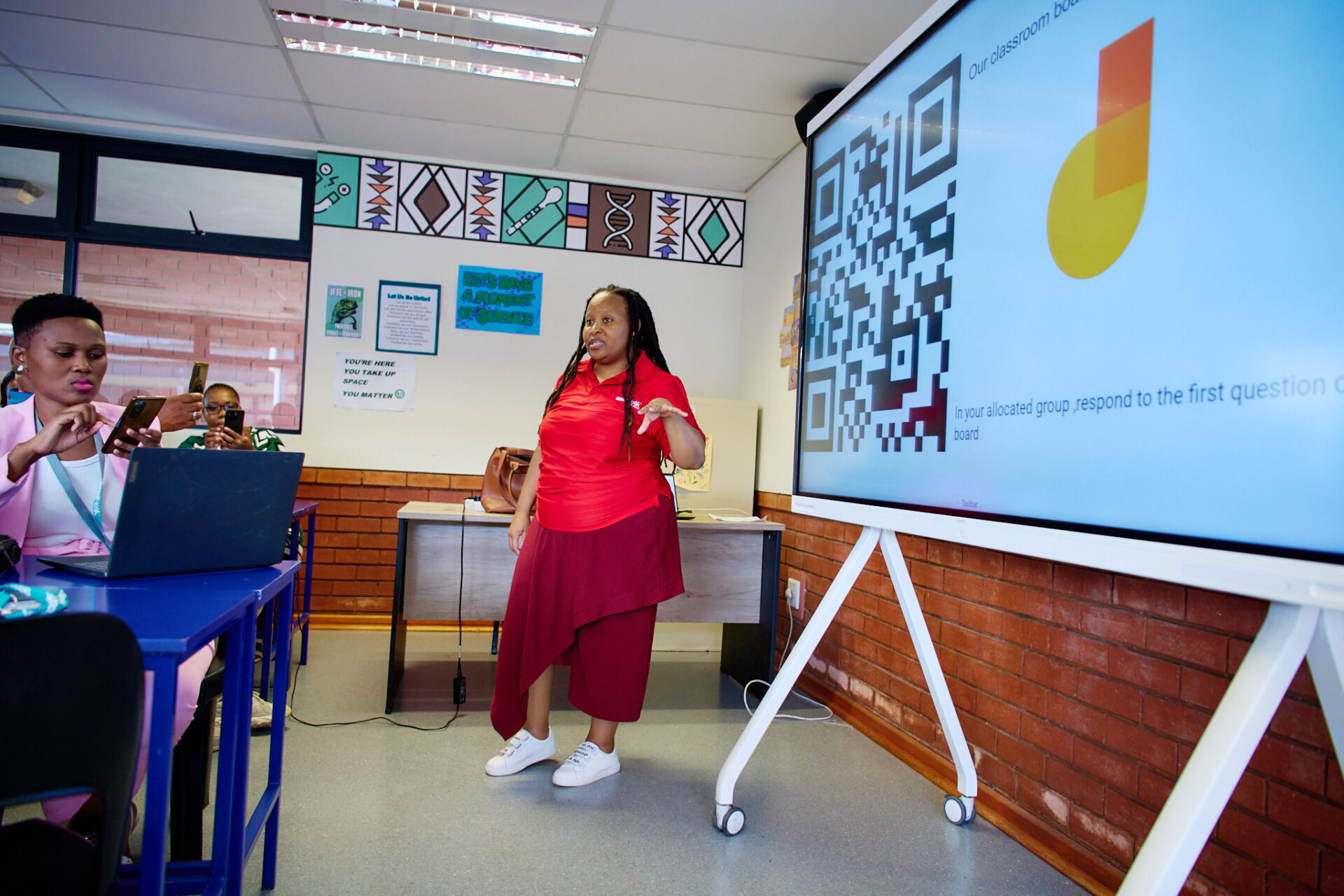
An instructor leads a classroom session using a digital whiteboard displaying a QR code, while participants scan the code with their phones and laptops to join the activity.

Educators participating in a hands-on workshop on AI tools.
Advice for teachers looking to promote access to AI in diverse environments

In Low-Tech Settings

  1. Consider using community or free Wi-Fi/hotspots outside school hours to generate lesson plans, worksheets, or multilingual stories via free tools (ChatGPT, Claude). Save as PDFs and share via USB drives, Bluetooth, or printed booklets with learners
  2. Free instant messaging platforms such as WhatsApp can be used to send daily vocabulary quizzes, math puzzles, or deeper thinking prompts, all pre-written using AI. Responses from learners can be collated for a manual review or a simple auto-grading bot can be used.
  3. You can pre-load USB drives with free and AI-generated content such as curriculum e-books, science simulations, exam papers, and tutorials. Use free Offline apps such as Khan Academy Lite, Wikipedia Kiwix and other resources.
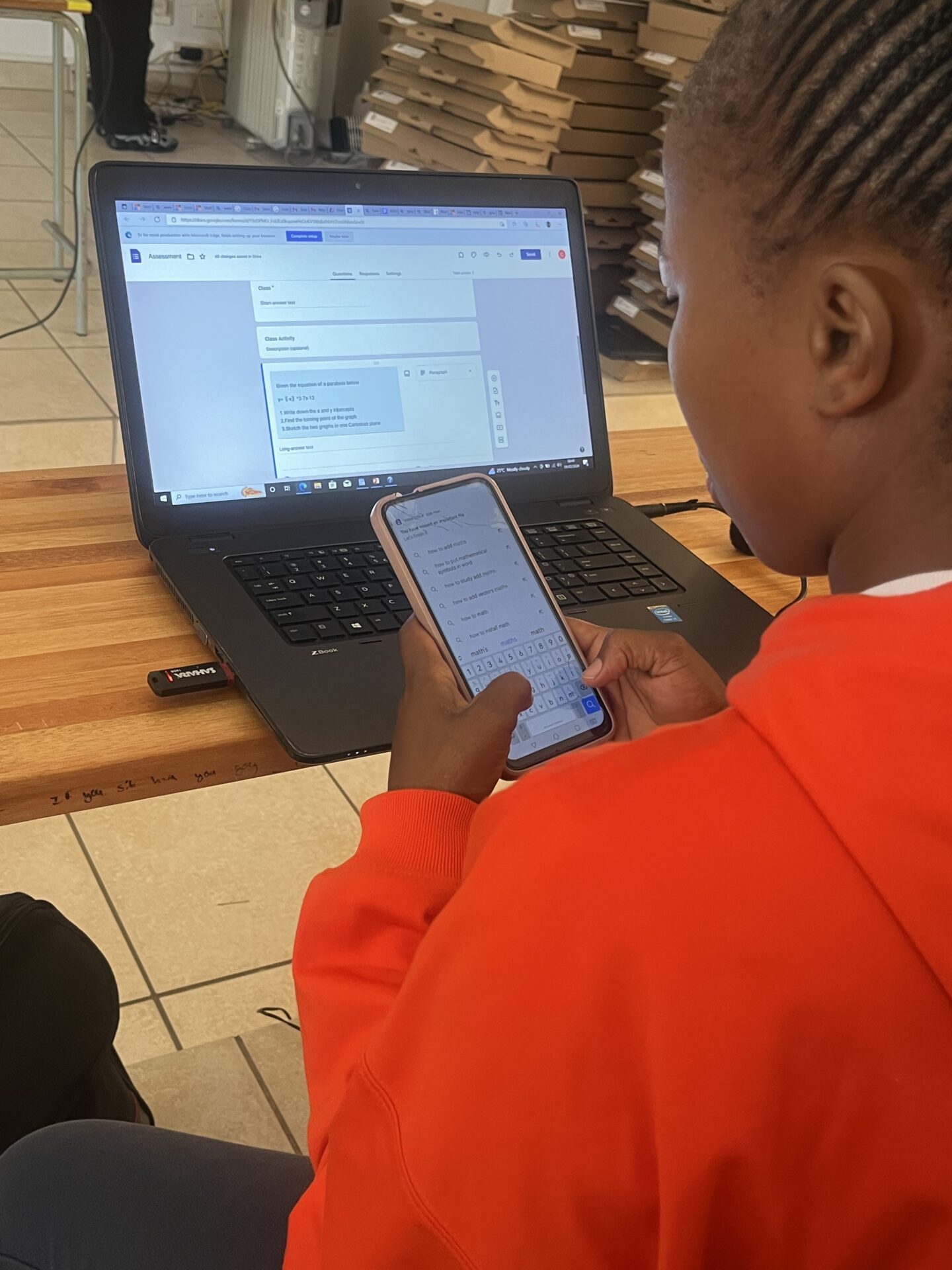
An educator uses a smartphone while working on a laptop displaying a digital class activity form.

Experimenting with AI prompts and searches.

In Mid-Tech Settings

  1. Use batch processing strategies where learners’ offline work can be set to upload during the night connectivity windows. Incorporate AI tools such as Editor or Grammarly to provide learner feedback and then you can download reports for learners portfolios.
  2. Use AI as a co-teacher where you can integrate voice notes for feedback or AI can generate short stories and you can play recordings in class. Consider recording class sessions and later use AI to transcribe for summaries and focus areas.
  3. Create local AI hubs where a host computer acts as a server with downloaded lightweight AI models such as GPT2-small for offline Q&A quizzes. Invite other teachers or learners to visit weekly to download resources.

Our path forward lies in contextual innovation that prioritizes practical, grounded solutions that acknowledge each environment’s unique constraints. This isn’t about lowering expectations; it’s about defining our success in ways that are inclusive, sustainable, and empowering for educators and learners alike.

To unlock AI’s potential in education, we must listen to teachers, celebrate local ingenuity, and design with equity at the core. The future of AI in our classrooms needs to be shaped in staff rooms, professional learning communities, and everyday teaching moments.

Learn more about the Ciena Solutions Challenge

Sign Up For Updates! Email
Loading...