
Teacher Reflection: Inspiring Connection, Curiosity, and Community in Eastern Kentucky Schools
Adam Roberts authored this blog post with support from Merijke Coenraad, a researcher at Digital Promise.
Key Ideas
- Teachers in Eastern Kentucky are engaging students in project-based learning that weaves together content, problem solving, heritage, and computational thinking.
- Drawing on Kinship’s project-based learning units center inquiry, creativity, and pride in where students come from.
- Teachers focused on lesson designs that highlight how a region’s history and environment can inspire students to think critically and act locally, while understanding our connection to the wider world.
My name is Adam Roberts and I am in my tenth year of public education. Though I have a background in biology education, I have spent the past two years teaching agriculture in Floyd County, Kentucky. During this time, I have had the opportunity to be part of the Drawing on Kinship project.
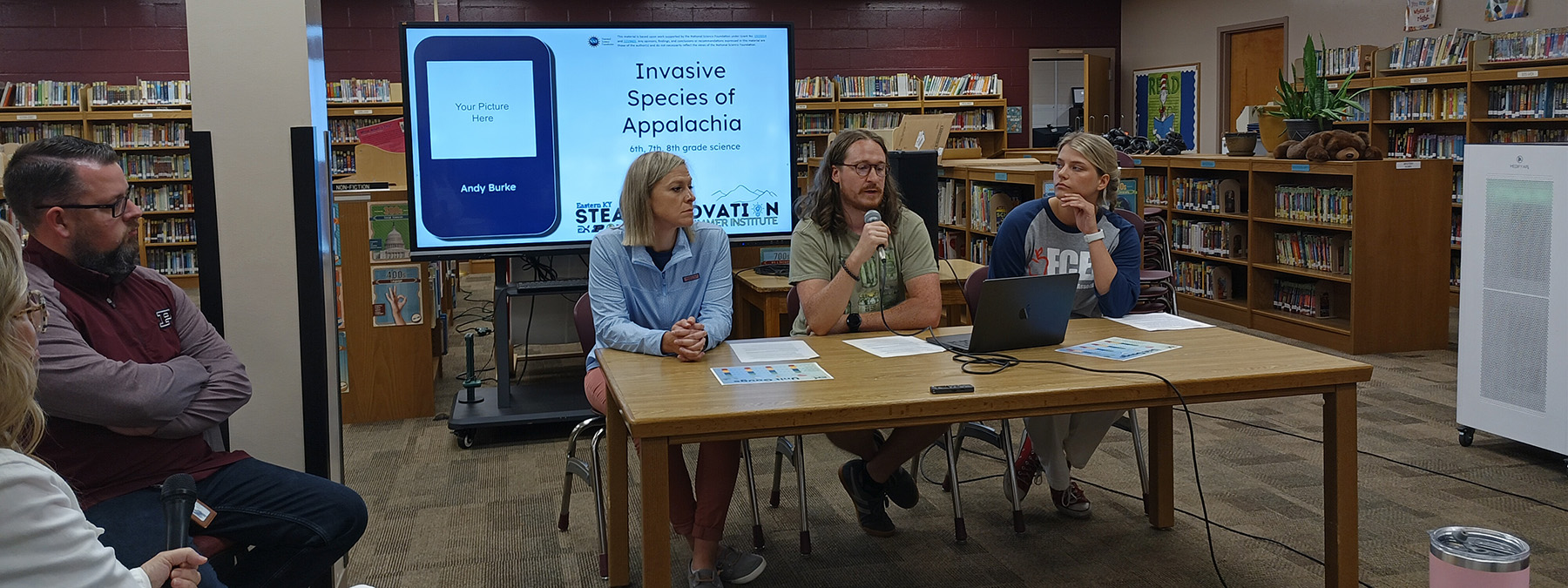
The Drawing on Kinship project is a research-practice partnership between Digital Promise, Floyd County Schools, and Pikeville Independents Schools, two school districts in Kentucky Appalachia. Researchers in the Drawing on Kinship project collaborate with teachers from these districts to design meaningful learning experiences that connect students to the land, culture, and people of Eastern Kentucky. They also research the impacts of these units on students and the professional learning mechanisms that make them powerful.
Together, we are reimagining how students learn by designing project-based learning (PBL) units that are:
- Content-aligned
- Focused on a central problem or challenge relevant to the students’ community
- Inspired by students’ heritage of Appalachian Ingenuity, and
- Add to students’ problem-solving toolkits by engaging students in computational thinking
In the 2024-25 school year, 16 teachers implemented these units through the Drawing on Kinship project. In this blog post, I share reflections on three projects that inspired my thinking and plans for my own PBL unit. Each project centered on inquiry, creativity, and pride in where our students come from. These projects showed how deeply our region’s history and environment can inspire students to think critically and act locally while understanding our connection to the wider world.
Researching Eastern Kentucky Solutions to the Changing Climate
Megan Hyden’s project, How Eastern Kentucky Can Impact Earth’s Changing Climate, encouraged students to research how our region could help reduce carbon dioxide and methane in the atmosphere. They explored different solutions and proposed ways Eastern Kentucky might contribute to a healthier planet. Her class found that the project’s in-depth research and discussion were major strengths, though students sometimes needed more structure for locating and citing sources. Ms. Hyden recommended using guided questions, checklists, and multiple supports to help all students succeed. Reflecting on the project, she noted that examining the cost and effectiveness of their proposed solutions would have pushed them to think even more deeply. In my own teaching, I have found that youth are often oblivious to the cost of things, so when they have this realization, I consider it a win.

Preserving the Stories of Appalachia
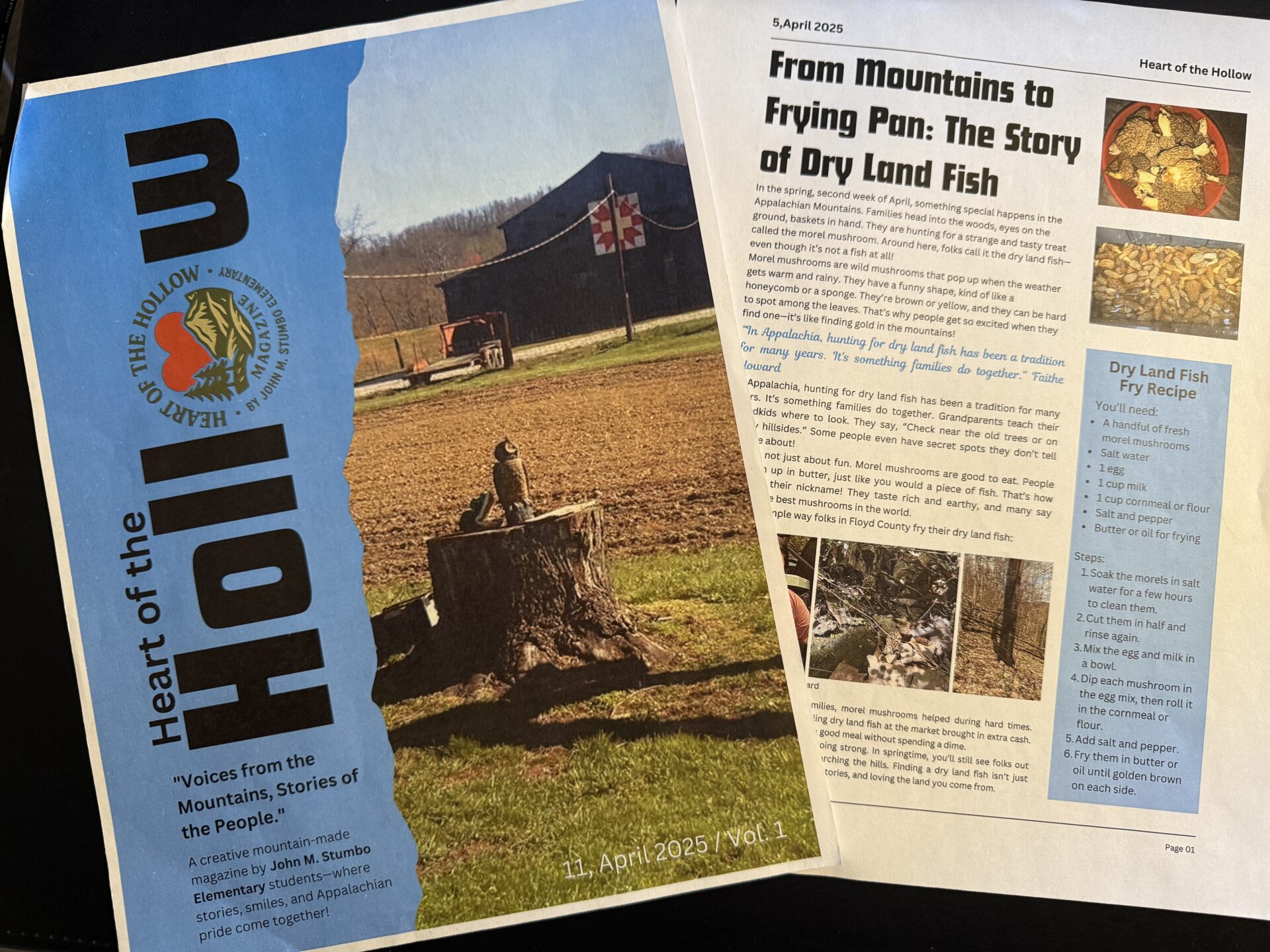
In Tales from the Creek, Kacey Burke’s third and fourth grade students explored how to preserve the stories and experiences of past generations in Appalachia. Each student interviewed a family or community member then shared these interviews with co-teacher Tina Mosley’s seventh-grade students. The seventh-grade students then turned these stories into either a digital or printed magazine page.
This project was a unique opportunity to let students not only share the stories they’ve been told, but also keep that story alive. By asking students to develop magazine pages, the project also helped students connect literacy to their heritage and see themselves as young historians. It was powerful to watch them develop pride in their roots through storytelling. I like how Mrs. Burke and Mrs. Mosley wanted to keep this momentum going, their next step being to publish their students’ work or host a community storytelling event so their stories could reach a wider audience.
Data Analysis and Community Engagement for Sustainable Economic Solutions
Melissa Howell’s project asked students, “How can the resources in Eastern Kentucky be used to develop sustainable economic solutions?” Students analyzed local data, identified challenges, surveyed community members, and proposed creative solutions for regional growth. They developed arguments and presentations for their ideas, blending research with real-world problem solving. I loved her involvement with the community. She offered that community partnerships could strengthen the projects even further. Community members need to be involved in the education of the youth. They are stakeholders in the grand scheme of things, and their involvement is vital toward our youth’s education.

Why Meaningful Learning Experiences are Important
Together, these three projects represent the heart of what I feel Drawing on Kinship aims to achieve: students learning through connection, curiosity, and community. Whether addressing climate change, preserving local stories, or exploring economic solutions, each project gave students a voice and a purpose rooted in their Appalachian identity.
When students in Eastern Kentucky can see that determination, resilience, and innovation are a part of their DNA, they also see that the limitations on their life extend beyond the hills they call home. Seeing these projects “grow wings and fly” was an inspiration as I began designing my own project. Together, their work motivated me to create a project that blends agricultural skills with a deeper connection to place, heritage, and responsibility in Appalachia.
My students’ projects for the 2025-26 school year will help students rediscover the Appalachian tradition of growing your own food while also looking at how raised bed gardens can support families facing hunger today. Students will blend heritage wisdom with modern agriculture to design meaningful solutions for their families and beyond.
Want to know more about the Drawing on Kinship project?
- Topics: Core Content
- Learning Environments: K-12
- Audiences: Educators , Researchers
- Offerings: Co-design , Research and Development
- Programs: Computational Thinking , Learning Sciences Research