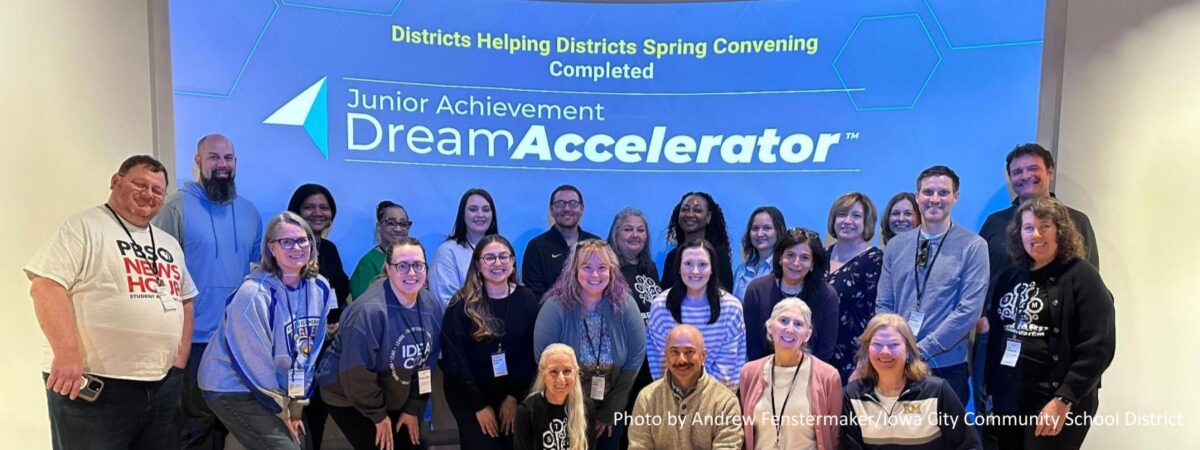


This past April 2026, leaders from seven school districts from across the country gathered in Iowa City, marking the culmination of the National Science Foundation–funded Districts Helping Districts (DhD) project—a four-year Research-Practice Partnership (RPP) dedicated to scaling inclusive computational thinking pathways nationwide. What began as an ambitious collaboration to rethink how districts design computer science learning ultimately evolved into a national model for peer-driven educational innovation.
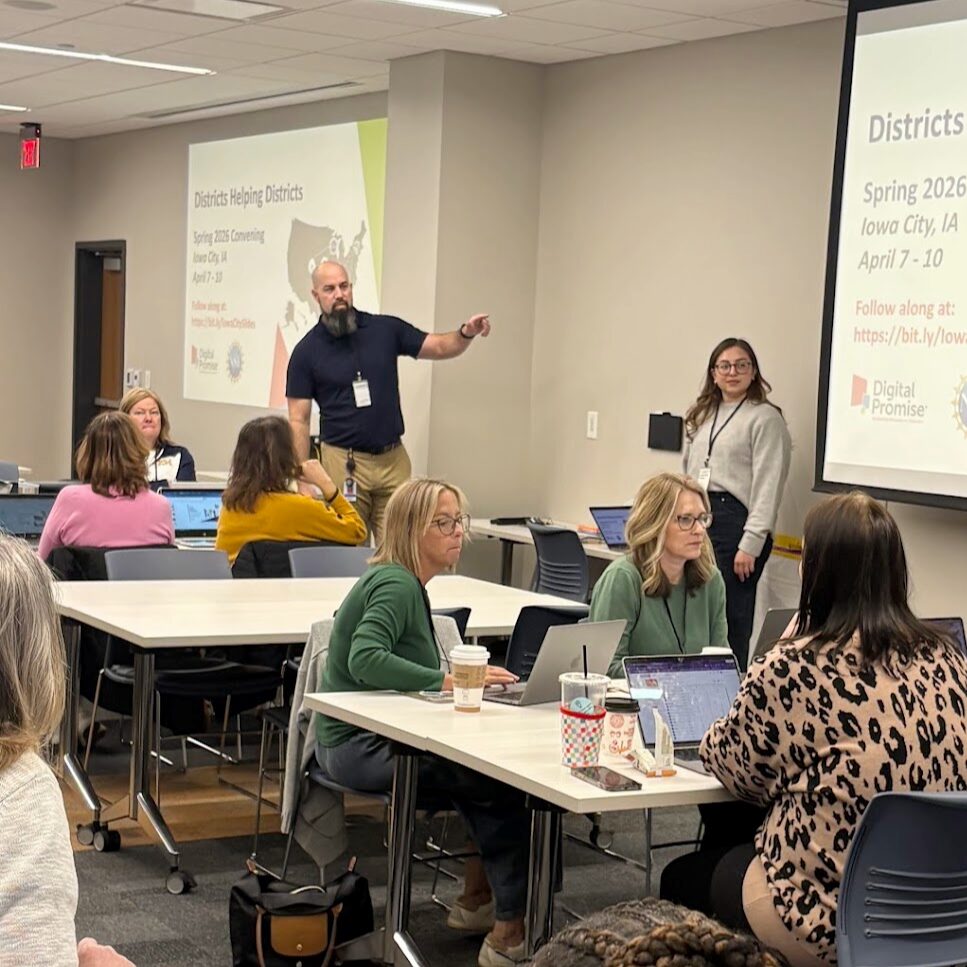
Andrew Fenstermaker, instructional technology coordinator at Iowa City Schools, speaks to a group of Districts Helping Districts leaders.
The DhD project is grounded in a simple but powerful premise: Districts themselves are the critical drivers of sustainable change in K–12 computing education. While all states have adopted computer science policies and standards, research consistently demonstrates that standards alone do not transform classroom practice or address persistent equity gaps in participation. The DhD partnership therefore focused on enabling districts to learn directly from one another—sharing strategies, challenges, and implementation decisions through structured communities of practice rather than relying solely on external mandates or packaged programs.
Since 2022, participating districts have collaborated with Digital Promise researchers and practitioners to design inclusive Computational Thinking (CT) Pathways that are cumulative, consistent, competency-based, and responsive to local contexts. Central to the project’s success were district-to-district communities of practice that enabled educators to exchange feedback, share resources, and collectively solve implementation challenges.
| District Name | Location and Context | School & Student Population | Demographics |
|---|---|---|---|
|
Broward County Public Schools
|
South, Urban |
329 schools, 256,037 students |
Economically disadvantaged: 69.2% |
|
Indian Prairie School District
|
Midwest, Suburban |
33 schools, 25,815 students |
Economically disadvantaged: 18.7% |
|
Iowa City Community School District
|
Midwest, Suburban |
29 schools, 14,820 students |
Economically disadvantaged: 43.4% |
|
Kettle Moraine School District
|
Midwest, Suburban |
11 schools, 3,575 students |
Economically disadvantaged: 12.4% |
|
North Salem Central School District
|
Northeast, Suburban |
2 schools, 1,068 students |
Economically disadvantaged: 17% |
|
Talladega County Schools
|
South, Rural |
18 schools, 7,127 students |
Economically disadvantaged: 69.3% |
|
Reynoldsburg City Schools
|
Midwest, Suburban |
13 schools, 7,350 students |
Title 1: 69% |
| District Name |
Broward County Public Schools
|
|---|---|
| Location and Context |
South, Urban |
| School & Student Population |
329 schools, 256,037 students |
| Demographics |
Economically disadvantaged: 69.2% |
| District Name |
Indian Prairie School District
|
| Location and Context |
Midwest, Suburban |
| School & Student Population |
33 schools, 25,815 students |
| Demographics |
Economically disadvantaged: 18.7% |
| District Name |
Iowa City Community School District
|
| Location and Context |
Midwest, Suburban |
| School & Student Population |
29 schools, 14,820 students |
| Demographics |
Economically disadvantaged: 43.4% |
| District Name |
Kettle Moraine School District
|
| Location and Context |
Midwest, Suburban |
| School & Student Population |
11 schools, 3,575 students |
| Demographics |
Economically disadvantaged: 12.4% |
| District Name |
North Salem Central School District
|
| Location and Context |
Northeast, Suburban |
| School & Student Population |
2 schools, 1,068 students |
| Demographics |
Economically disadvantaged: 17% |
| District Name |
Talladega County Schools
|
| Location and Context |
South, Rural |
| School & Student Population |
18 schools, 7,127 students |
| Demographics |
Economically disadvantaged: 69.3% |
| District Name |
Reynoldsburg City Schools
|
| Location and Context |
Midwest, Suburban |
| School & Student Population |
13 schools, 7,350 students |
| Demographics |
Title 1: 69% |
While the DhD project began with a focus on computational thinking, the relatively recent and very rapid emergence of generative artificial intelligence (AI) reshaped the educational landscape during the final years of the grant. Participating districts recognized AI as a natural evolution of computational thinking competencies—extending problem solving, data literacy, and ethical reasoning into a new technological era.
In addition to districts sharing their own refined K-12 computing pathways over the first part of the week, the Iowa City convening centered on the first-ever Iowa City AI Summit, hosted at the district’s Center for Innovation. The summit blended educator professional learning, student voice, and cross-district collaboration, reflecting the project’s philosophy that innovation must occur simultaneously at leadership, teaching, and student levels.
Not only were DhD’s seven districts represented and leading sessions, but educators from across the state came for the day to share their ongoing efforts and ask questions of each other around district policy, curricular integration, and best practices for educator professional development. Summit Lead and nationally recognized AI and computer science advocate, Mr. Andrew Fenstermaker remarked, “While AI handles the heavy lifting of computation, the human ability to think critically, ethically, and creatively remains our greatest asset. Our work connecting CT to AI is about keeping the ‘human-in-the-loop,’ ensuring our students remain the architects of their own learning in an automated age.”
The hallmark of the summit was the student-focused live Design Thinking Challenge in which students developed AI-powered solutions while engaging directly with educators for feedback. By the closing session, students presented their solutions, demonstrating how computational thinking skills cultivated through the project now enabled meaningful engagement with generative AI technologies.
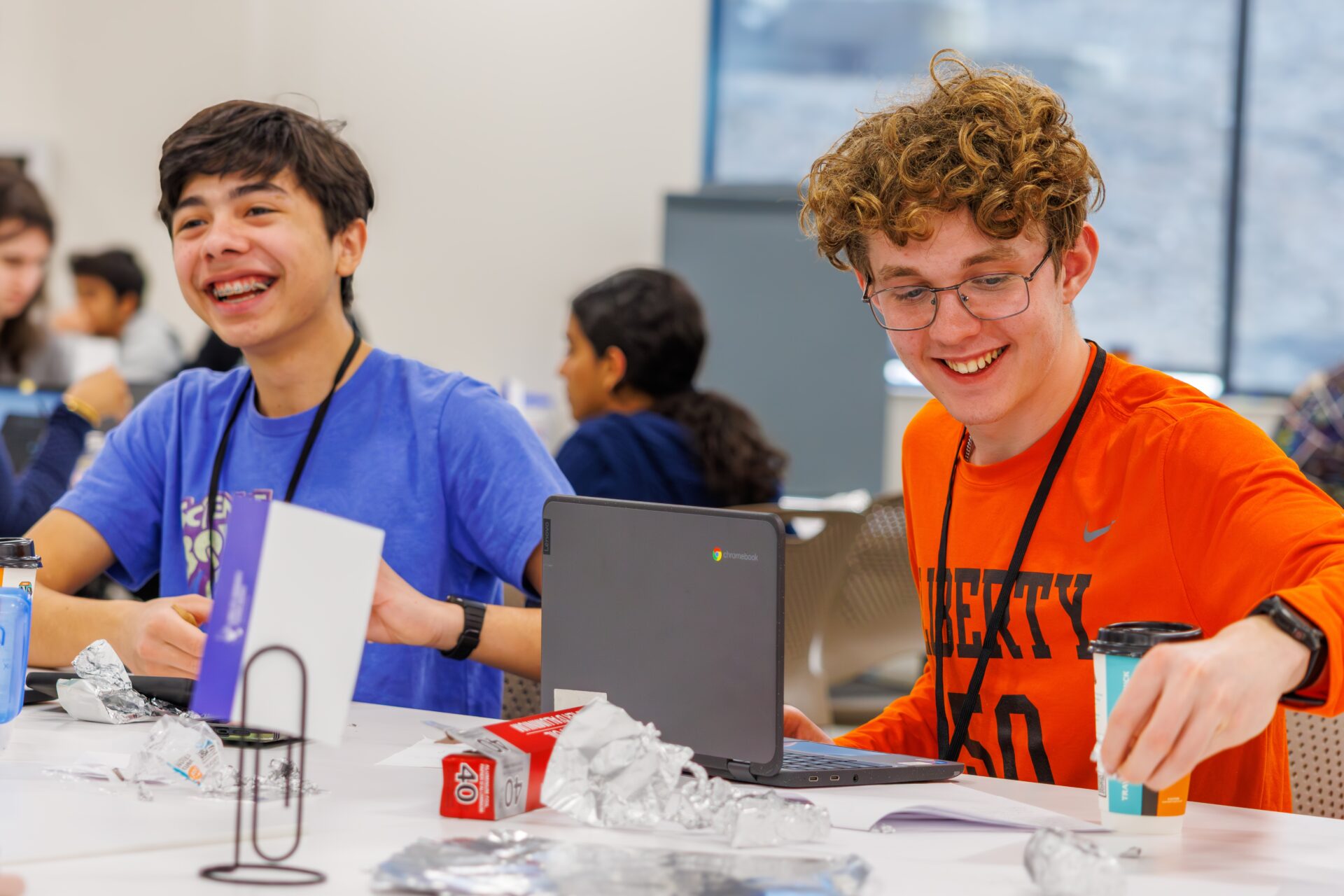
Students participate in a Design Thinking Challenge.
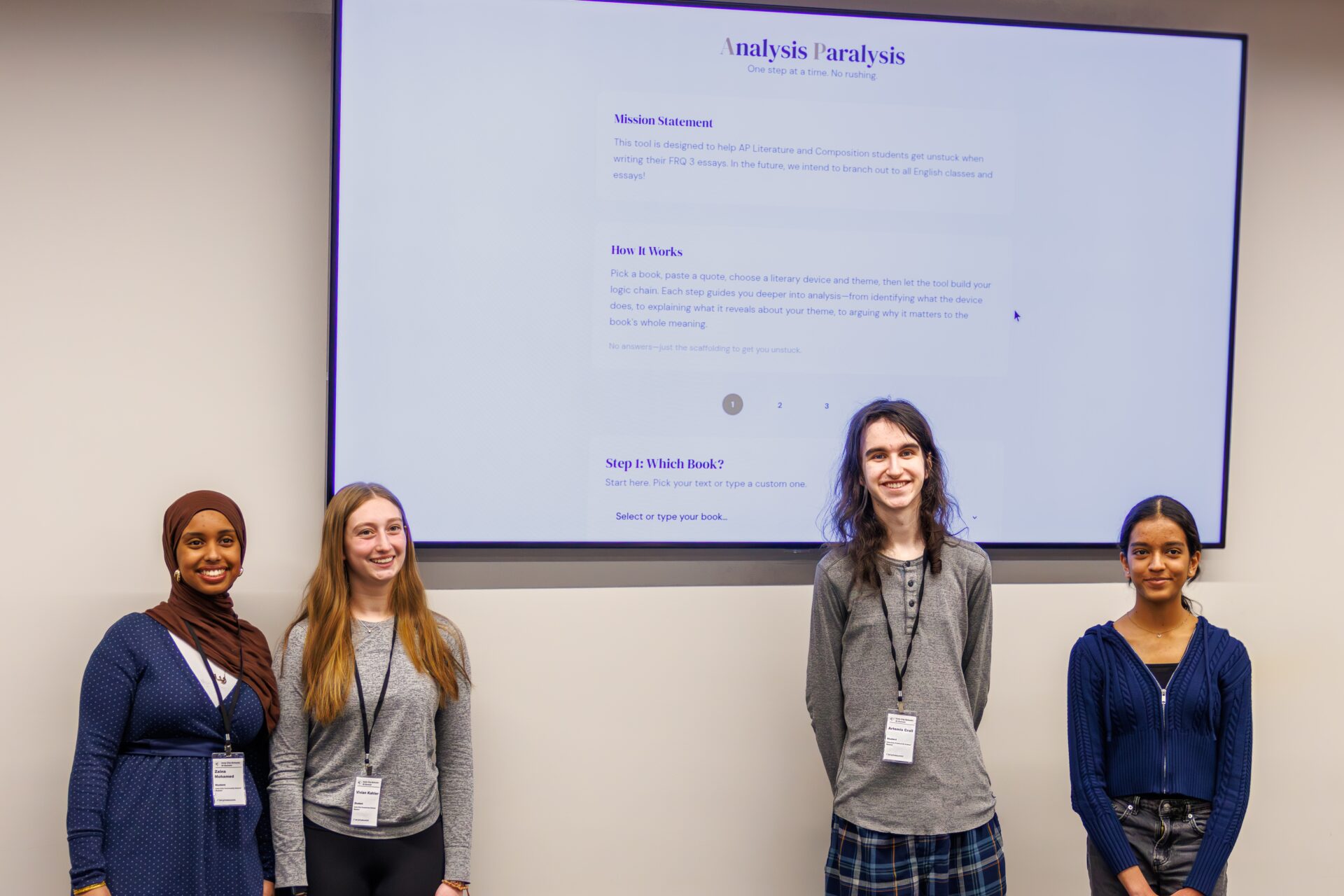
A student team presents their AI-powered solutions.
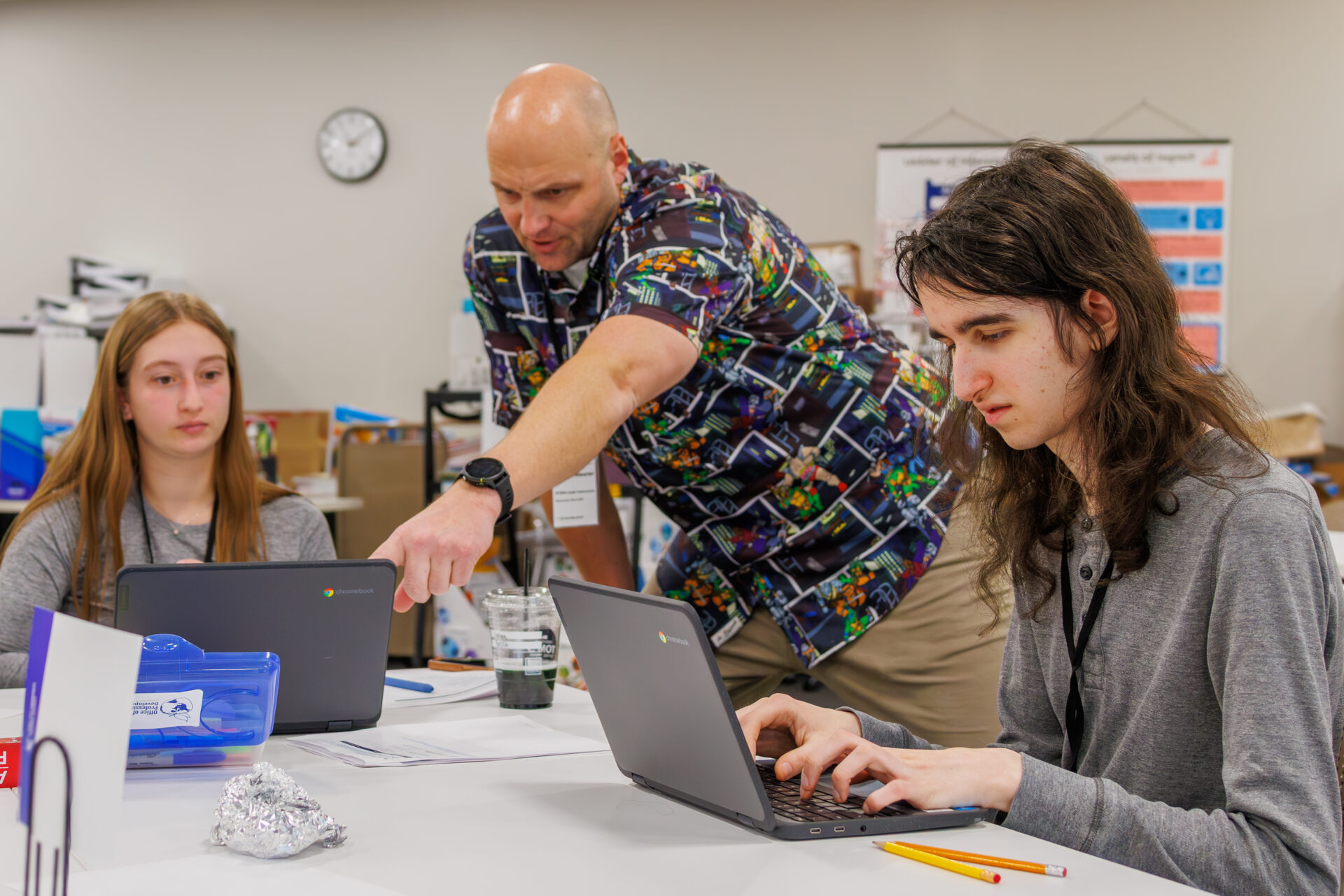
An educator reviews a student’s work at the Iowa City AI Summit.
AI Summit photos courtesy of Iowa City West High School student intern photographer, Leah Butcher
As the NSF Districts Helping Districts project concludes this fall, its most enduring outcome may be neither a specific curriculum nor a single program, but a replicable model for how educational systems innovate together. Sustainable change occurs when ownership shifts from external reform efforts to collaborative networks of practitioners who adapt shared ideas to local needs.
The Iowa City convening underscored several lessons with national significance: inclusive computing pathways require coherence across grade levels and district strategy; peer networks accelerate innovation; and emerging technologies such as generative AI demand educational systems capable of continuous adaptation.
Looking ahead, participating districts committed to sustaining the DhD network beyond the life of the grant through ongoing communities of practice, shared professional learning, and continued research collaboration. The April 2026 gathering marked both an ending and a beginning—launching a new phase of district-led innovation focused on AI literacy, collaboration, and equitable access to future-ready learning.
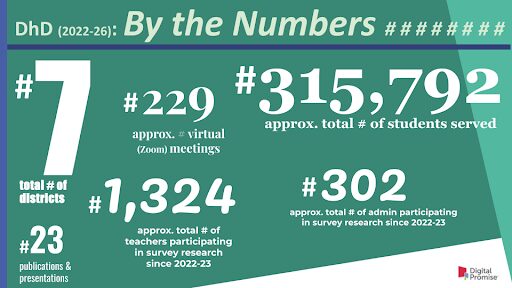
Flyer from a presentation at the Iowa City DhD convening, “The Project’s Reach over a Range of Numbers.”
 This work is supported by National Science Foundation Grants #2219350 & #2219351