
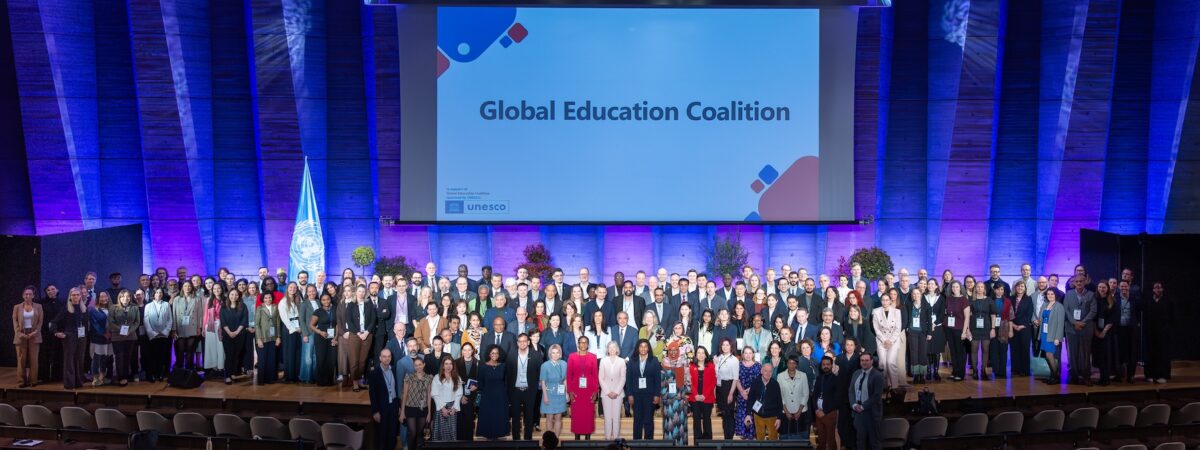


As artificial intelligence (AI) reshapes the global landscape, how can digital transformation in education generate tangible social and economic returns? This question sat at the heart of the 2026 Global Education Coalition (GEC) meeting at UNESCO Headquarters in Paris.
The GEC is a global platform that brings together education partners from around the world to collectively transform education. Digital Promise joined the GEC in 2024 and has been an active member of its Digital Transformation Collaborative (DTC), a tech-focused subgroup of partners focused on helping governments advance sustainable digital transformation.
Our participation in the GEC and DTC have given us opportunities to shape the future of learning on a global scale by sharing our work and resources, learning from members, and deepening our collective impact on education systems across the world.
The GEC annual meeting in Paris brought together more than 240 Coalition members, including governments, UN agencies, private sector partners, foundations, and civil society organizations. Together, we discussed how to approach educational and digital transformation through a systems lens. Throughout the sessions, a consistent theme emerged: the “people” side of systems change—such as skills, mindsets, cultures, and environments—is essential for achieving true transformation.
Below are three global trends from the conference that speak to this overarching theme:
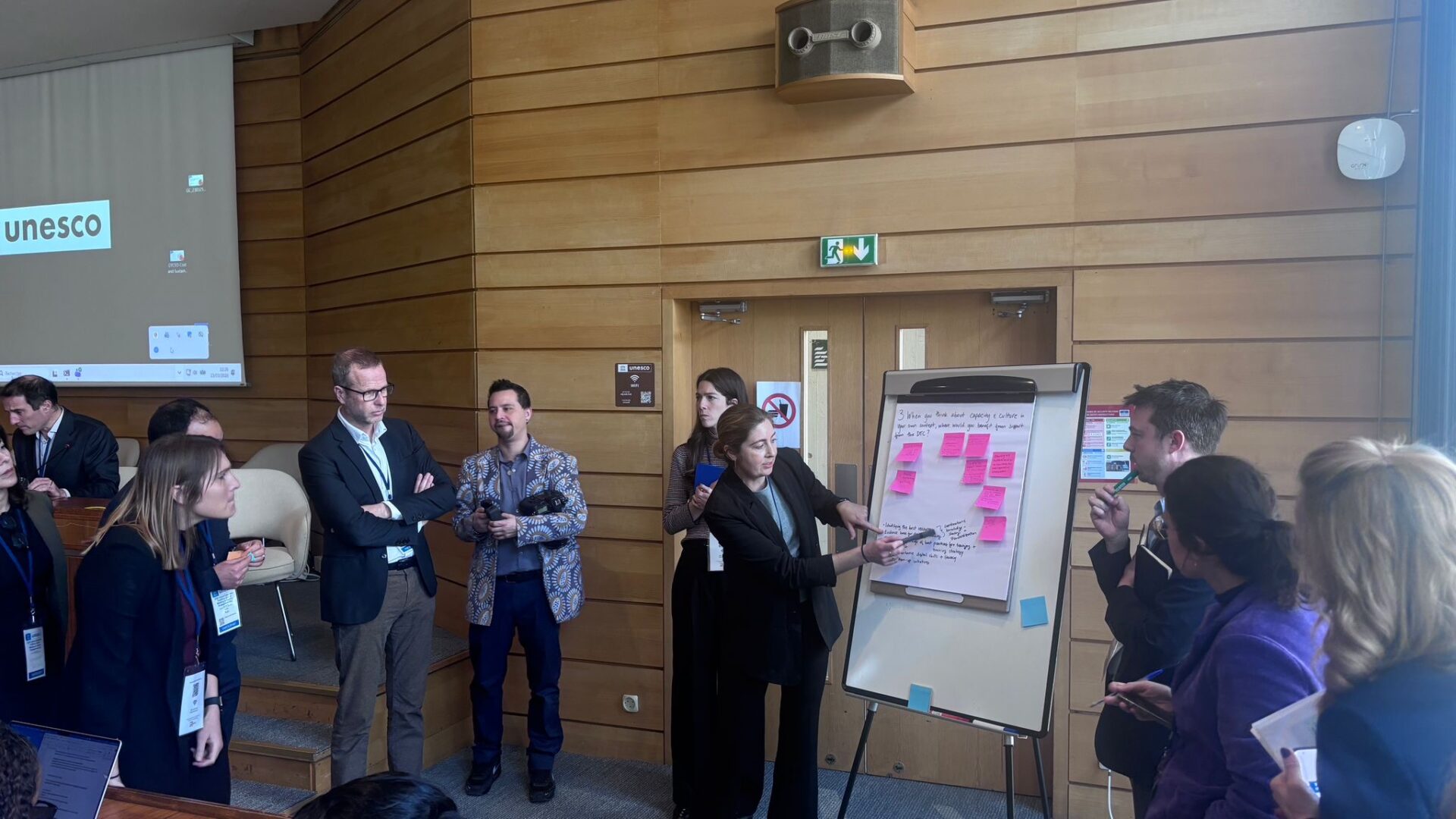
Digital Promise’s April Williamson—in partnership with the teams from Teach for All, Raspberry Pi Foundation, and ProFuturo—led a workshop on how to tap into teachers’ unique strengths as AI integration in classrooms continues to expand.
We underscored this message during the “DTC Country Engagement Day” deep-dive workshop on capacity and culture, which Digital Promise co-facilitated alongside Teach for All, Raspberry Pi Foundation, and ProFuturo.
We shared two anchoring resources from our work co-leading the Teacher Task Force thematic group on digital education and artificial intelligence: a position paper on teachers and AI and policy quick guide. These resources emphasize teachers’ unique strengths that make them irreplaceable in the age of AI and how important human connection is when it comes to learning.

“Conscious adoption” of AI in education was the common refrain from a panel discussion moderated by UNESCO’s Global Teacher Campus. Panelists—including Mozambique’s Minister of Education and Culture H.E. Samaria dos Anjos Filemon Tovela, April Williamson, and representatives from UNESCO, the Association for Teacher Education in Europe, and the European Trade Union Committee for Education—agreed that teachers’ voices must be present in this conversation.
Digital Promise participated in a panel discussion led by UNESCO’s Global Teacher Campus exploring AI in teacher training. Spanning pedagogies, platforms, programs, and policies, the discussion underscored that, while AI could be leveraged to support teachers and help achieve the right to quality education, this approach is currently far from a universal reality.
While educators may be feeling overwhelmed by the rapid rise of AI tools and resigned to their risks, there is a valuable opportunity for people to come together and decide whether and how to apply AI in education. This conscious adoption needs to happen through a lens of ethics, equity, and sustainability, and with teachers as critical authorities in the dialogue.
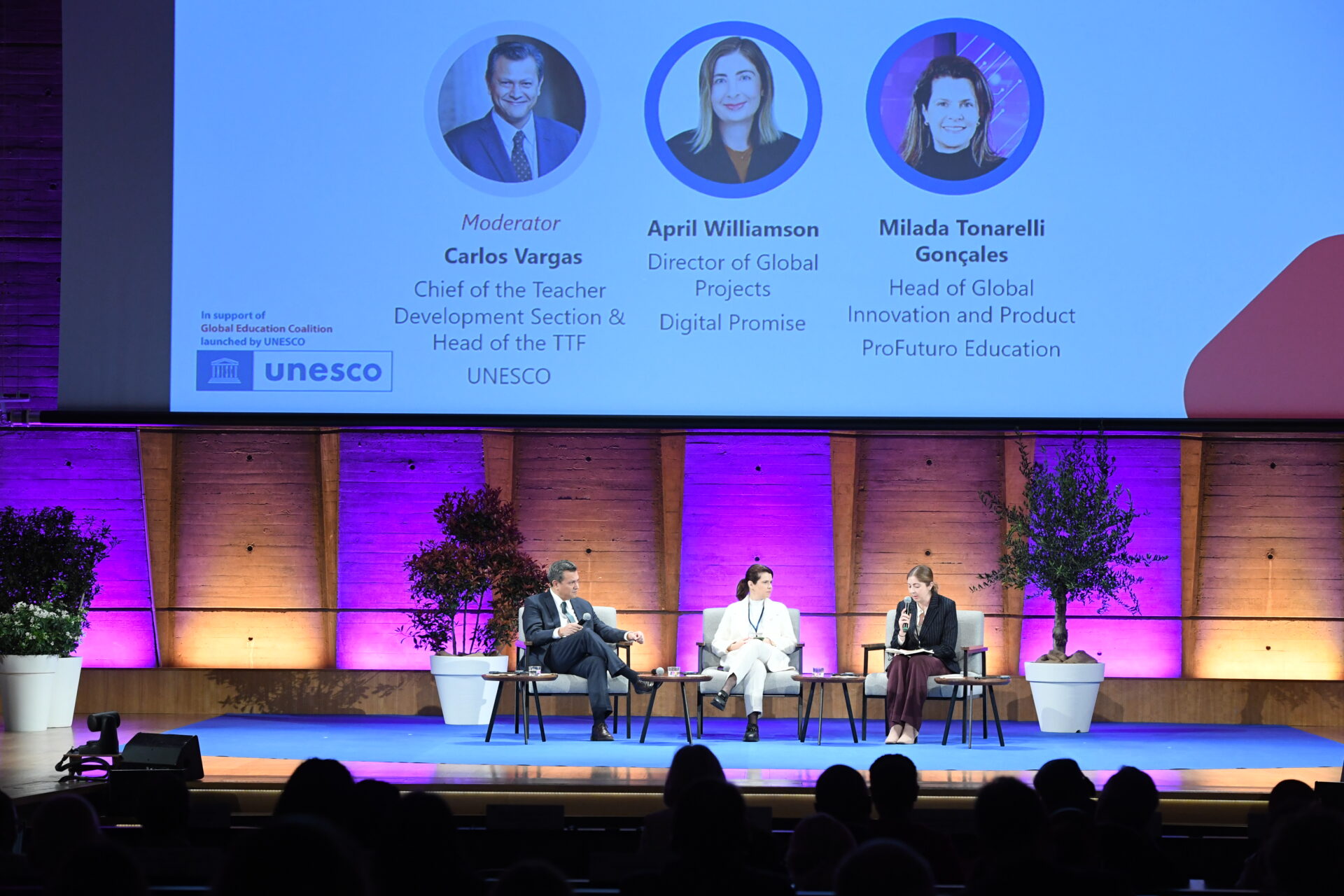
In a fireside chat facilitated by Carlos Vargas, April Williamson shared examples from Digital Promise’s work with teachers that underscore the reality that teachers are the key drivers of impact when it comes to education.
Digital Promise participated in a fireside chat, “The Teacher Impact Multiplier: Investing in the Professional Agency of Teachers through AI,” moderated by Carlos Vargas, chief of section of teacher development at UNESCO. The discussion explored how investments in teacher professional development, including the integration of technology and AI, can drive impact in classrooms and across education systems.
We highlighted a few key lessons from our work with teachers:
Over the next year, Digital Promise will continue to contribute to the GEC and DTC’s work to achieve UN Sustainable Development Goal 4—ensuring inclusive and equitable quality education and promoting lifelong learning opportunities for all—including participating in a new artificial intelligence workstream within the DTC.
Want to dive deeper?

