

Classroom discussion is widely recognized as a powerful way to promote deep thinking, critical engagement with sources, and civic skills. But despite its value, many teachers struggle to find high-quality materials and practical support to make discussion a foundational part of their teaching.
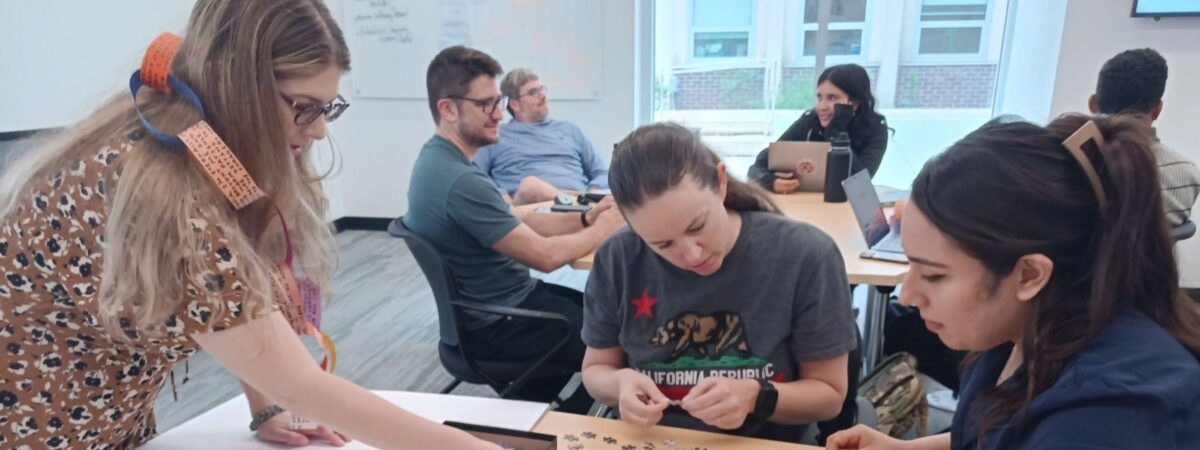
That’s the challenge we set out to solve with the Deeper Discussions in World History (DDWH) project. This research-practice partnership brought together a team of researchers and 12 World History teachers from Title I settings across the country who share a commitment to making history meaningful, relevant, and accessible for all learners. The team met weekly over three semesters to design, test, and refine discussion-rich world history lessons and build a community of practice.1 This collaboration yielded transformative results that we are immensely proud of: our open-source Deeper Discussions lessons and professional development toolkit, and the profound professional development teachers experienced through co-design.
To capture the full scope of this evolution, we surveyed these teachers over a three-year period to identify exactly how participation in our co-design model changed their practice and identity. Here are the three lasting shifts that participation sparked:
Before the project, discussion was often seen as a “nice-to-have” activity when there was extra time. After participating in the co-design process, teachers reported an enduring shift in their instructional practice: Discussion became a central part of their lesson design. They established new norms and routines to make student talk a predictable element of class. Even a year after the formal project ended, all teachers reported continuing to set norms, expectations, and learning goals for discussion with their students. This demonstrates that collaborative design can lead to truly sustained instructional change.
Co-design helped teachers become more confident and deliberate discussion facilitators. Teachers gained broader repertoires of strategies and tools, but the key change was internal. As one teacher shared, “I’m much more confident in giving students the space to talk without jumping in too quickly. I see that as growth in myself as a facilitator.” By having the time and support to develop, test, and revise the Deeper Discussions in World History lessons alongside peers, they developed a deeper, more reflective approach to structuring student talk.
The project didn’t just change instruction inside the classroom; it expanded how teachers saw their roles outside of it. Teachers began to see themselves not just as curriculum implementers, but as active contributors and leaders in their schools and the broader field. In the year after the project concluded, nearly all co-design teachers reported sharing the Deeper Discussions in World History lessons and strategies with colleagues. Moreover, 60% said they were mentoring colleagues around discussion, and 40% had led discussion-focused professional development sessions in their schools or districts. Feeling trusted as experts and valued as collaborators gave co-design teachers the confidence to step into these leadership roles.
Co-design teachers consistently highlighted that collaboration and strong professional relationships were the foundation of the entire co-design experience. Belonging to a community of practice, sharing strategies, and working alongside peers and researchers reignited their excitement for teaching. This trust and collegiality gave them the confidence to experiment and the support to sustain changes, showing that professional growth is deeply relational. This collaborative expertise is now embedded in the Deeper Discussions in World History lessons and Professional Development Toolkit, making them high-quality resources designed by and for teachers.
Ready to bring sustained instructional change to your classroom? The Deeper Discussions in World History project, born from this collaboration, produced co-designed lessons and a comprehensive professional development toolkit to support teachers in making discussion central to their practice. We encourage you to explore the lessons with your history teacher colleagues and join the robust online teacher community hosted by our partners at OER Project to share your own discussion strategies, ask questions, and continue growing as a discussion facilitator.
Smaller teams of 3-4 teachers and a dedicated researcher met approximately 10 times per semester, reconfiguring each semester to cross-pollinate ideas across new teacher groupings and align with shifting schedules and district pacing calendars. This ongoing work was anchored by three in-person workshops (January 2023, July 2023, and July 2024) dedicated to building expertise around project design frameworks, analyzing classroom feedback, reflecting on implementation challenges, and building scaffolds and supplemental teaching resources. Additionally, all teachers co-presented their learnings alongside the research team at a national social studies conference.

