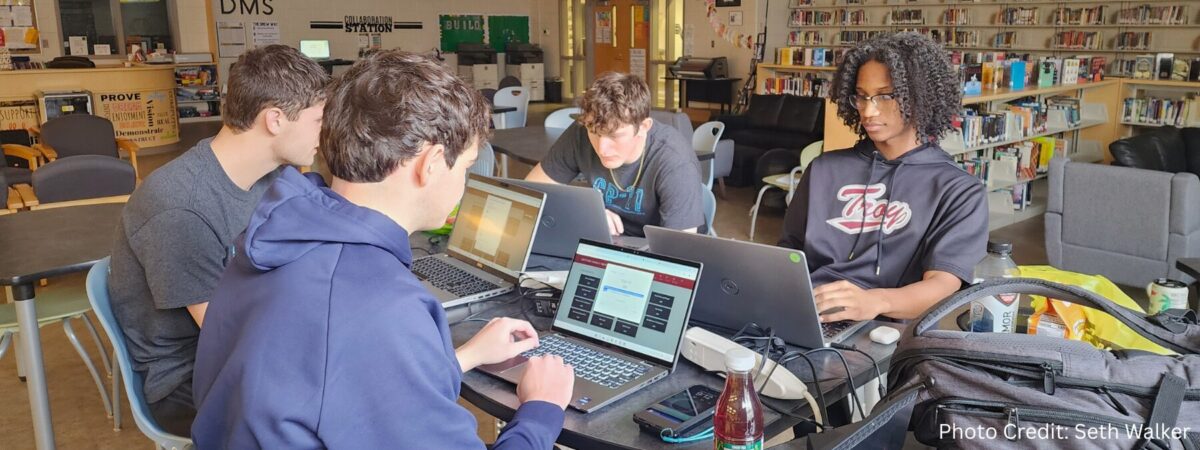


It wasn’t until my senior year of high school, when school district leaders from across the country visited our school district (Talladega County Schools) and learned about our cybersecurity program during a Digital Promise League of Innovative Schools annual convening, that I realized the uniqueness of my learning experience. I thought every school had opportunities like this. Turns out, a foundation had been built under my feet without me even noticing.
In 2023, Talladega County Schools joined 10 districts across the country in launching cybersecurity programs as a part of Digital Promise’s inaugural Cybersecurity Pathways Cohort. Through our Cybersecurity Pathways program, Talladega built a workforce pathway for rural students to gain industry mentors, participate in national competitions, and earn credentials that hold real value in the job market. I joined as a junior in high school and could have never imagined how it would change my life. The opportunities this program has given me keep coming one after another.
My district built a foundation that gave our community something solid to stand on. They defied the odds of what people thought was possible in a rural area and built a pathway that lifted students like me into the future.
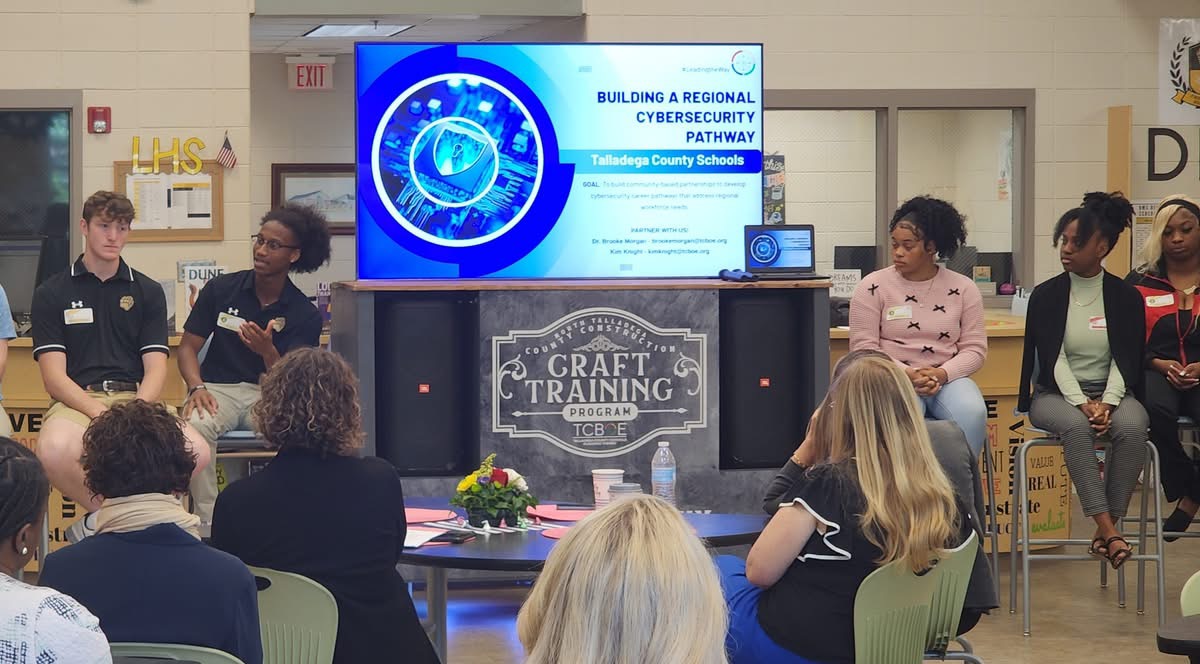
Seth Walker (second from left) speaking during a 2023 League of Innovative Schools convening hosted by Talladega County Schools in Alabama.
Talladega’s Cybersecurity Pathway shaped me in so many ways. The pathway didn’t just give me knowledge. It gave me confidence and skills I will carry forever.
I’ll never forget touring the The University of Alabama at Birmingham’s digital forensics program or the Oxford Police Department headquarters. Or having the opportunity starting my junior year to participate in dual enrollment and help us get started early. My peers and I earned certifications, competed in national competitions like CyberPatriot and SkillsUSA, and connected with industry mentors.
We also had an opportunity to intern through Sylacauga Alliance for Family Engagement at banks, schools in the county, and even electrical plants like Coosa Valley Electric. The pay was $15 an hour for up to 40 hours a week. Now, that might not sound like much to someone outside rural Alabama, but for us students it was huge. Cybersecurity gets fun when something’s about to go wrong or already has, and because I had these hands-on learning opportunities, I was able to learn that firsthand.
To be honest, at first I didn’t think I was capable of being in cybersecurity. I was surrounded by smart people and I felt out of place. But being pushed by my classmates, teachers, and leaders like our superintendent, Dr. Suzanne Lacey, and our career and technical director, Kim Knight, gave me confidence.
They put me in situations where I had to sharpen my skills, lead agendas and objectives, and prepare for the day when it’ll be my turn to solve the problem. That’s how I finally saw myself not just as a student, but as someone with a real future in tech.

Seth Walker and his classmate, Edward Ponder, interviewing for an ABC3340 story on their school district’s cybersecurity program.
—Seth Walker
When I’d talk to friends at other schools, they’d admit they didn’t have the same opportunities we did. But that’s how the program was designed—to give us opportunities so seamlessly that we didn’t even realize how special it was until later.
I really noticed how different Talladega was around the beginning of senior year. We were on TV and in the news three times that year, and I was invited to speak on broadcasts, in newspapers, and on panels. That’s when I realized, “Okay, something special is happening here.”
I asked Dr. Suzanne Lacey, superintendent of Talladega County Schools, how she helped make the district a national model. She said:
“In 2008 when I became superintendent, our graduation rate was very low. We knew we had to make changes to better engage students. We began aggressively integrating technology to support student learning and for 10 years we have been partners with Digital Promise through the League of Innovative Schools. That partnership elevated our work in serious ways, most recently through our Cybersecurity Pathways initiative. We also wanted to increase the relevance of classroom work so students would be better prepared after high school.”

Cybersecurity instructor Brian Kelly (left) and his Lincoln High School students posing with a $1,000 check after winning third place in the National Cyber Summit’s 2024 Cyber Cup. They outperformed several university and professional teams.
What Talladega shows is that rural schools can lead. That’s why Collaborative Innovation matters. It’s not just about programs being handed to students, but about students, families, and communities shaping them together. This is more than just STEM education. It’s workforce development and equity. It’s showing students that no matter where you come from, you can step into a career with confidence.
As I begin my journey at Troy University, I know my story isn’t just mine. It’s a glimpse of what’s possible when schools believe in students, and communities build together. If other districts follow Talladega’s example, they’ll see students standing on a foundation they didn’t even realize was being built, ready to step into the future.
Discover how a robust interconnected state-regional effort in Eastern Alabama is tackling the national cybersecurity workforce shortage and helping students in rural America—like Seth—access high demand, high earning career credentials. Digital Promise’s statewide pathways blueprint is a framework for how states and regions can build and scale career-credentialed pathways.