
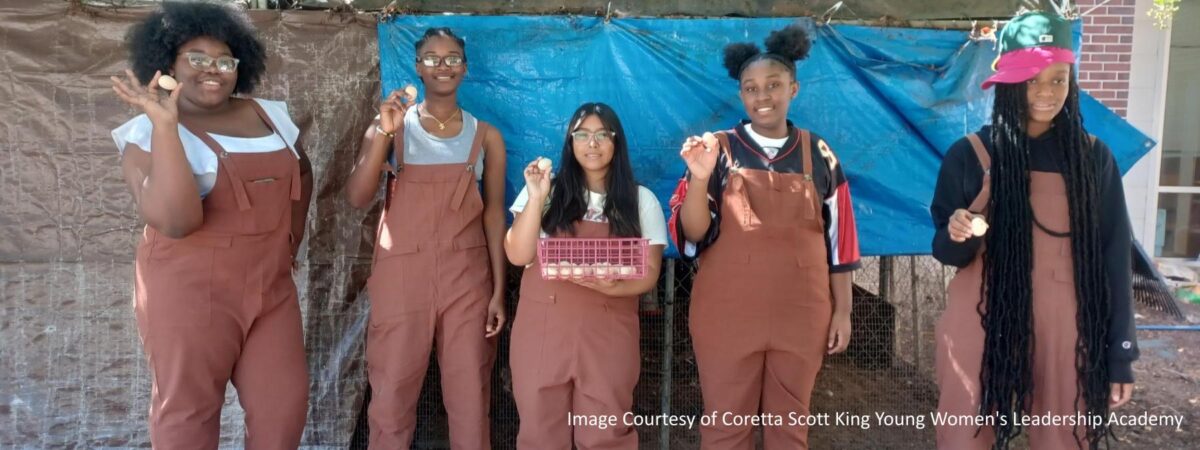


It started with an apple.
A few years ago, a student at Coretta Scott King Young Women’s Leadership Academy (CSKYWLA) in Atlanta got vocal about school lunch. Not in a complaining-to-complain way—she just wanted something healthy. Apples, strawberries, real food. “She was vocal about school lunch,” says EJ, CSKYWLA’s STEAM lab teacher. “Then that conversation grew into, well, when would we go get her some?”
That question led a handful of teachers to start looking harder at their neighborhood. What they found was a textbook food desert: the nearest real grocery store was a 30-minute round trip on a good day—no line, no traffic, and only if you had a car. The store that had been the last option nearby was recently bought out to become a storage facility.
Ten years later, that one student’s frustration has grown into a project that now touches every grade at CSKYWLA: sixth through eighth graders run hydroponic towers, ninth and 10th graders manage an indoor greenhouse wired with Raspberry Pi sensors and cameras, 11th graders raise fish and vegetables together in an aquaponics system, and seniors take on an outdoor garden as a kind of send-off project. Somewhere in there, students are also writing the code, building the websites that track plant growth, and pushing their designs to GitHub so other schools can use what they’ve learned. The work gives students a purpose beyond completing an assignment. They are using what they learn to make an authentic, meaningful contribution to their community.
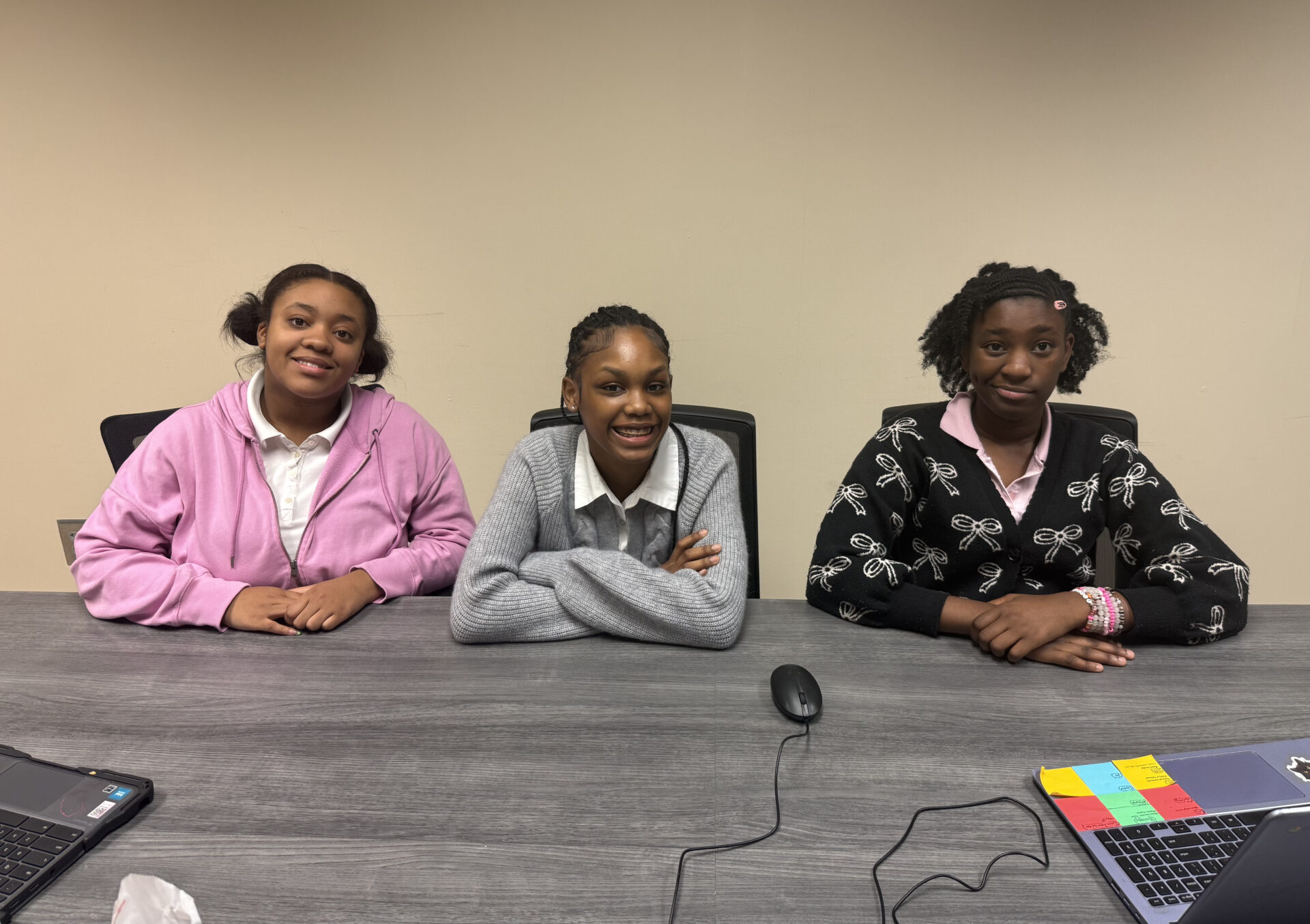
CSKYWLA students gear up to present their project in the Ciena Solutions Challenge. Image Courtesy of Coretta Scott King Young Women’s Leadership Academy.
What makes this Powerful Learning isn’t the technology. It’s what the technology is in service of.
Take Destiny. EJ describes her as a student who “didn’t really, really talk”—until the garden project gave her something to talk about. She took over the technical side of the indoor greenhouse: writing code, working with a community partner on the electronics, staying after school to keep building. “She used one of the sensors so much trying things that she literally burnt it out,” EJ says. “We had to give her another one.” When it came time to submit a video about the project, EJ had to ask her to slow down and explain the code for people who weren’t at her level. She was the one who wanted to be on camera—a first, for a student who rarely spoke up in class.
That’s agency: A student seeing herself as someone who builds things, not just someone who’s assigned things.
It is also a connection to self: Destiny began to see her interests, abilities, and emerging identity reflected in the work.
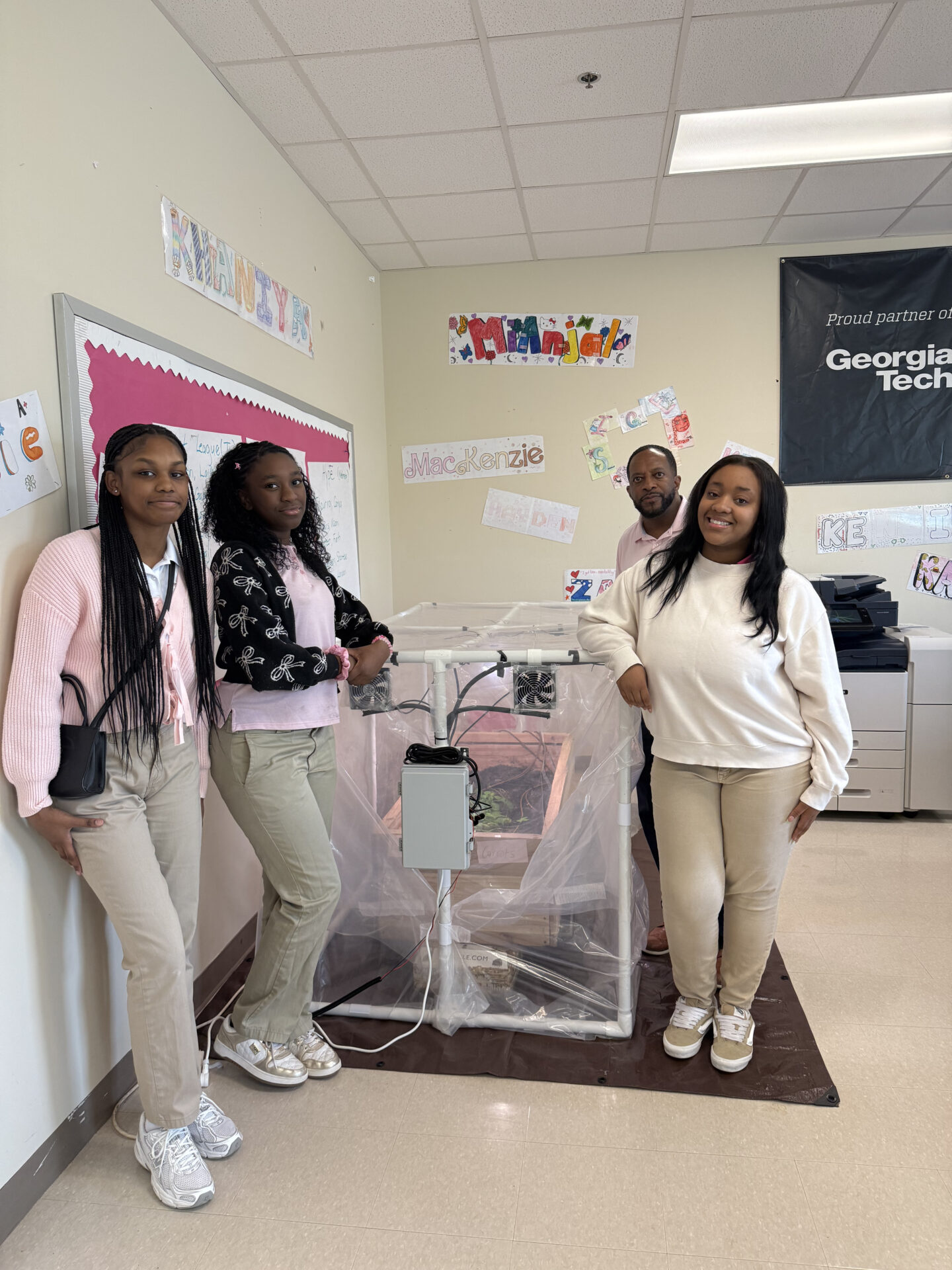
Students pose beside the indoor garden after winning the Ciena Solutions Sustainability Award. Image Courtesy of Coretta Scott King Young Women’s Leadership Academy.
The garden gave students a reason to zoom out. Students pulled census data and realized their neighborhood wasn’t just missing a grocery store—it was missing the funding and infrastructure that usually come with one. Suddenly photosynthesis, nutrition science, and local politics were all part of the same real question: how do you feed a community that’s been left off the map? By connecting ideas across science, technology, nutrition, and local politics, students learned to approach a community challenge from multiple perspectives. Students have shown up at city council meetings. A local news crew came to film the garden this summer, and girls told the reporters they’d started growing tomatoes at home. Their learning was connected to its people and places, grounding it in the relationships, needs, and possibilities of the community around them.
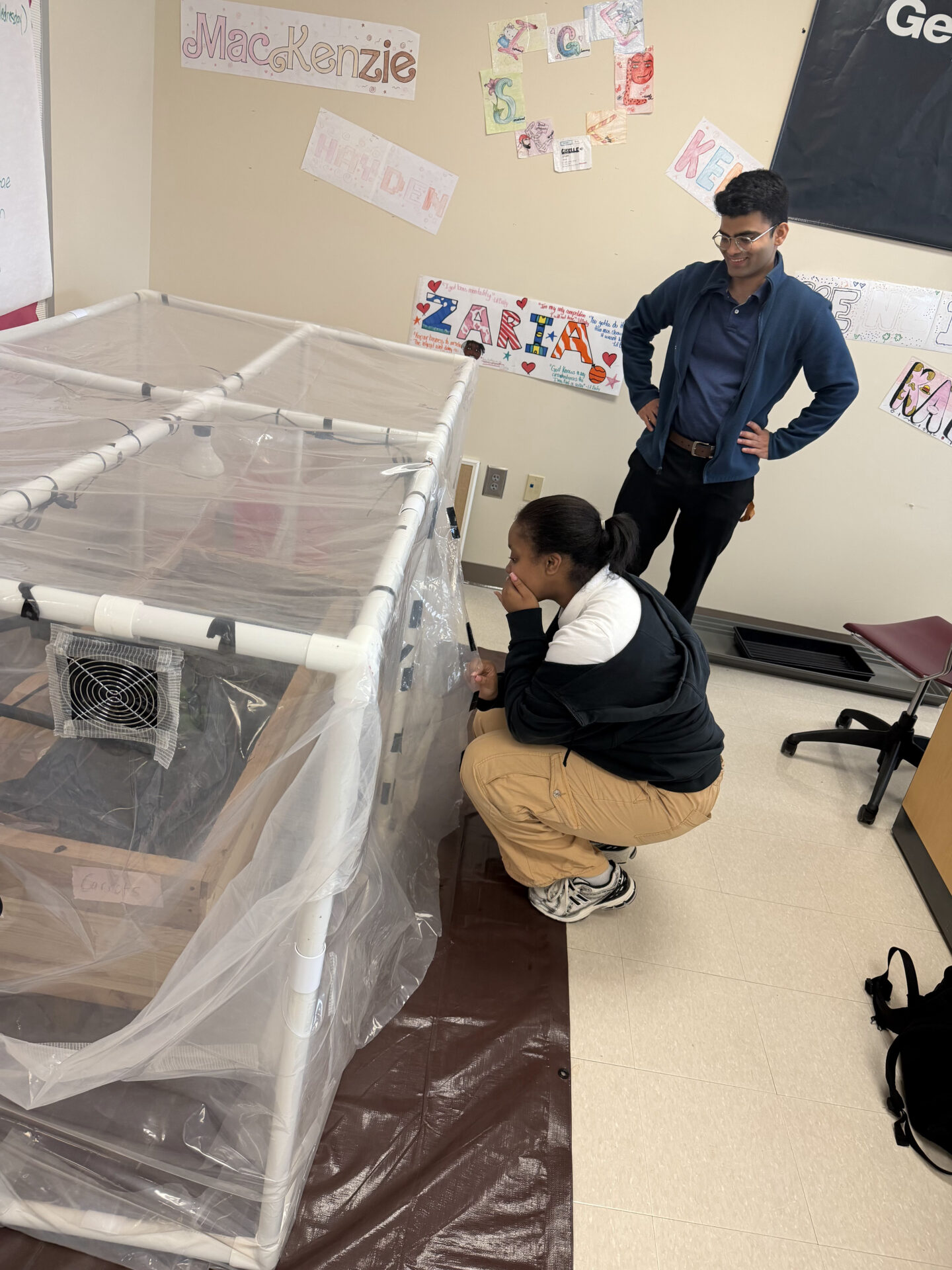
Working alongside a volunteer, a CSKYWLA student waits for sensors to activate light and water flow. Image Courtesy of Coretta Scott King Young Women's Leadership Academy.
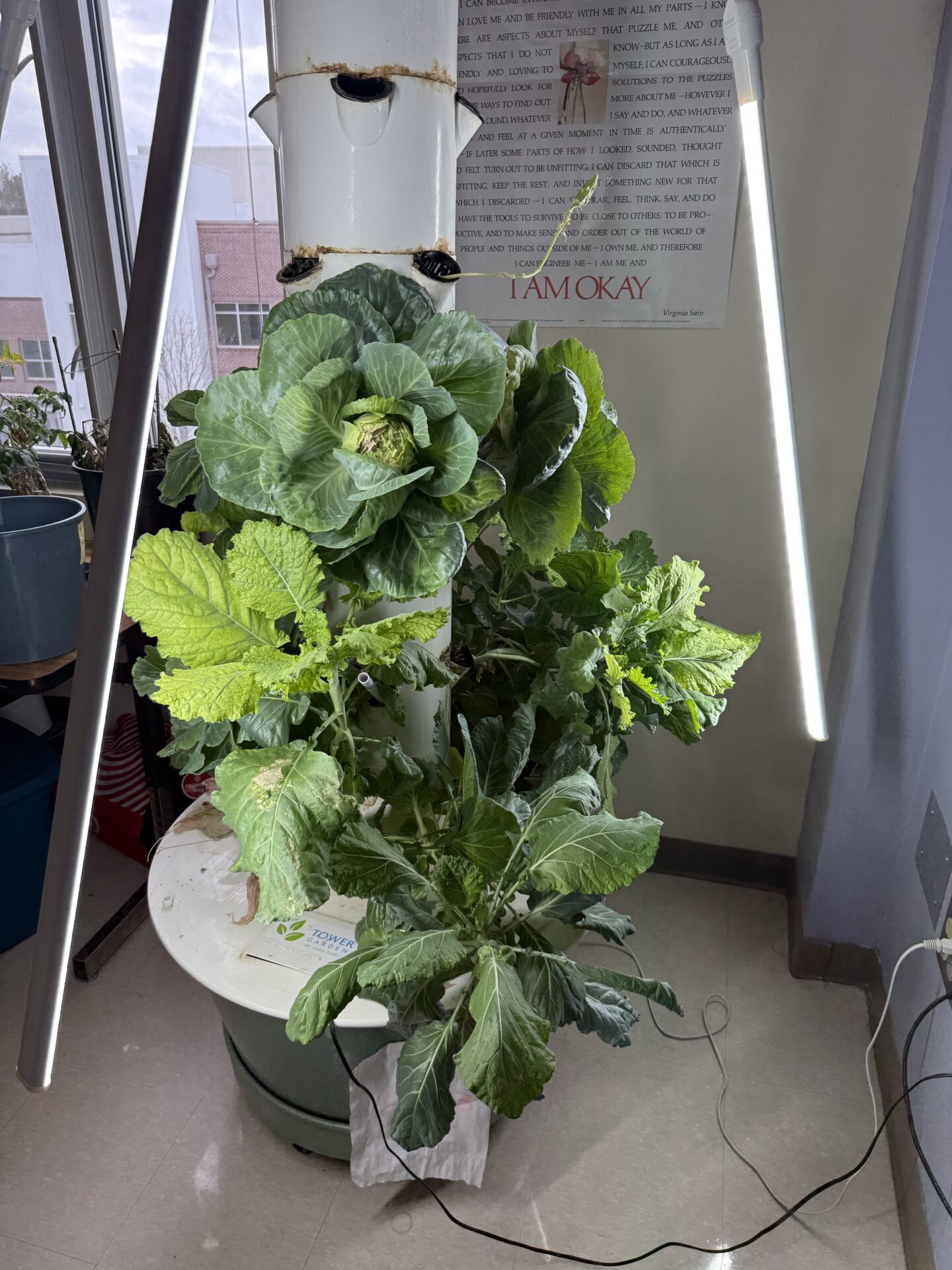
Collard greens thrive inside a hydroponic tower maintained by CSKYWLA middle schoolers. Image Courtesy of Coretta Scott King Young Women's Leadership Academy.
There are conditions that enable Powerful Learning to thrive that are reinforced through everyday structures and norms. At CSKYWLA, they are evident in how new teachers are mentored, leadership supports educators’ ideas, resources and responsibilities are shared, and mistakes are treated as opportunities for learning rather than punishment.
CSKYWLA’s teacher retention hovers around 90–100% year over year, and the building is full of veteran teachers—some with 20, 30, even close to 40 years in the classroom—paired deliberately with newer ones. EJ started at CSKYWLA as a long-term substitute. Principal Washington pulled him aside and said, “I like the work you’re doing in here. Have you ever thought about staying?” That one conversation turned into a STEAM coordinator role a decade later.
Leadership matters here in very specific, very unglamorous ways. When a teacher proposed literally tearing up part of the front lawn to plant a garden, the principal said yes. When someone floated the idea of an indoor beehive, she said yes to that, too. “If you’re truly passionate, and this is going to provide kids exposure and enrich them, she’ll go,” EJ says. That kind of trust is what lets a lunch complaint survive long enough to become an aquaponics system.
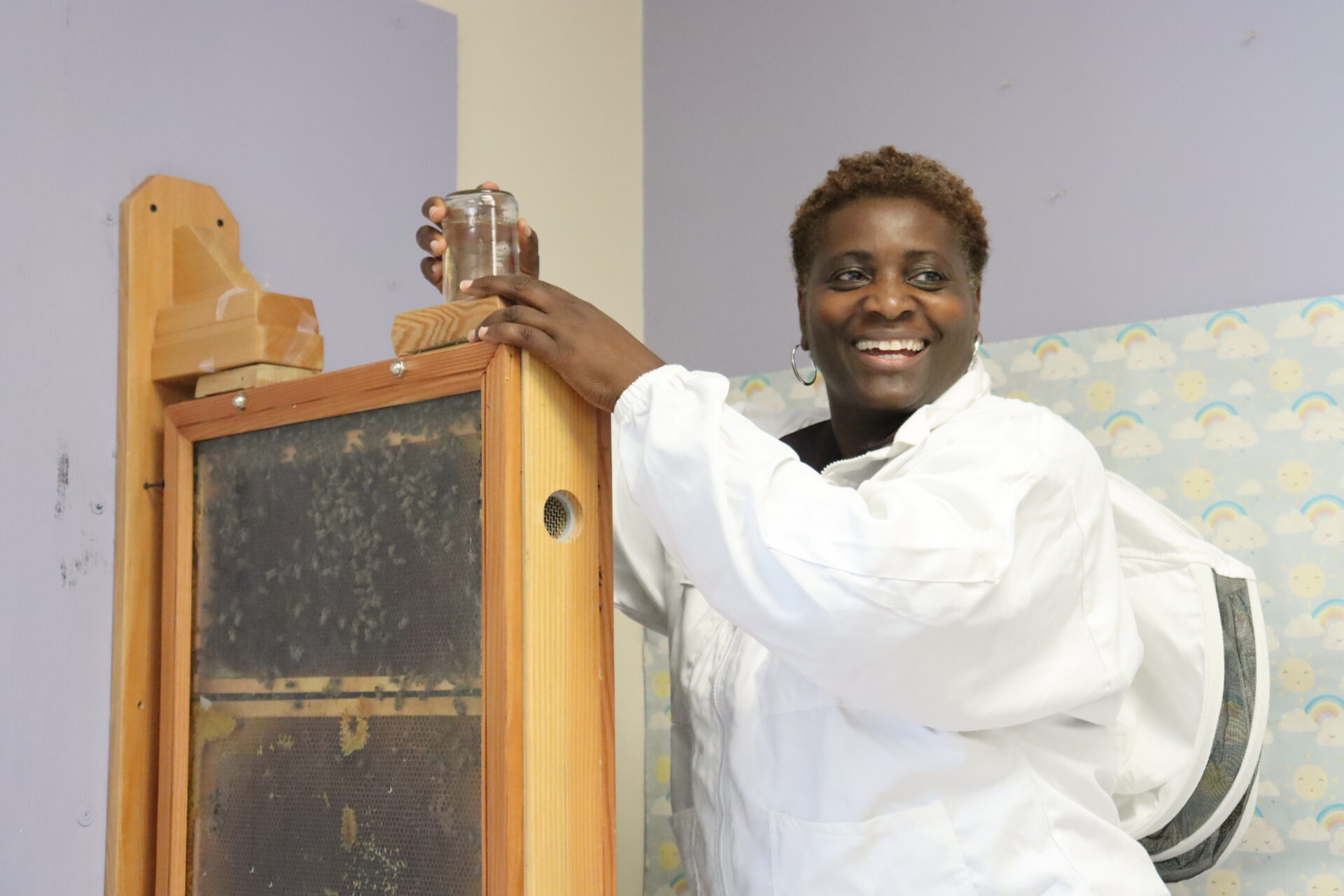
Principal Washington feeds bees at the school’s indoor beehive. Image Courtesy of Coretta Scott King Young Women’s Leadership Academy.
The conditions that foster Powerful Learning are also reinforced by new teachers being paired with two or three veterans down the hall as informal mentors. Grant applications get built as group efforts instead of one person’s extra work. When a garden bed leaked because no one had accounted for drip irrigation soaking straight through the soil, the fix wasn’t punitive—it became a lesson about the ecosystem the students had accidentally built indoors.
Ten years in, EJ can point to a former student who left CSKYWLA to study veterinary science—and came back to teach it, in the same building where she first got excited about the garden. “I can see myself in the crowd at her graduation,” EJ says. “She went away, and she came back.”
That’s the kind of future-readiness that’s hard to put on a rubric: not just STEM skills, but the sense that your questions matter enough to follow all the way through—and maybe, one day, to bring back home.

