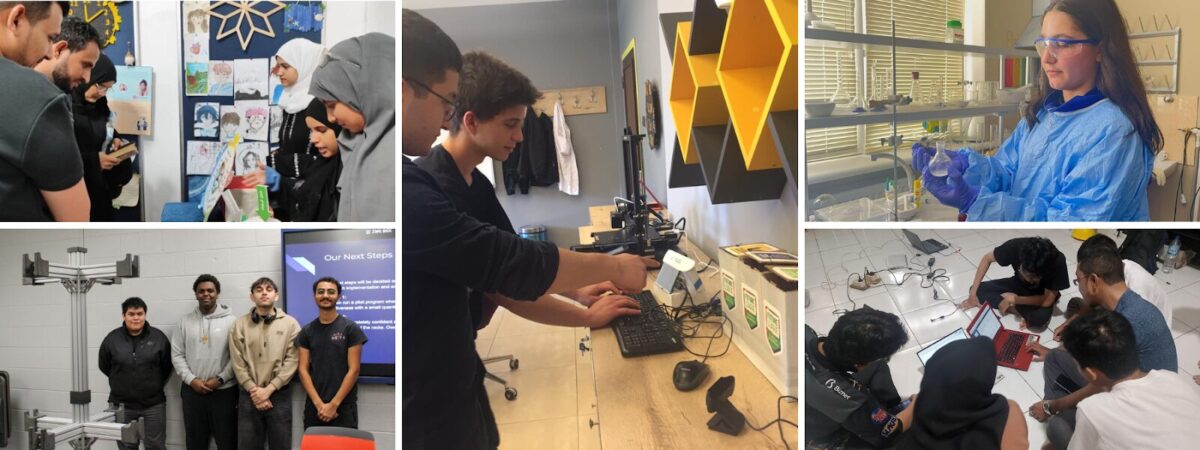


We’ve seen this again and again, offering valuable insights into the kinds of learning experiences that foster youth creativity and innovation in a complex world.
As the next Ciena Solutions Challenge submission deadline on March 5, 2026, draws closer, we’re sharing a few of these insights to inspire other educators and students who are making a difference in their communities to showcase their work and apply for $3,000 USD in funding to sustain and scale their projects.
A girl in Uganda engineered a low-cost fish-farming tool built from salvaged plastic. After seeing how polluted waterways threatened local fish farmers, she created Fish Alive, a monitoring and filtration system using recycled bottles, wood scraps, and simple sensors to track water quality and fish health. With funding from a Sustainability Award, the team has been able to refine this and other student project prototypes and conduct market testing.
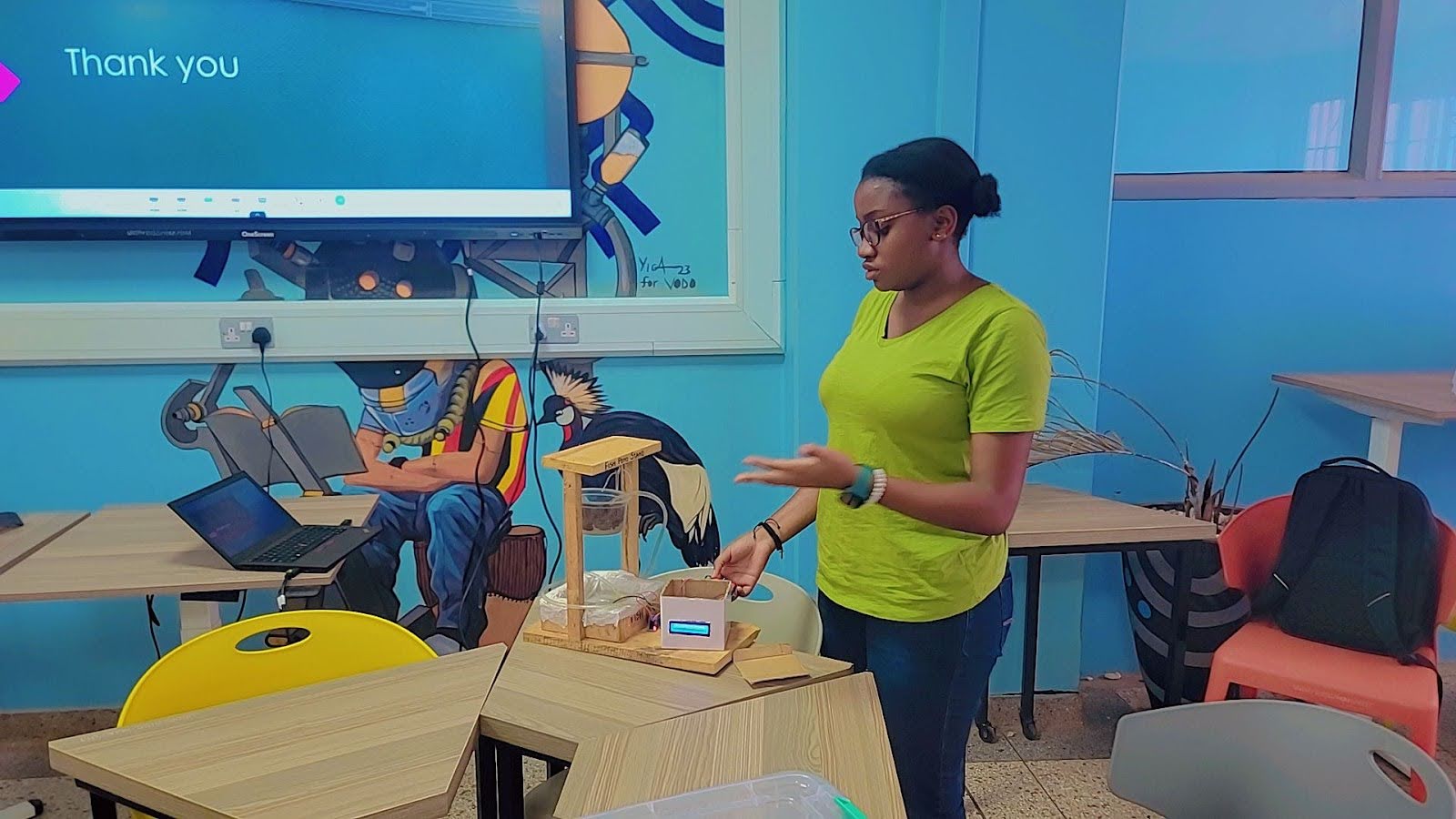
Student presenting Fish Alive, a low-cost fish-farming tool built from salvaged plastic.
Students in a coding club in Türkiye used AI to redesign waste disposal. Pairing clearly labeled boxes with low-cost technologies (Raspberry Pi, webcam, motor and cable), students designed a Recycling Smart solution to make recycling more efficient and accessible at their school. Sustainability Award funding enabled the school to conduct additional training programs for students, focusing on using artificial intelligence to address sustainability challenges.
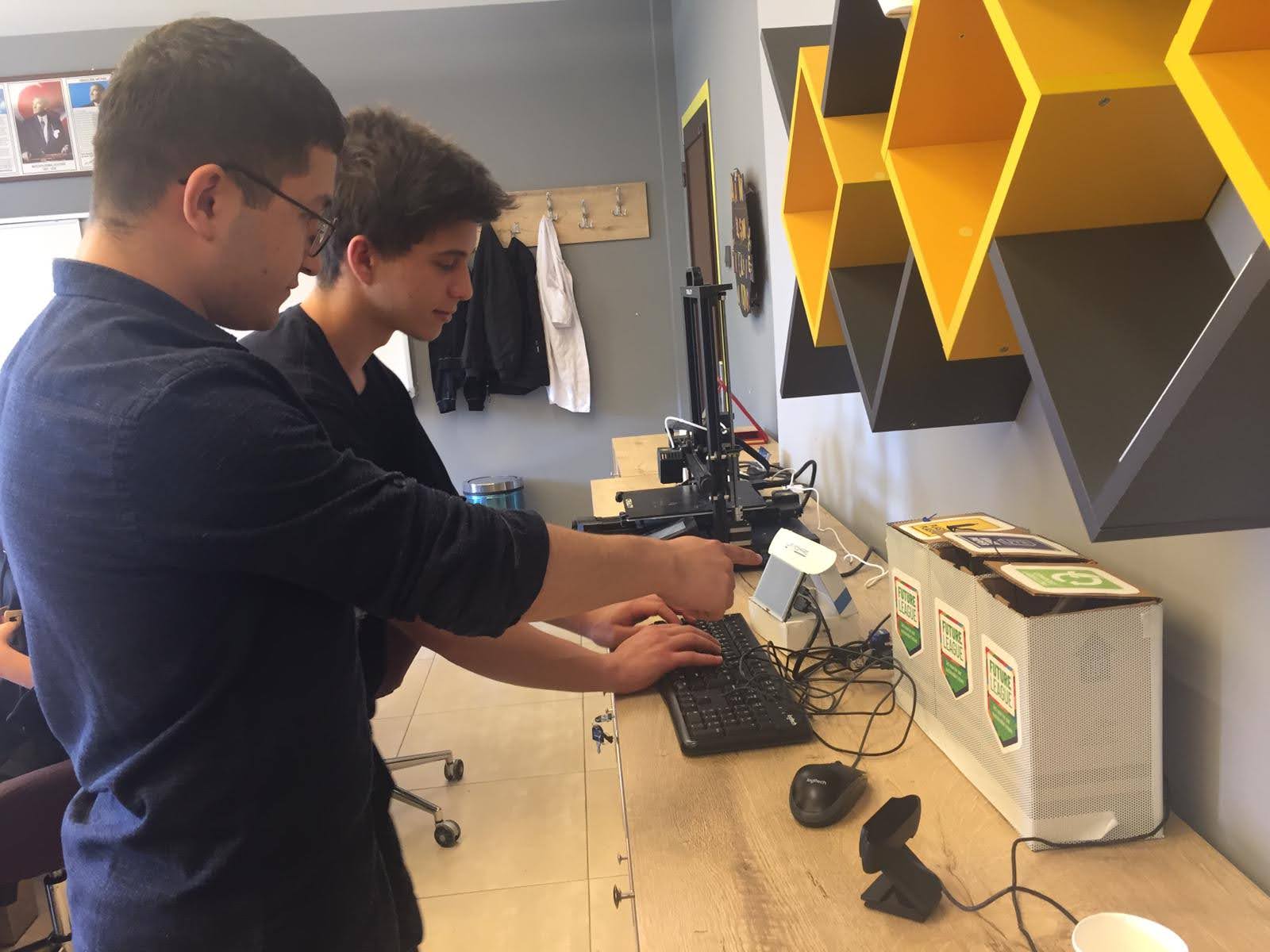
Students testing their Recycling Smart solution to make recycling more efficient and accessible at their school.
At the conclusion of a summer camp for STEM learning hosted by Amideast in Yemen, students showcased their accomplishments in an exhibition attended by parents and classmates. This event not only celebrated the students’ achievements but also deepened families’ commitment to the value of education. With Sustainability Award funding, the team equipped students with tablets, ensuring that those who previously relied on small cell phone screens or had no device at all could access their eBooks and coursework more easily.
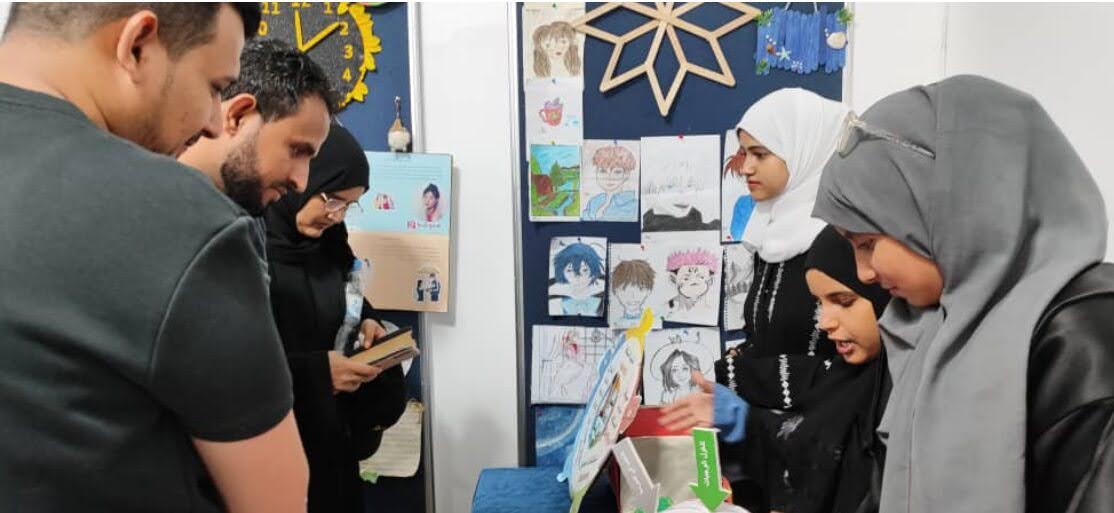
Students presenting their projects to community members.
In Indonesia, graduates returned to mentor current students of an Electrical Engineering Program, and through community service–based practicums, 11th graders went into neighborhoods to repair household electrical systems. The team’s AKURAT: Advanced Kit for Unified pH and Acidity Testing Project benefited from Sustainability Award funding that has allowed the team to pay for transportation, ongoing maintenance costs, and materials such as pliers, screwdrivers, saws, and soldering irons as they deploy their solution in the community.
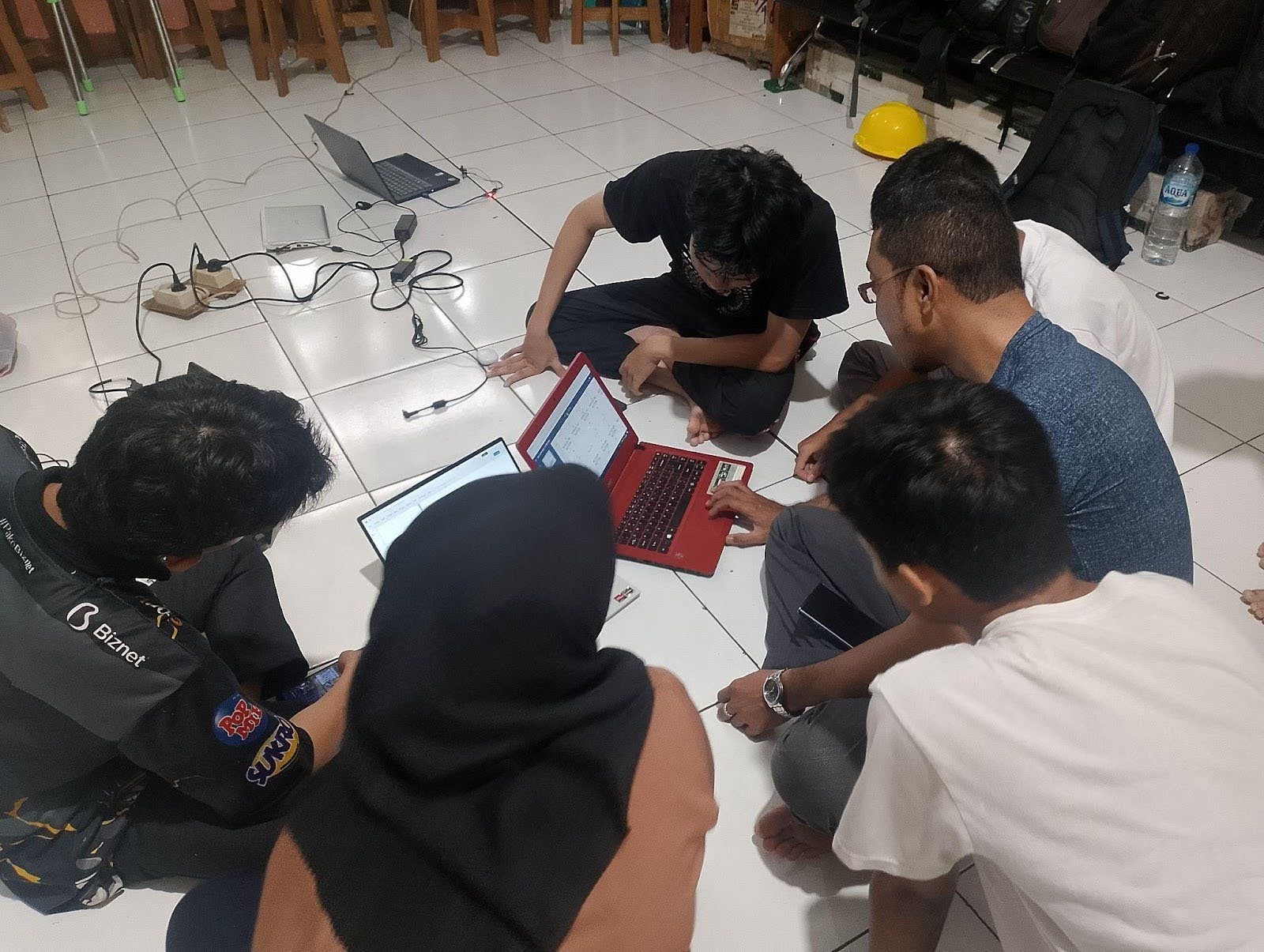
Students testing their AKURAT: Advanced Kit for Unified pH and Acidity Testing Project addressing environmental pollution in their community.
When students in Whitehall, Ohio, in the United States noticed that chronic tardiness was affecting their school community, a team of senior engineering students stepped up to design and build a solution in the form of a scooter hub. With Ciena funding, the team was able to manufacture and assemble their Orbit Rack prototype, receiving local news coverage and catching the eye of the district’s superintendent and Whitehall’s mayor.
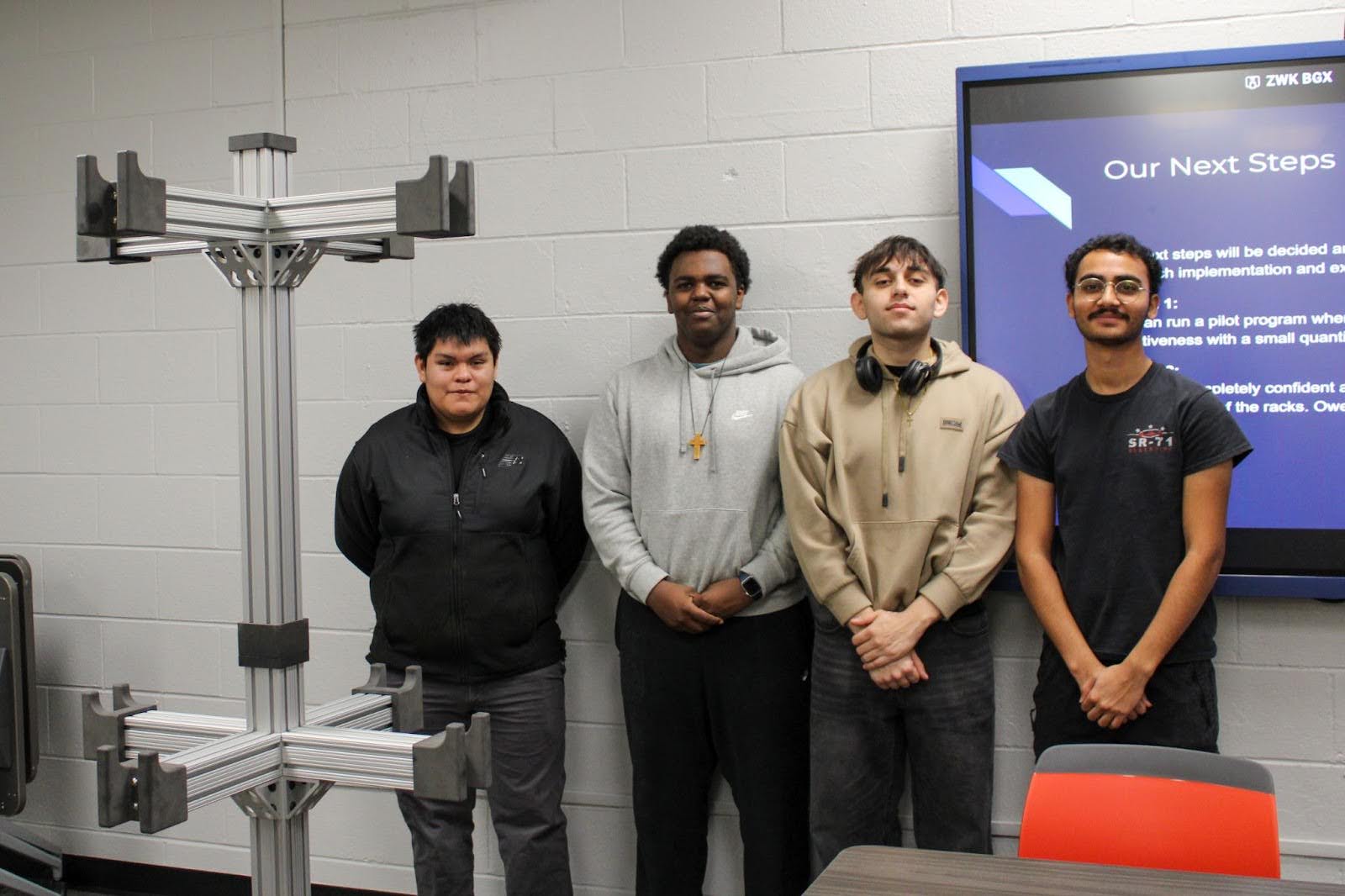
Senior engineering students with their Orbit Rack prototype.
Students in Sachkhere, Georgia, who built a Virus Genome Decoder wanted not just to understand the science themselves but to help other students and community members feel informed and empowered to engage in global health solutions. With Ciena funding, the team has been able to purchase additional materials (DNA extraction kits, reagents, and lab equipment) along with microphones and video editing tools to produce professional animations and tutorials.
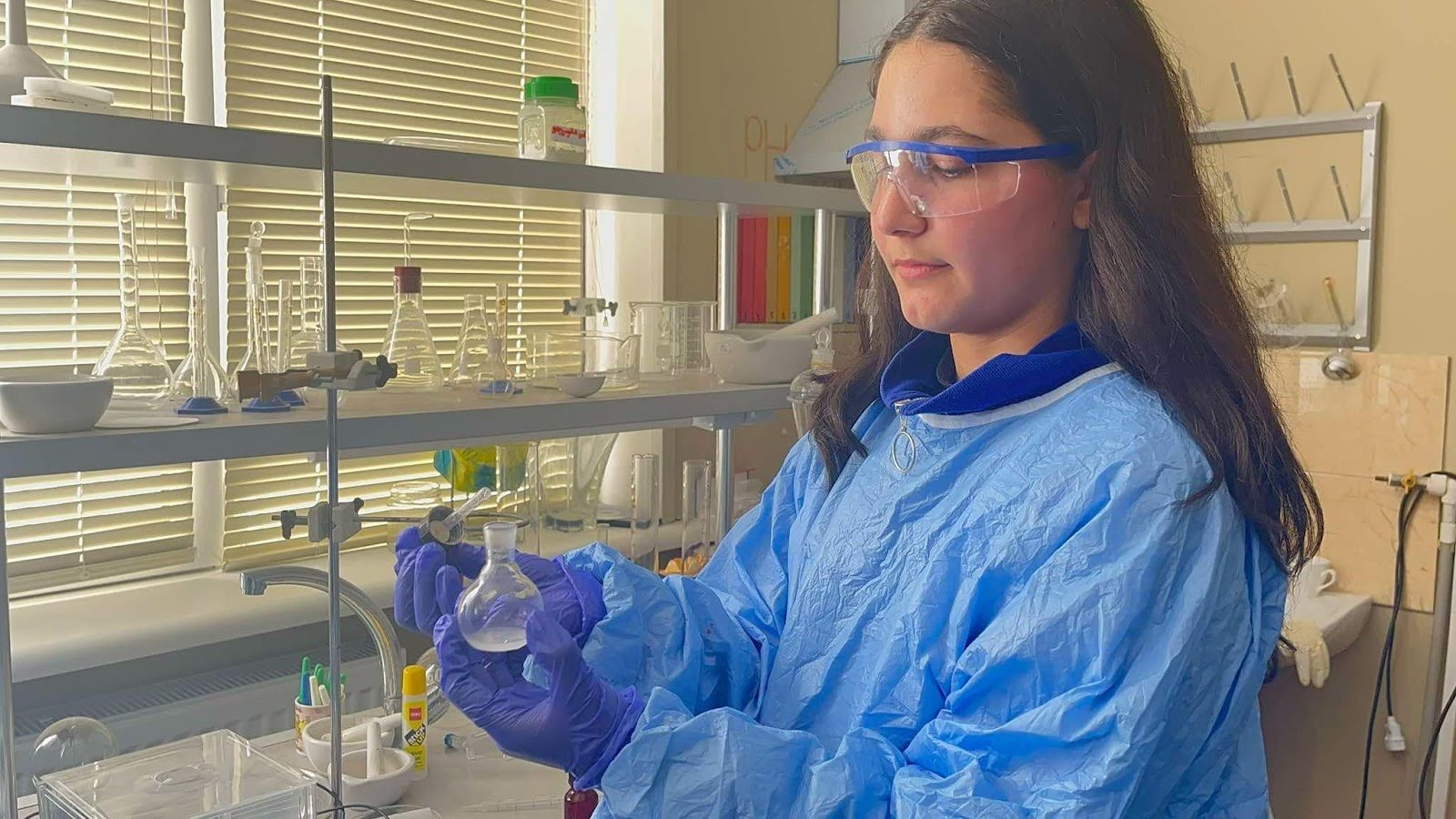
A Virus Genome Decoder team member in Georgia conducts tests in the science lab.
This sense of connection is also cultivated in additional opportunities within the Ciena Solutions Challenge. Teams are able to connect during interactive sessions such as community-led meetings and student-led panels. These events allow teams from different regions to present their projects, ask critical questions, and offer peer-to-peer feedback. The opportunity to connect and learn from fellow student teams across the world fuels their sense of purpose by being part of a larger global network of changemakers.
As we look ahead to the next round of the Ciena Solutions Challenge, we’re excited to see how more educators and students will build on this momentum, contributing local solutions to global challenges and strengthening the networks of belonging that make powerful learning possible.