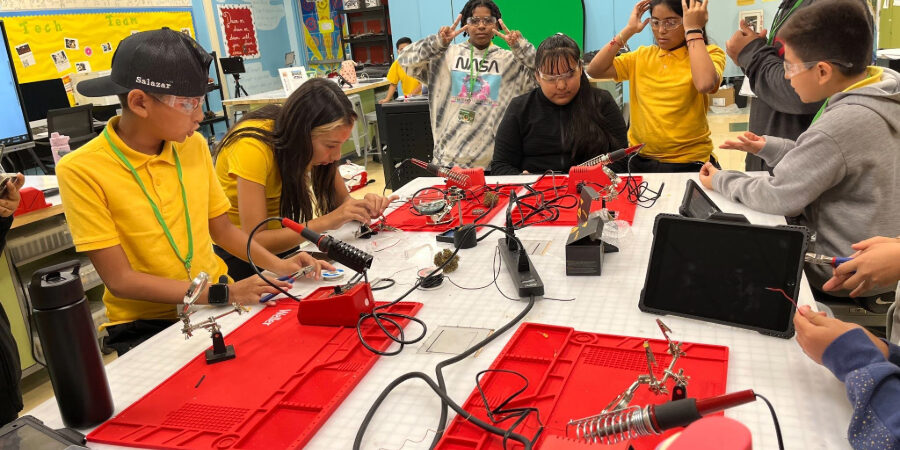


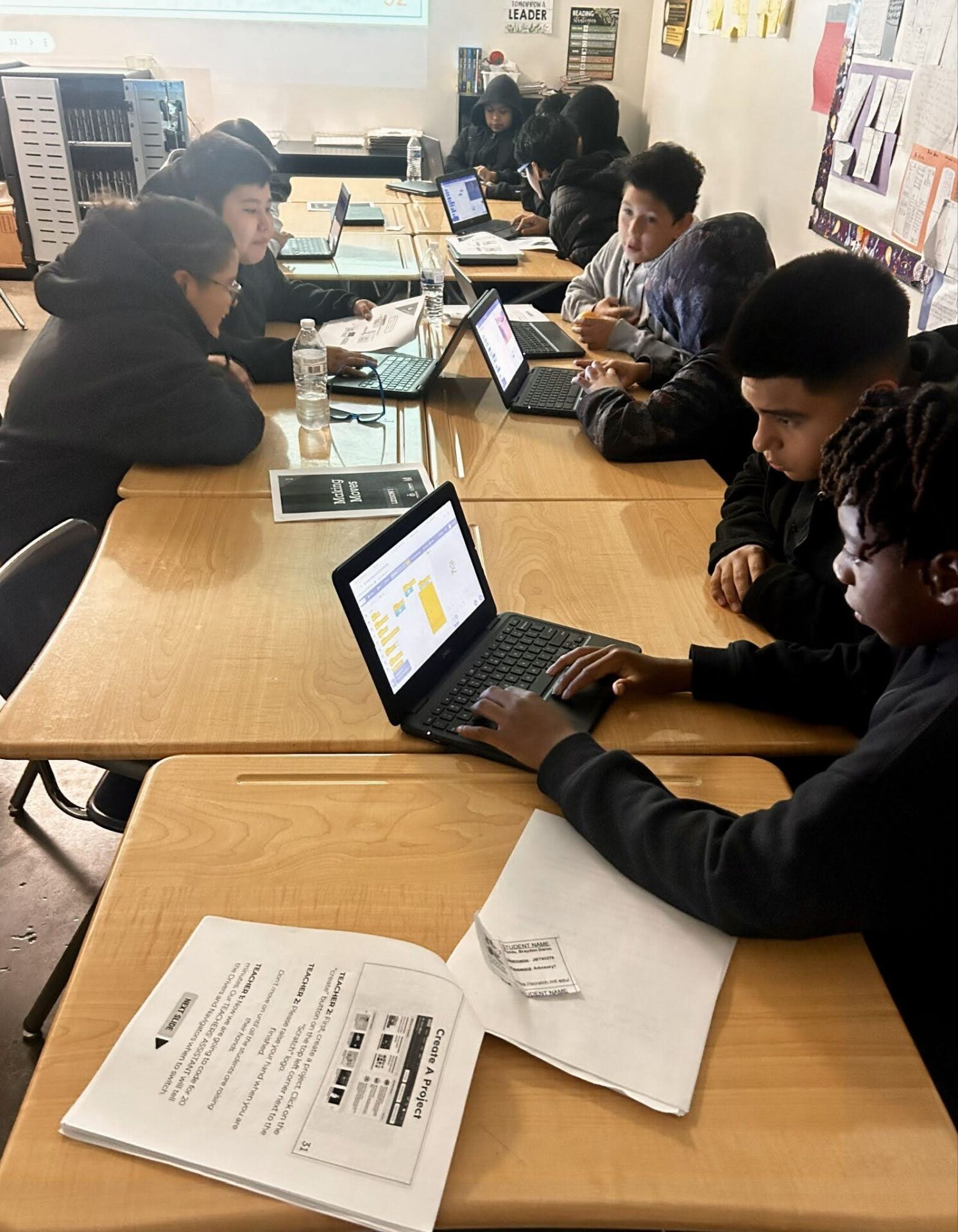
Students coding.
This year’s cohort reflected the wide range of spaces where maker learning thrives. From middle school classrooms and school libraries to museums, teen centers, and fabrication labs, InfyMakers brought projects rooted in local needs and student interests while remaining connected by a shared commitment to making computer science more inclusive, relevant, and engaging.
We kicked off the year by getting to know each educator and their project goals through 1:1 conversations and collaborative online meetings. Using a shared digital whiteboard, cohort members exchanged photos, videos, ideas, and questions as they began forming relationships with one another. These early sessions laid the groundwork for trust, collaboration, and a willingness to share both successes and challenges as projects unfolded throughout the year.
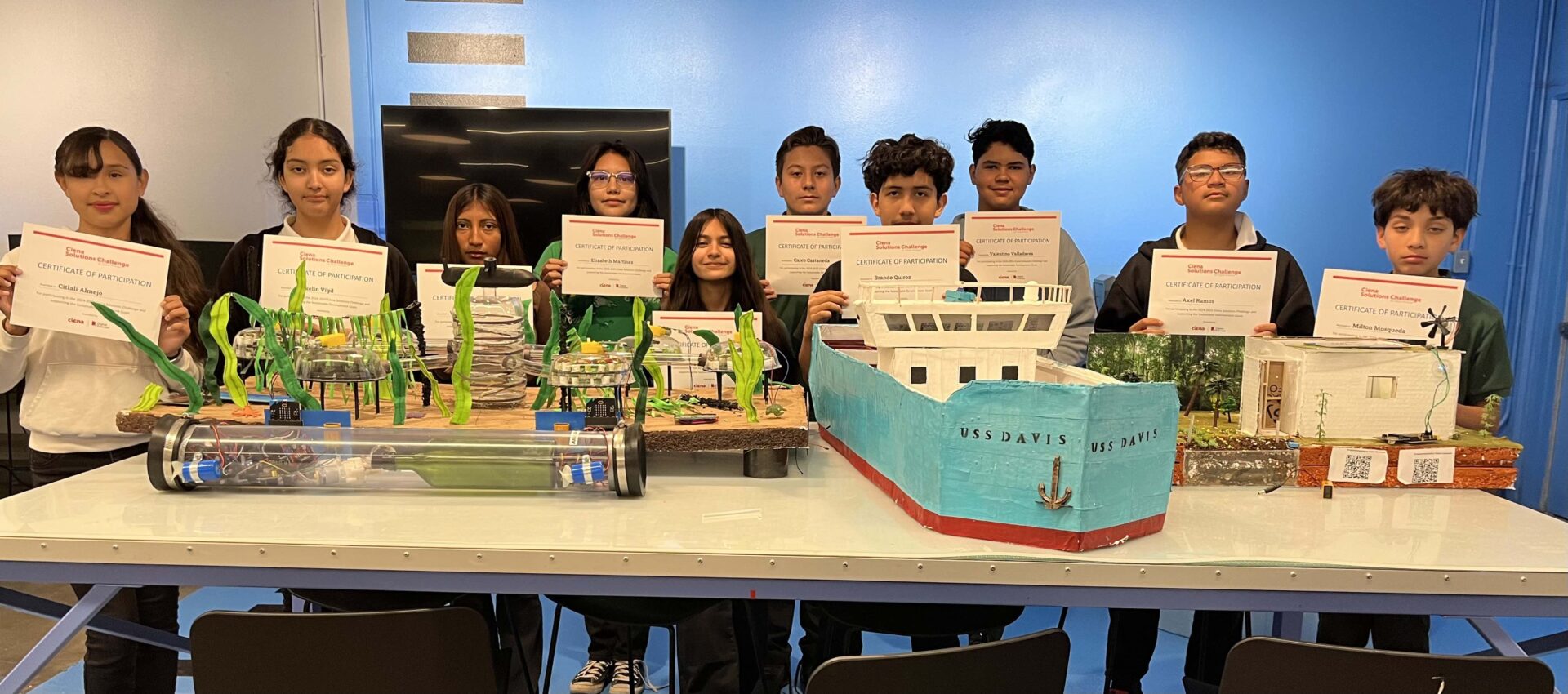
Ciena World Challenge Winners
Across the cohort, students explored interdisciplinary maker experiences that blended computer science with sustainability, history, art, engineering, and community problem solving. In California, Jose Gonzalez’s students investigated climate change, microplastics, and sustainable ocean systems through aquaponics, ROV design, and regenerative farming concepts. One especially powerful moment came when Jose’s students presented their work directly to the InfyMakers cohort, sharing not only their technical designs but also their thinking, collaboration, and pride in what they had created. Their presentations served as a reminder that student voice and authentic audiences are central to meaningful maker learning.
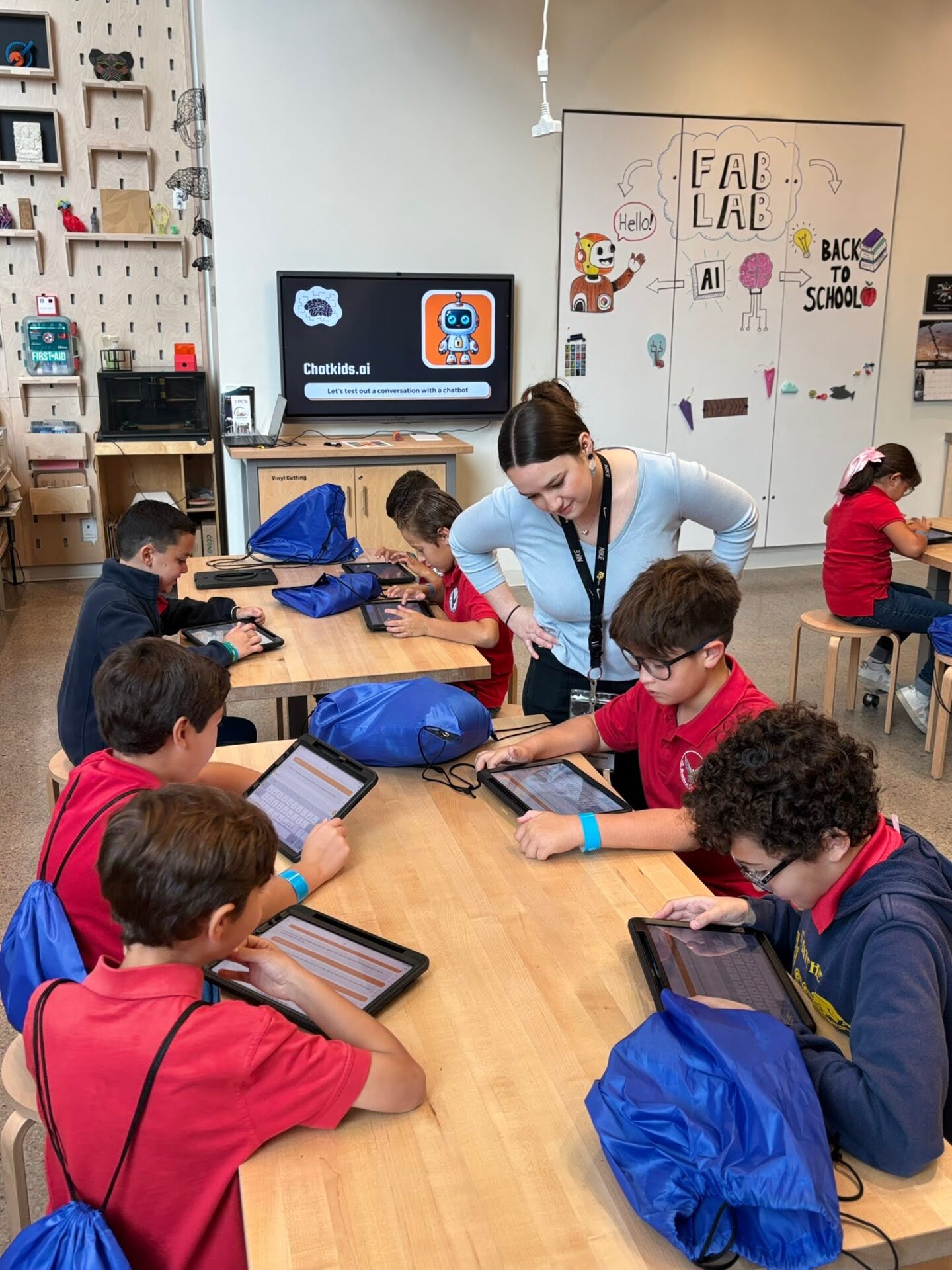
Fab Lab El Paso’s Maker Space
At Fab Lab El Paso, Michael Nelson led extensive work expanding access to fabrication tools and workforce-aligned maker experiences for both youth and adult learners. His efforts emphasized community-centered making, skill development, and pathways into advanced manufacturing and design. Through workshops, open lab access, and partnerships, Michael’s work demonstrated how makerspaces can serve as hubs for lifelong learning while strengthening local ecosystems around computer science and technical creativity.
“It was an awesome opportunity to connect and share best practices with other Maker Educators from around the country!” – Michael Nelson
“I would absolutely recommend this program to others, to have the funding and support while learning along other driven individuals is a valuable part of developing programming for our students that is impactful and rewarding to all.” – Victoria Savo
Mya Stark brought a strong focus on accessibility, creativity, and community-based making through her work with Two Bit Circus Foundation. Her contributions emphasized inclusive design, upcycled materials, and learner-centered makerspace practices, offering the cohort valuable perspectives on how playful making can support diverse learners and foster belonging.
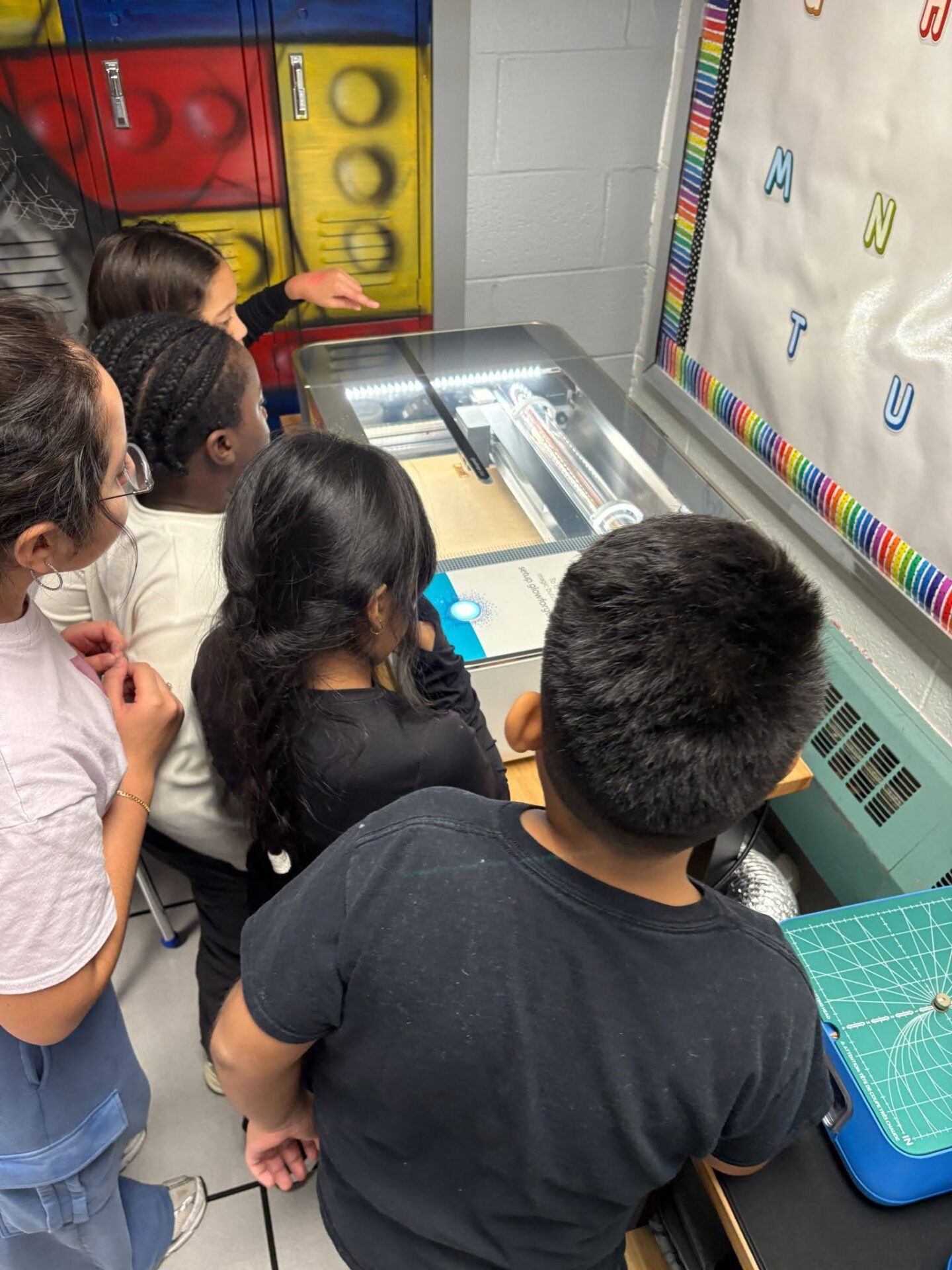
Students using Glowforge machine.
Other projects highlighted the power of making to connect technical skills with real-world meaning. Yeidy Levels’ work, featured in the “Making Meaningful Machines” projects, encouraged students to design machines with purpose—blending engineering, creativity, and reflection on how technology can serve people and communities. Across projects, educators emphasized student agency, collaboration, and problem solving as core outcomes of their work.
“I was very impressed with the program! Not only was there a grant awarded, I was given the opportunity to meet with other like-minded educators that were eager to share ideas with the cohort! I was able to take away so much and I’m so excited for our future endeavors with our materials.” – Yeidy Levels
As the 2024–25 cohort wraps up, InfyMakers leave with stronger networks, clearer visions for their programs, and renewed energy to continue this work. The creativity, persistence, and generosity of this year’s educators demonstrate what’s possible when teachers are trusted as designers and supported through community. We’re grateful to Infosys Foundation USA for making this work possible and look forward to seeing how these projects continue to grow in the years ahead.
Want to know more about maker education? Find more resources here: