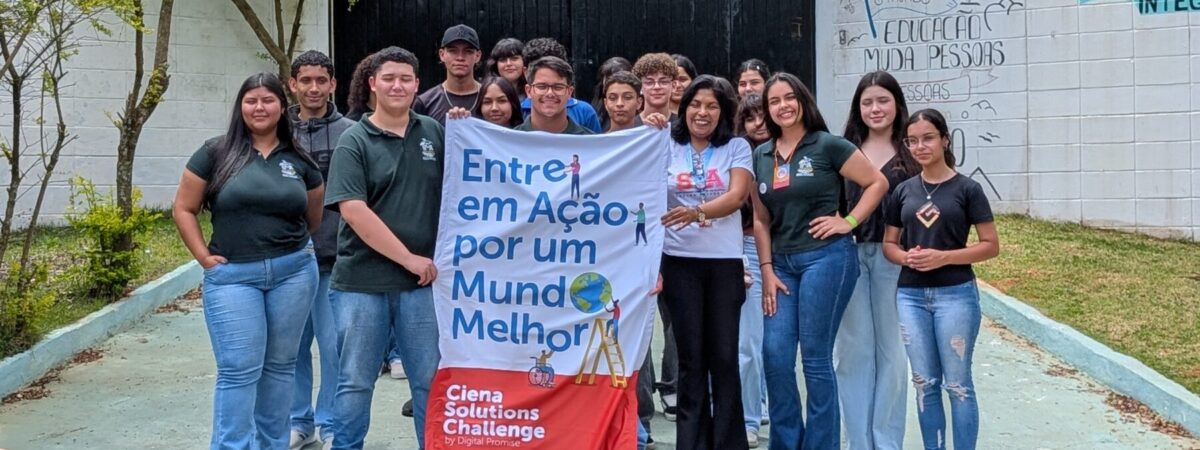


Walking into Escola Estadual Simpliciano Campolim de Almeida (SCA) in Nova Campina, Brazil, you’ll notice expansive outdoor spaces where students connect, learn, and create. In the main courtyard, students are cultivating a garden of fruits and vegetables, and the surrounding area displays their artwork. Learning about the environment in chemistry class transcends the school walls to the surrounding forest, where students test a pond’s water quality.
Seeing students at SCA solve problems by asking questions, collaborating with their peers, and creating with a range of low- to high-tech tools offers a snapshot of student protagonism, a concept in Brazil that aligns with how we describe student agency and student voice in the United States.
In recognition of their dedication to student protagonism through the global Ciena Solutions Challenge, SCA became a Ciena Solutions Challenge Model School, receiving additional investment from Ciena and Digital Promise, alongside model schools in Tanzania, Zimbabwe, Canada, and the United States.
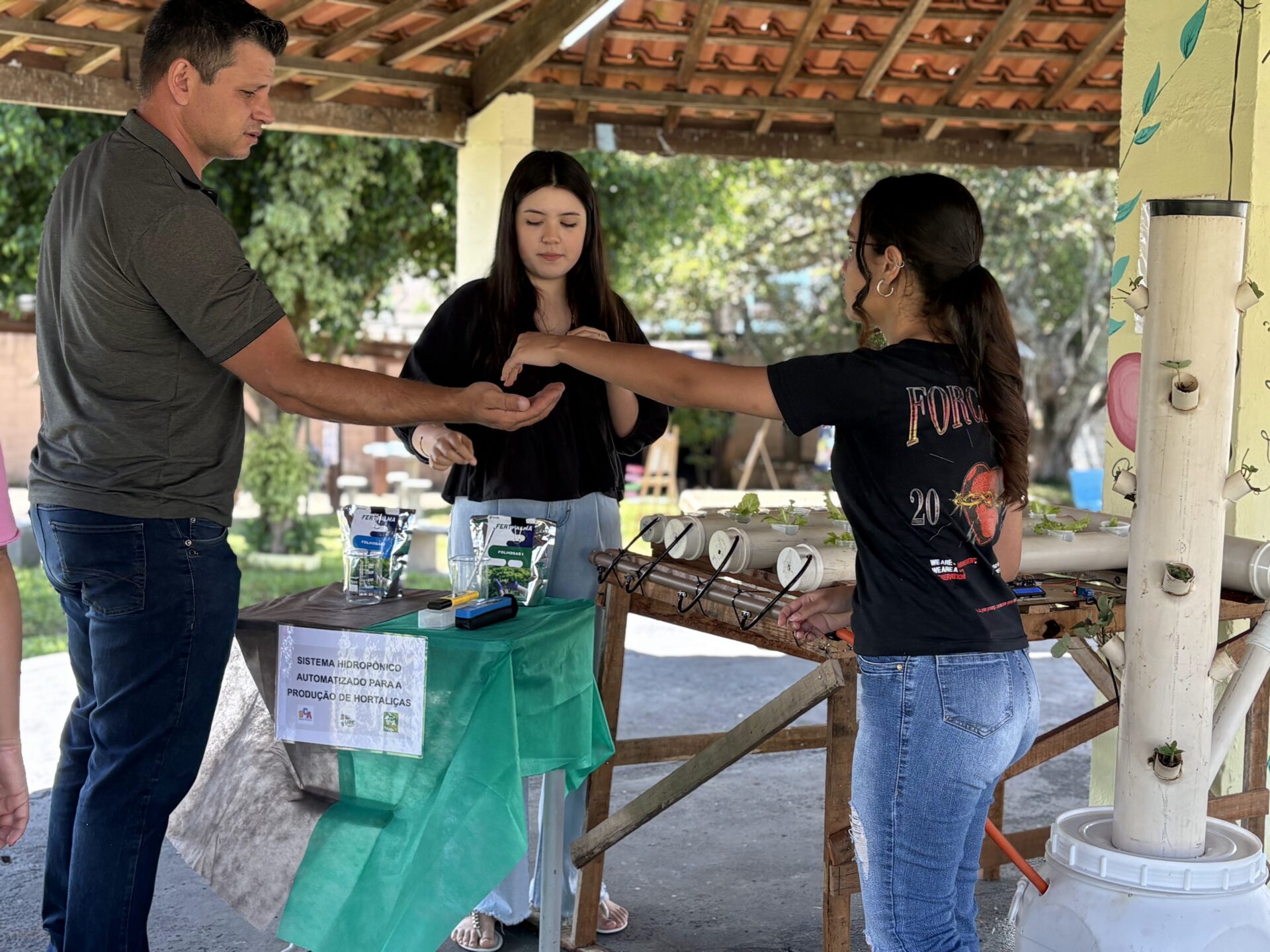
Students and a teacher work together on the hydroponics system
SCA is a public school located in a rural part of the state of São Paulo, where the economy is powered by agricultural industries. Through the Ciena Solutions Challenge, English teacher Ivanete Paes Landim and her colleagues help students work on projects that connect to their interests, environmental sustainability, and technology.
One of those projects saw students at SCA develop a hydroponics system that will grow fruits and vegetables as part of their school garden. One student, Maria Clara, brought a personal interest in programming to the project, gaining hands-on experience with automated systems and how they can promote environmental sustainability.
In previous cycles of the Ciena Solutions Challenge, SCA students explored environmental sustainability through creating a model of a sustainable house and promoting sustainable tourism through ecoaltruism and community partnerships. SCA also offers adult learning courses where younger students help adult learners develop skills in digital literacy.
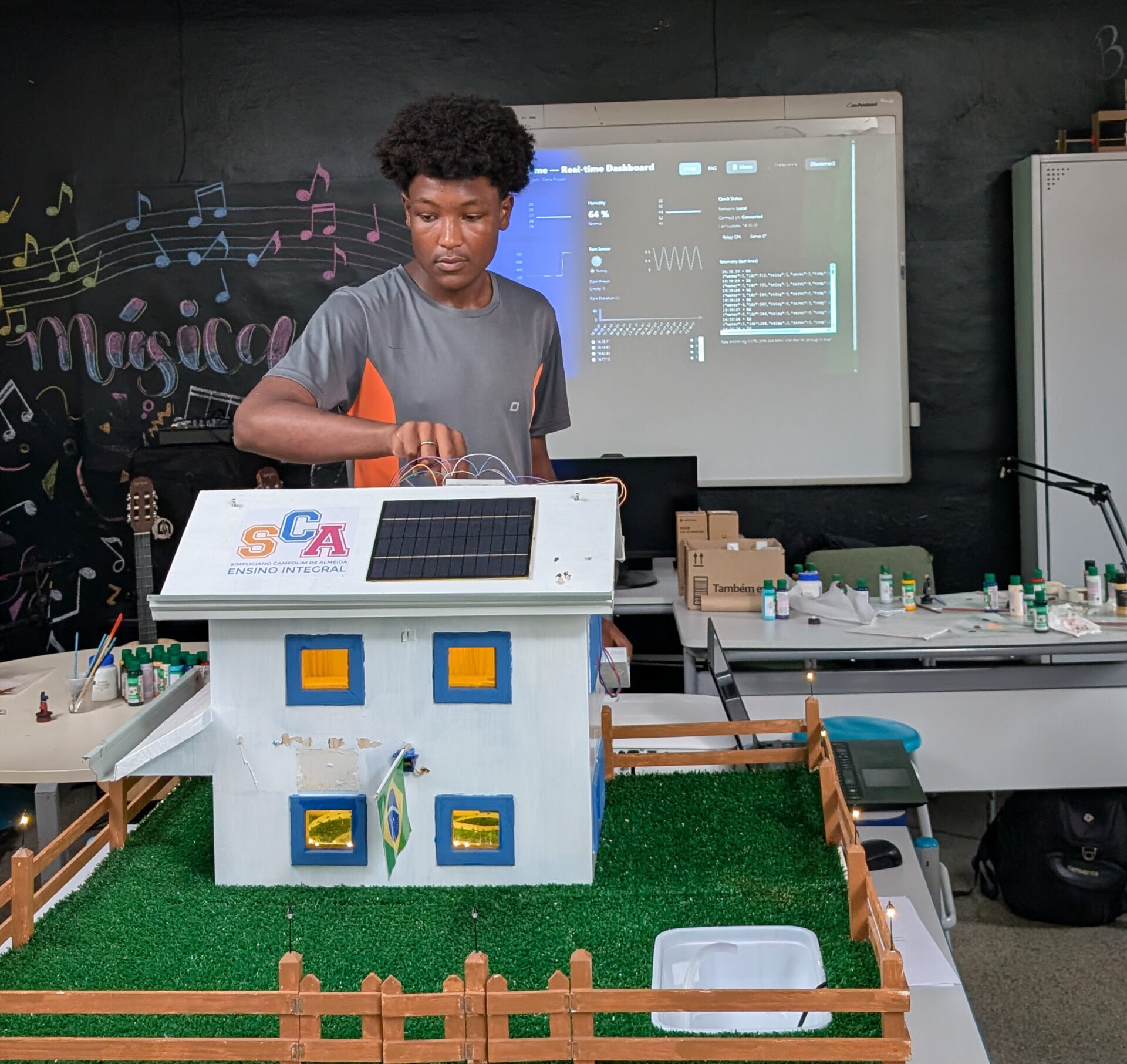
The model of a sustainable house is built with sensors that collect information seen on the data dashboard that’s projected on the screen
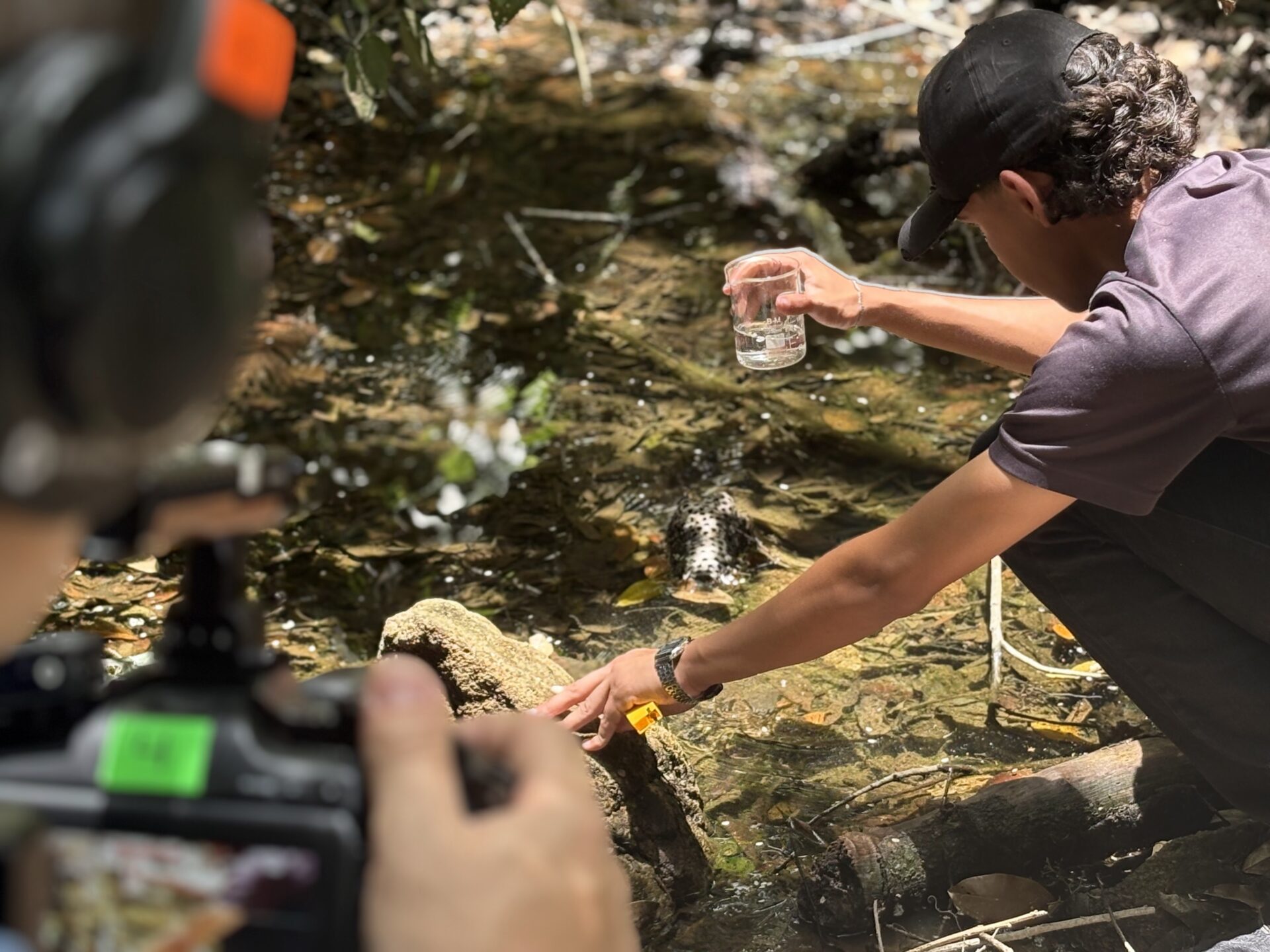
A student demonstrates how he tests the water quality at a local pond
SCA shows what’s possible when student protagonism is fueled by students’ interests, a strong sense of place, and creative use of technology. Using the Ciena Solutions Challenge as a framework, SCA continues to cultivate a community of learners forging deeper connections between their learning, aspirations, and real-world experiences.

