
At Norwalk Public Schools, we are intentionally seeking out student perspectives as our Connecticut district enters the third year of our Portrait of a Graduate program. After successful implementation of our first two competencies: critical thinker and effective communicator, we next want to explore student portfolios as a way for our district to notice, recognize, and celebrate student growth on these Portrait of a Graduate competencies. As part of a needs assessment to understand how best to support schools with building out a Portrait Portfolio, we conducted student focus groups with fourth and fifth graders to understand student perspectives on portfolios. What we found will ground our work building a Portrait Portfolio Playbook for students, teachers, and instructional leaders.
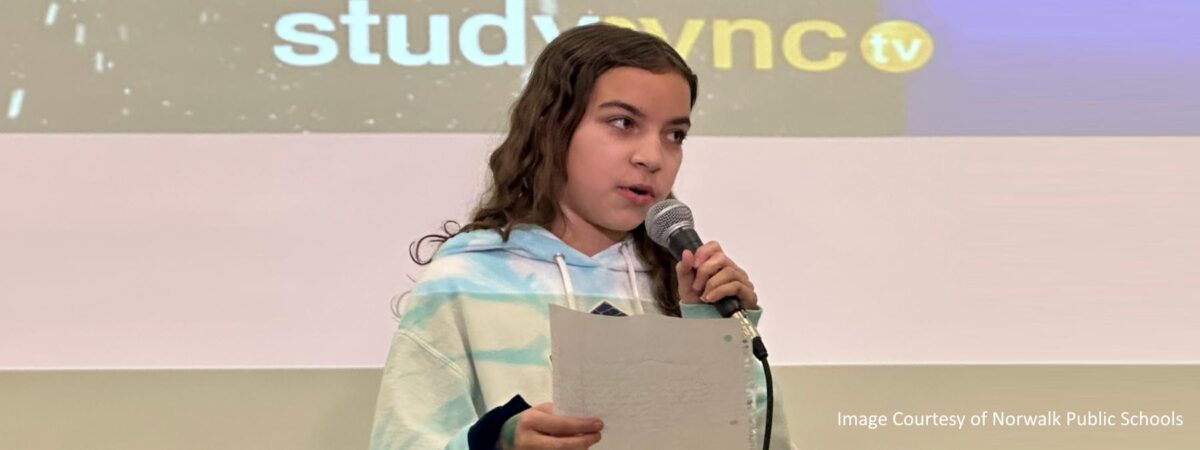
Students were so excited to share their portfolios with us. Their enthusiasm was palatable. In fact, we had to institute some turn-taking protocols to ensure all students had a chance to share their work and that we didn’t disrupt their school schedule too much. Students read us their work, their reflections, and their teacher feedback—proud to share what they’d accomplished and what they are trying to improve.
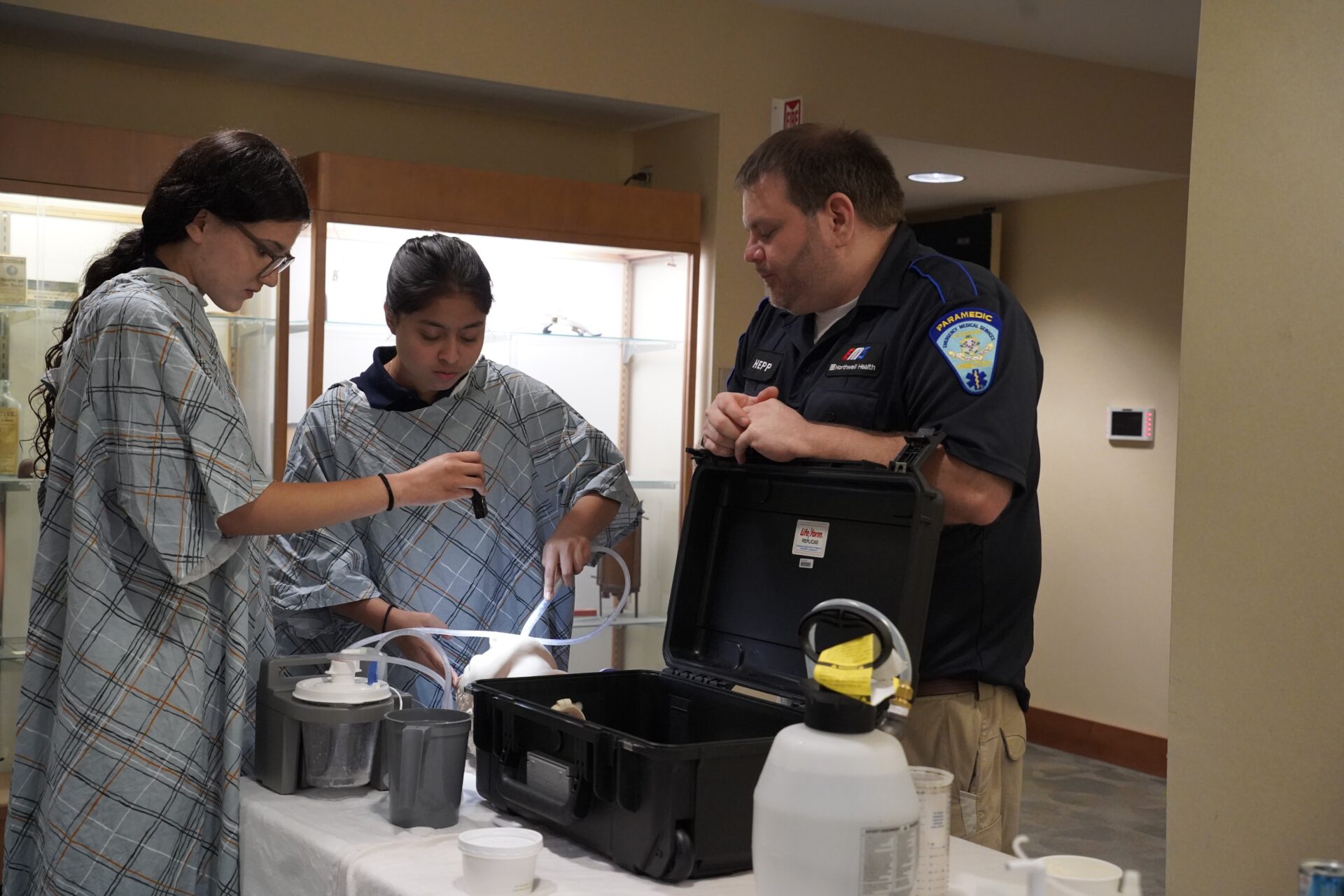
Brien McMahon High School students in the BMHS Healthcare Academy took responsibility for their own learning by participating in a summer EMT program. Image courtesy of Norwalk Public Schools.
When we asked students what they wished for when it came to their portfolios, they told us they want more chances to share their work with their friends and classmates, teachers, and their community. As student heads nodded along with these suggestions, it was clear that students are interested in authentic, relationship-based feedback.
What students didn’t ask us for was an AI tool that would score their portfolio.
It is essential that we remember students’ developmentally appropriate desire for authentic, relationship-based sharing of their work. This is why we are planning how our Portrait Portfolio team can support student-led conferences and celebrations of learning, to provide these human-centered approaches to noticing, recognizing, and celebrating student growth on Portrait competencies.
Even the first grader who self-advocated to join our focus group mentioned how her counting has improved since she was in kindergarten. She enjoyed showing us the difference from her prior numeracy and her current skills and abilities. Another student pointed out his teacher’s feedback from earlier in the year and how he had improved, “It says ‘Your essay loses focus.’ I started to work on it and it says over there that ‘This was organized very well.’” Others shared the value their portfolios served to help them remember things they learned earlier in the year, “When I go on [digital portfolio website] I remember all of the work I’ve done from last year, this year, it helped me remember a lot.” Seeing their growth and improvement was meaningful to these students.
This feedback from students about how they appreciate the ability to see their growth over time has informed how we are developing protocols for our Portrait Portfolio Playbook. Having teachers select three points throughout the school year to pause, collect, and reflect, will allow us to ensure that as students build their portfolios, they will capture examples of work that can demonstrate growth and require students to self-evaluate, set goals, and evaluate their progress.
Related to what students told us about how they noticed their growth in academics and future-ready skills, students also demonstrated ownership of their portfolios. Students named what kinds of things went into their portfolios and how they decided what should be included. One student named three goals: “To inform people on what you were doing in class. To inform your parents what you’ve been doing in school. Be more organized, don’t have papers everywhere.” In addition to portfolios informing them about their own growth, students identified how portfolios support teachers and parents with understanding their school performance.
“My grandpa never went to school so he loves when me and my brother share good things that are happening at school.”
All the students shared that their parents and caregivers liked to learn about what they were doing in schools and that the portfolios that were digital supported this. Students also discussed the value of portfolios for their teachers. One student commented that “[Portfolios] are good to have so the teachers can understand what you need help with or more work on.” Students get that portfolios are a good way to provide evidence of their learning. Some students even indicated that they would like more control and access to their portfolios. As one student suggested, “I wish during free time we could go up and grab our portfolios. I wish we could grab our portfolios and think on our feedback as a daily reminder about what you could work on.”
As our district incorporates our Self-Directed Learner competencies into our culture of teaching and learning, we want students to have the agency to use their portfolio to improve their learning. Building on the ownership that students already have of their portfolios and providing more student voice and choice will help us use portfolios as a means to notice, recognize, and celebrate students’ growth on future-ready skills.

